
Beyond Speech Recognition: Deciphering Phonological Processes through Situation-Awareness
Applying situation-awareness for recommending phonological processes in the children's speech
This paper introduces a novel approach for recommending Phonological Processes (PPs) in children's speech by integrating Situation-Awareness (SA) with Machine Learning. The system employs Decision Trees for pronunciation classification and Random Forests for predicting error patterns, achieving over 92% accuracy across both tasks using a large-scale corpus of Brazilian Portuguese speech.
TL;DR
Researchers at the Federal University of Santa Maria have developed a specialized AI system that doesn't just listen to what a child says, but understands why they might be mispronouncing certain sounds. By applying the Situation-Awareness (SA) framework, the system predicts "Phonological Processes"—the mental shortcuts children use—with 92.2% accuracy, providing a high-tech assistant for speech-language pathologists (SLPs).
The "Why" Behind the Error: The Motivation
In speech therapy, knowing that a child said "buka" instead of "bruxa" (witch) is only the first step. The real clinical value lies in identifying the Phonological Process (PP) at play—in this case, Cluster Reduction.
Existing Speech-Language Pathology (SLP) tools often treat pronunciation as a binary (Correct/Incorrect). However, different errors require vastly different therapeutic approaches. The challenge is that one error could represent multiple potential PPs. The authors recognized that to move towards "Virtual Therapists," a system must possess Situation-Awareness: the ability to perceive cues, comprehend their relationships, and project future diagnostic needs.
Methodology: The Three Levels of Awareness
The team structured their solution around Endsley's SA Model, which consists of three distinct levels:
1. Perception (Level 1)
The system "perceives" the environment through audio signals. They used a massive dataset of 1,114 evaluations from children aged 3 to 8. This isn't just raw audio; it involves naming tasks where children respond to visual stimuli (target words).
2. Comprehension (Level 2)
To understand the speech, the system converts audio into spectrograms. Instead of traditional audio processing, they treat these spectrograms as images and apply Local Binary Patterns (LBP)—a visual texture descriptor. A Decision Tree (ML-DT) then determines if the word was spoken correctly.
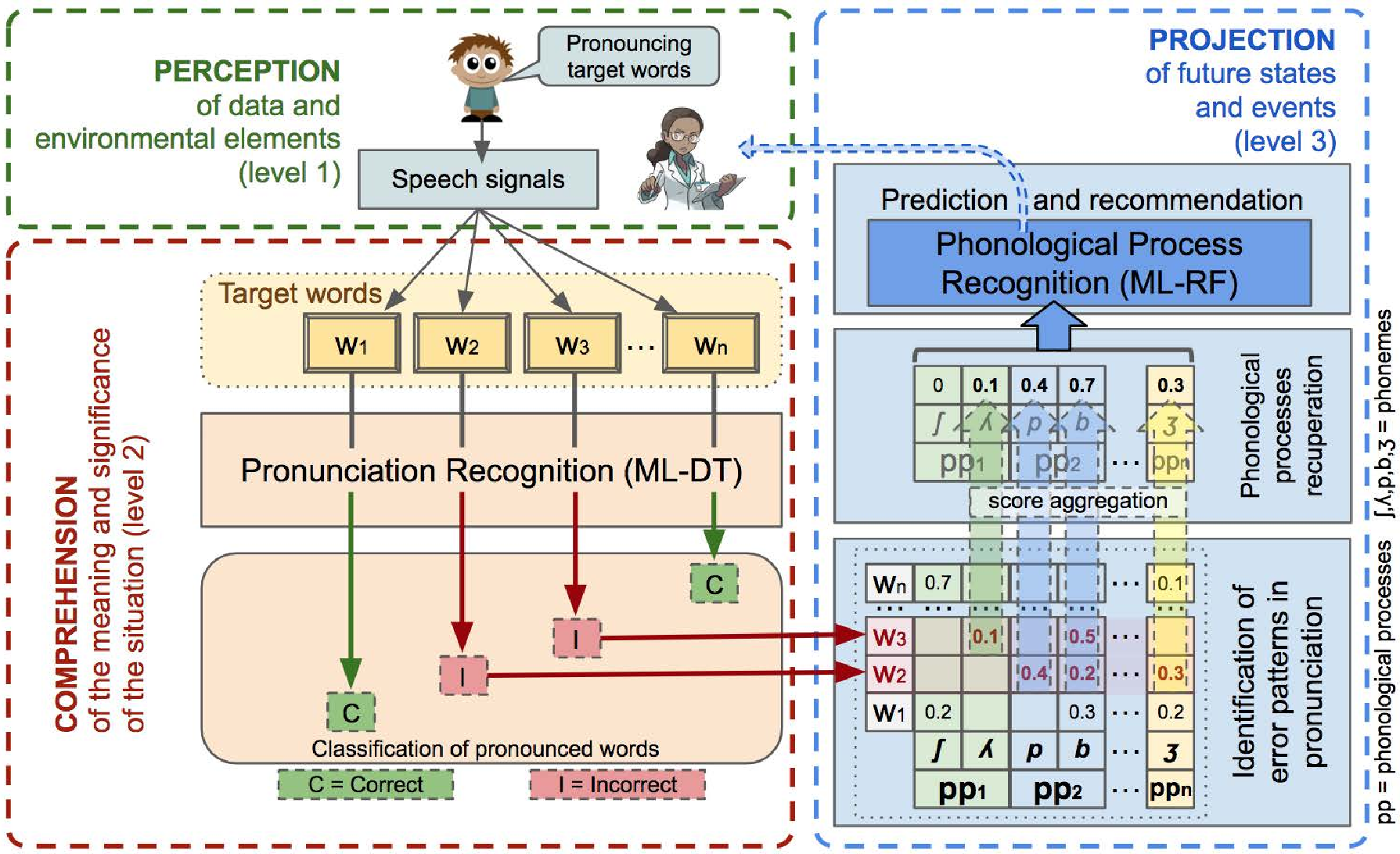 Figure 1: The Situation-Aware architectural model for predicting phonological processes.
3. Projection (Level 3 - The Core Innovation)
This is the "AI-as-a-specialist" phase. The authors created a Phonological Matrix (PM) that maps 84 target words to potential PPs. If a child misses certain words, the system calculates a score vector. This vector is fed into a Random Forest (ML-RF) classifier to predict which therapeutic strategies the child is using.
Experimental Results & Insights
The system's performance was measured against the "Ground Truth" provided by expert speech therapists:
- Pronunciation Accuracy: 92.5%. The LBP-based vision approach proved highly effective at distinguishing the subtle acoustic differences between correct and disordered speech.
- PP Prediction Accuracy: 92.2%. The system showed remarkable precision in identifying complex processes like Liquid Gliding and Devoicing.
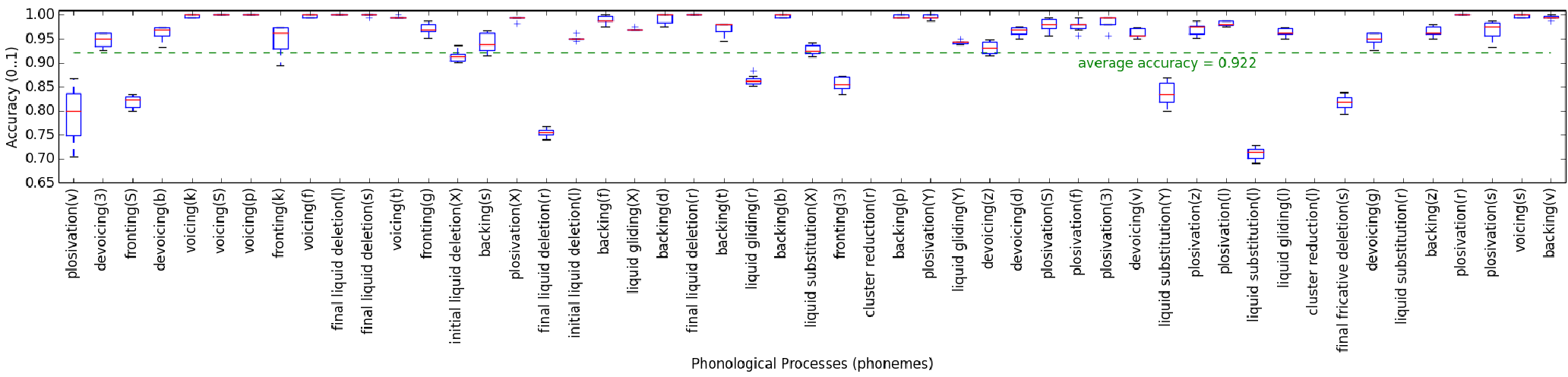 Figure 2: Accuracy for predicting specific phonological processes and associated phonemes.
Critical Insight: The researchers noted that some PPs had lower accuracy (below 70%). Interestingly, they didn't blame the model; they suggested these specific target words might be inherently weak indicators of those disorders, providing feedback back to the clinical field on how to design better speech assessments.
Deep Insight & Conclusion
The brilliance of this work lies in its Inductive Bias. By using a Phonological Matrix defined by clinicians, the researchers ensured the AI operates within the "rules" of human linguistics rather than trying to learn phonology from scratch.
Key Takeaways:
- Hybrid Approach: Combining visual texture Analysis (LBP) with structured linguistic knowledge (Phonological Matrix) outperforms general-purpose speech-to-text for clinical use.
- Configuration: The PM is highly modular, meaning this system could be adapted to English, Spanish, or any other language by simply swapping the linguistic mapping.
While it doesn't replace a therapist, this SA-based method eliminates the manual "drudge work" of error categorization, allowing SLPs to focus on intervention rather than manual data entry.