
Situation Semantics Aggregator: Revolutionizing Realtime Simulation of Group Behaviors
Situation Semantics Aggregator for Realtime Simulation on Organizational Behaviors
The paper introduces a Situation Semantics Aggregator (SSA) designed for the realtime simulation of unknown organizational behaviors in cyber situational awareness. By utilizing a bottom-up approach rooted in Situation Theory and behavior type algebra, it enables the clustering and identification of complex group attack patterns without requiring predefined knowledge bases.
TL;DR
To combat the rise of unknown and polymorphic cyber attacks, researchers have developed a Situation Semantics Aggregator (SSA). Moving away from rigid, top-down knowledge bases, this method uses a bottom-up algebraic approach to cluster individual network behaviors into complex organizational structures in realtime, reducing computational complexity from to .
The "Unknown" Problem: Why Knowledge Bases Fail
In the realm of Cyber Situational Awareness (SA), identifying "cliques" or organized group attacks is a Holy Grail. Conventional models, such as Agent-Group-Role (AGR) or Finite State Machines (FSM), operate on a top-down logic. They require a library of known attack patterns to work.
The catch? Modern botnets and hackers use polymorphic techniques. When an "unknown" behavior sequence appears, these models hit a wall. They lack the "running meaning" of the behavior, leading to simulation failure and a lack of awareness during zero-day events.
Methodology: From Raw Data to Algebraic Meaning
the authors bridge the gap between raw data (netflows) and organizational meaning using Situation Theory.
1. Extracted-Behavior Function
Instead of simple state transitions, they define behavior as a mapping , where represents the state space of an agent (Environment + Self). This function acts as the "typescript" of the behavior.
2. The Algebraic Relationship
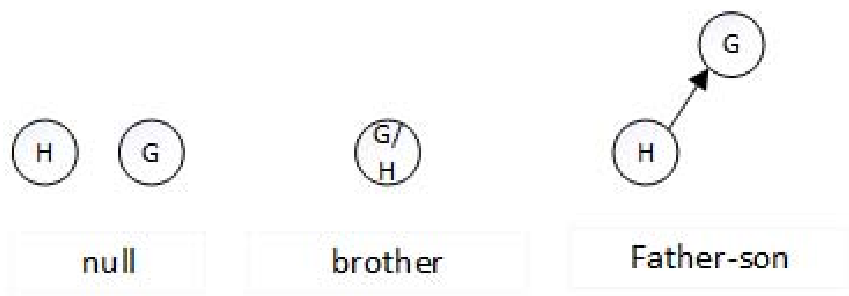
By treating groups of behaviors as -algebras, the system can mathematically determine the relationship between two clusters of agents:
- Homomorphism (): Agents are "Brothers" within the same cluster, sharing the same intent.
- Isomorphism (): A "Father-Son" relationship, implying a hierarchical dependency (e.g., a "Master" node controlling "Worker" nodes).
- No Functor: The clusters are independent.
Realtime Efficiency: The Breakthrough
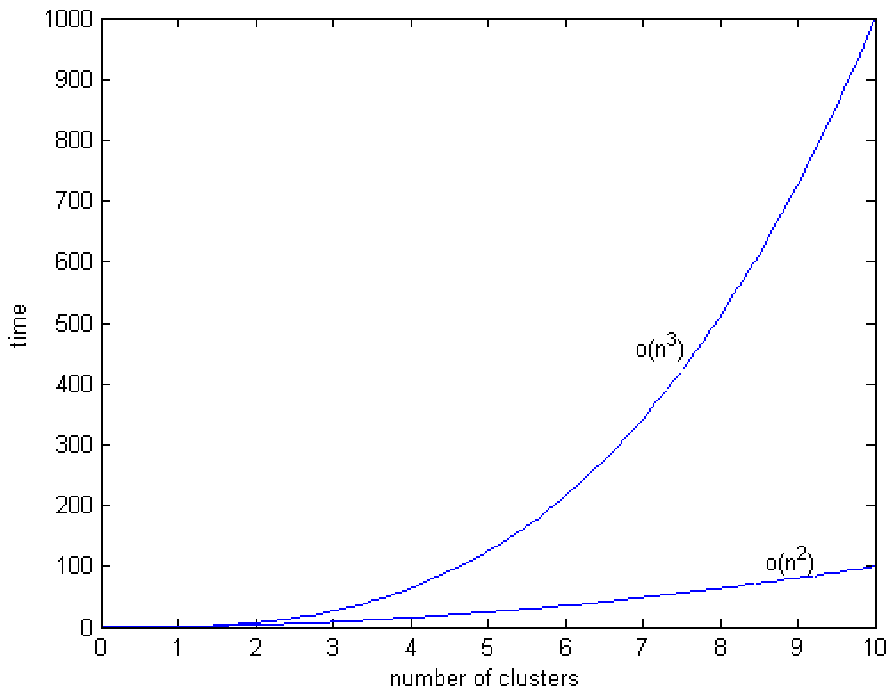
Standard hierarchical clustering is notoriously slow (). By leveraging the algebraic properties of situation semantics, the proposed aggregator optimizes the merging process.
As shown in the experimental comparison, as the number of clusters increases, the time cost of the SSA grows much more slowly than traditional methods. This efficiency is the key to realtime simulation at scale.
Validating with Netflow Scenarios
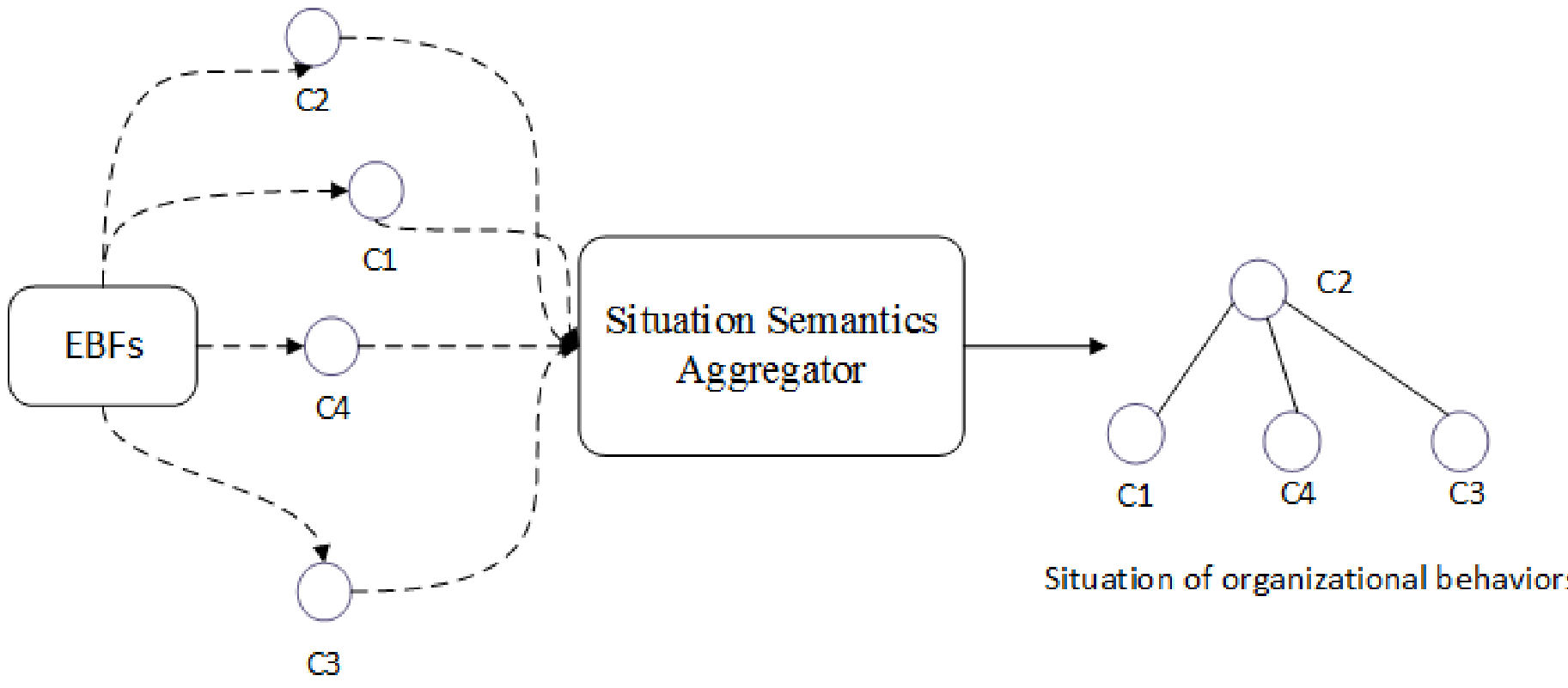
The authors tested the aggregator on "Netflow" quintuples (Source/Dest IP, Ports, Packets). The aggregator successfully clustered disparate netflow behaviors into a "C-Matrix" that identifies organizational nodes (C1 through C4), effectively "generating" the organizational structure of an unknown group attack from the bottom up.
Strategic Comparison: SSA vs. Knowledge Bases
The paper concludes with a striking comparison:
- Knowledge Bases: Offline, top-down, fixed time-windows, and unable to handle unknown attacks.
- Proposed Aggregator: Runtime, bottom-up, dynamic windows, and fully compatible with unknown attacks.
Critical Insight & Conclusion
This work shifts the focus from "matching patterns" to "calculating semantics." By using constructive mathematics to decode agent interaction, we can see group intent before we even have a signature for the attack. While the algebraic derivations are rigorous, the roadmap is clear: the future of cyber defense lies in the autonomous aggregation of behavior, not the manual curation of rules.