
Scaling the Human Element: Elastic SLAs for Social Compute Units
SLA-Based Management of Human-Based Services in Business Processes for Socio-Technical Systems
This paper introduces a framework for Service Level Agreement (SLA)-based management of human-based services within Collective Adaptive Systems (CAS). It proposes the use of Social Compute Units (SCUs) and elastic SLA adaptation mechanisms to automate the management of human collectives in business processes.
TL;DR
In the evolving landscape of Collective Adaptive Systems (CAS), humans are becoming integral components alongside software and IoT services. However, human management lacks the automated rigor of cloud SLAs. This paper proposes a framework to treat human collectives as Social Compute Units (SCUs) governed by Elastic SLAs, allowing for runtime adaptation of budget, quality, and personnel to optimize business process efficiency.
Background: Beyond Software Services
While we have mastered the automation of Cloud and IoT resources through standardized Service Level Agreements (SLAs), human resources remain an "unstructured" bottleneck. Most human-based services in business processes rely on static contracts that cannot handle the dynamic fluctuations of runtime demands. The authors argue that for a system to be truly "Socio-Technical," it must manage people with the same elastic flexibility—yet ethical sensitivity—as virtual machines.
The Core Challenge: Human Unpredictability
Managing humans involves three unique complexities that software services don't face:
- Incentive Sensitivity: Performance is a direct function of fluctuating rewards and penalties.
- Hierarchical Negotiation: Contracts exist between the platform and the client, and separately between the platform and the worker.
- Privacy & Consent: Unlike a sensor, a person requires strict privacy constraints (e.g., data retention periods and audit rights) which must be encoded into the SLA.
Methodology: The Elastic SCU Framework
The authors utilize the concept of Social Compute Units (SCUs)—collectives of individuals (ICUs) providing specialized skills.
1. Socio-Technical Metrics
To automate management, the authors define a Socio-Technical Trust (STT) score. This isn't just a simple rating; it is a composite of:
- Performance Trust (PT): Objective metrics like productivity and success rate.
- Membership Collaboration Trust Score (MCTS): Peer-to-peer satisfaction within the collective.
- Customer/Platform Satisfaction (CPS): External behavioral consistency.
2. Runtime Adaptation Logic
When a customer changes a parameter (e.g., "I need this done faster for 20% less cost"), the platform doesn't just fail or pause. It executes an automated adaptation workflow:
- Notification: Existing ICUs are notified of the new SLA terms.
- Pruning: Those who reject the terms are removed, and their reputation (Platform Satisfaction Score) is docked.
- Elastic Expansion: The system queries a ranked pool of available workers to fill the gaps.
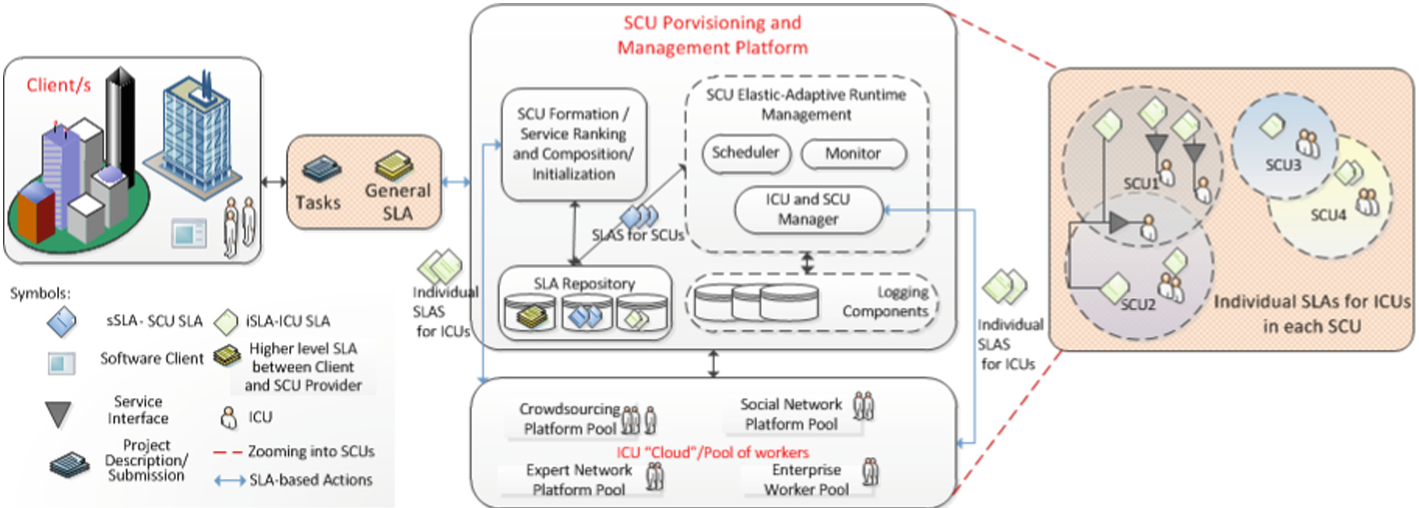 Figure 1: Abstract overview of the SCU provisioning platform showing hierarchical SLA negotiation.
Experimental Insights
The research tested the algorithm against a "Fixed" baseline where the collective membership remains static after formation.
Performance Boost
The study found that Elastic SCUs maintained higher trust scores over time. By excluding underperformers or those unaligned with budget changes, the collective "evolves" toward higher efficiency.
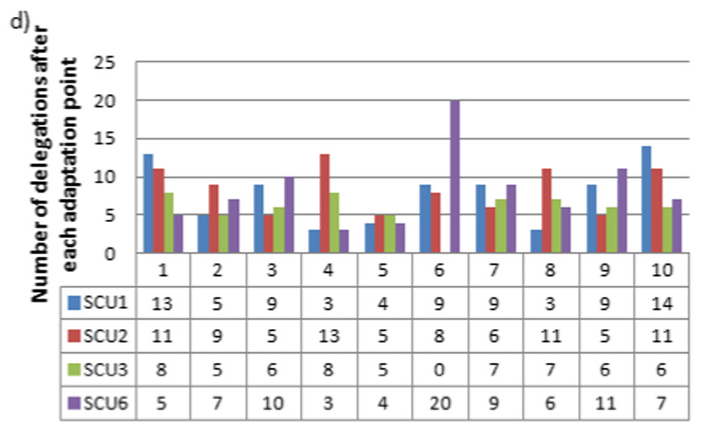 Figure 2: STT scores and adaptation points. Note how STT recovers and rises as the system elastically reconfigures human resources.
Time Efficiency
A critical finding was the reduction in Task Execution Time. In fixed systems, cost changes lead to bottlenecks as a few workers become overloaded. In the elastic model, the system simply "scales out" by adding more ICUs from the pool that accept the new terms, keeping the queue times low.
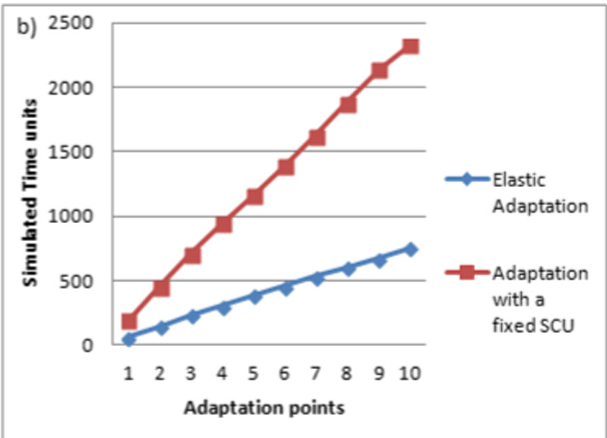 Figure 3: Total execution time is significantly lower in the elastic model (Variation of Alg 1) compared to the fixed base-algorithm.
Critical Analysis & Conclusion
This work bridges the gap between Social Computing and Business Process Management (BPM).
The Takeaway: Treat human capacity not as a static resource, but as an elastic cloud-like service.
Limitations: While the performance metrics are robust, the "Privacy" aspect of the SLA remains largely theoretical in this paper. Furthermore, the penalty system (lowering scores for rejecting cost changes) assumes a high-supply market; in a specialized expert market, such penalties might discourage workers from joining the platform entirely.
Future Work: The integration of automated privacy auditing and more nuanced non-monetary incentive models will be the next frontier for SCU management.