
SleepGuardian: Safeguarding Health Through the Invisible "Telepathy" of WiFi
16948_SleepGuardian An RF-Based Healthcare System Guarding Your Sleep from Afar.
SleepGuardian is an RF-based sleep monitoring system that utilizes off-the-shelf WiFi devices to provide non-obtrusive healthcare services. By extracting Channel State Information (CSI) and leveraging a Gaussian Mixture Model (GMM), it achieves SOTA-level performance in real-time abnormality warning and fine-grained sleep logging without specialized hardware.
TL;DR
SleepGuardian is a breakthrough healthcare system that turns standard WiFi signals into a sophisticated sleep monitor. By analyzing how human movement disturbs wireless signals (Channel State Information), it provides real-time alerts for emergencies like seizures and generates detailed sleep logs—all without cameras, wearables, or expensive medical equipment.
Background Positioning
In the landscape of "Ambient Intelligence," SleepGuardian occupies a unique spot. It moves beyond simple motion detection into fine-grained behavioral recognition. While earlier works focused on respiration or simple presence, this system classifies specific body part movements (head, arms, legs) using low-cost, off-the-shelf WiFi hardware, making it a highly practical solution for the burgeoning Silver Economy and remote patient monitoring.
The Core Challenge: Noise vs. Nuance
Monitoring sleep wirelessly is inherently difficult because:
- Environmental Sensitivity: WiFi signals are "bouncy" and change based on furniture, walls, and even a second person in the room.
- Granularity: Distinguishing between a normal rollover and a pathological twitch requires a high "Signal-to-Noise" ratio that RSSI (signal strength) simply cannot provide.
- Privacy vs. Utility: Users want monitoring without being filmed or wearing uncomfortable straps.
Methodology: GMM-Based "Temporal Vision"
The researchers treated CSI data not as a 1D signal, but as a dynamic "image" where subcarriers represent pixels.
1. Adaptive Background Modeling
Instead of using fixed thresholds, SleepGuardian uses a Gaussian Mixture Model (GMM).
- The Logic: If a signal pattern persists (the bed, the room, a still body), it is modeled as the "Background."
- The Action: Any sudden deviation (a limb moving) is identified as "Foreground." This allows the system to remain accurate even if the user changes their base sleeping posture.
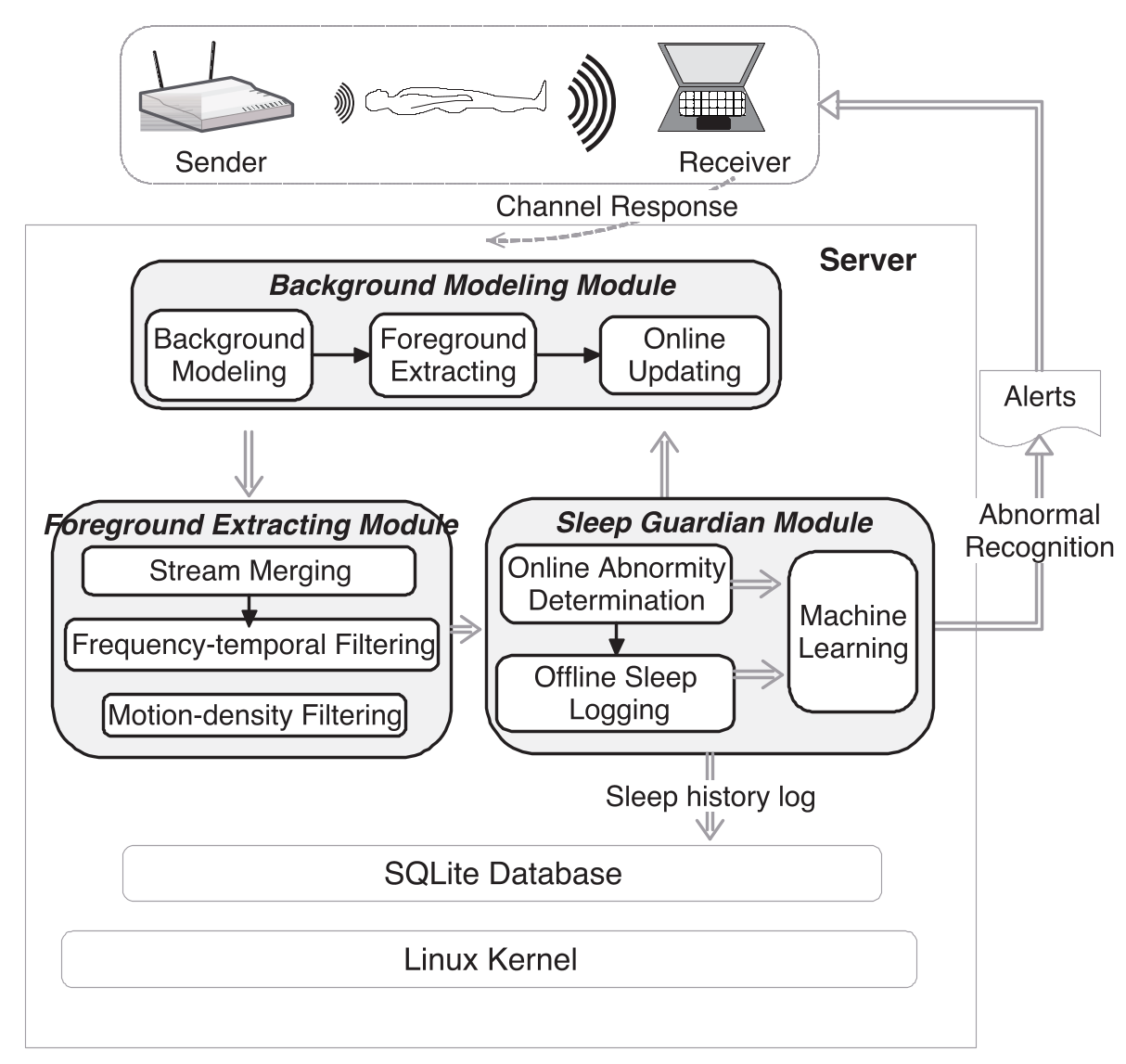 Figure 1: The SleepGuardian workflow, from CSI acquisition to abnormality warning.
2. Multi-Antenna Stream Merging
WiFi NICs (like the Intel 5300 used here) have multiple antennas. SleepGuardian merges these streams to ensure that if a motion is "hidden" from one antenna's perspective (due to multipath fading), it is captured by another.
Experimental Results: Precision in the Dark
The system was tested on 15 participants in diverse environments (crowded offices vs. quiet conferences).
- High Fidelity: The system achieved an average 99.01% Detection Rate.
- Action Recognition: It can identify which body part is moving (e.g., Leg Stretch vs. Arm Swing) with over 93% accuracy using a k-Nearest Neighbors (k-NN) classifier.
- Abnormality Detection: Real-world tests showed that "Sudden Sitting Up" (common in nightmares or seizures) is a clear outlier in duration-intensity maps, making it easy for the system to trigger an automated emergency call.
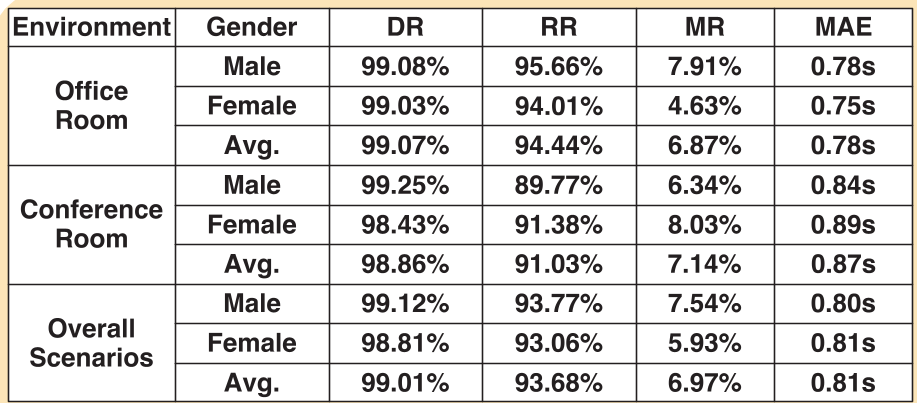 Table 1: Detailed performance metrics across different scenarios and genders.
Critical Insight: Why GMM?
The brilliance of using GMM here lies in its calibration-free nature. Most RF sensing systems require a "training phase" for every new room. Because GMM updates its parameters online, SleepGuardian adapts to a new bedroom environment or a new mattress height automatically, significantly lowering the barrier for consumer adoption.
Limitations & Future Outlook
While impressive, the system currently struggles slightly in Non-Line-of-Sight (NLOS) scenarios where thick walls block the signal, with accuracy dropping to ~89%. Future iterations will likely incorporate MIMO beamforming to "see through" obstacles more effectively.
Takeaway
SleepGuardian represents the future of the "Zero-UI" interface. It proves that our homes are already filled with the sensors needed for medical-grade monitoring; we just need the right signal processing algorithms to unlock their potential.