
SEN2SOC: Bridging the Gap Between Silicon Sensors and Social Pulses in Smart Cities
Smart Cities Data Streams Integration: experimenting with Internet of Things and social data flows
The paper presents the SEN2SOC experiment, a framework that integrates Internet of Things (IoT) sensor data with social media streams (Twitter, Flickr, Foursquare) within a Smart City context. Leveraging the SmartSantander infrastructure, the study demonstrates how combining physical sensing with human "social sensing" enhances urban decision-making and citizen engagement.
TL;DR
The SEN2SOC project represents a shift in Smart City design—moving away from pure hardware-centric monitoring toward a hybrid "Cyber-Physical-Social" system. By integrating the SmartSantander IoT infrastructure with social media streams like Twitter and Flickr, the researchers created a framework where environmental data is validated and enriched by human sentiment and crowdsourced observations.
The "Silo" Problem in Urban Intelligence
Historically, Smart City initiatives have been categorized into hardware deployments (sensors for parking, noise, and air quality) or software platforms (social media for government accountability). These two worlds rarely spoke to each other.
The authors argue that this separation limits the effectiveness of urban planning. For instance, a sensor might detect high CO2 levels, but without social context, authorities might miss the reason (e.g., a local festival or a traffic accident). Conversely, social media "buzz" lacks the quantitative precision provided by calibrated hardware.
Methodology: The Architecture of Integration
The SEN2SOC architecture is designed to handle heterogeneous data streams through a modular approach.
Core Components:
- Sensor Data Monitoring: Handles the "heavy lifting" of data retrieval, cleansing, and spatial aggregation from thousands of sensors into "virtual nodes."
- Social Data Observer: Acts as a geo-located mining engine for user-generated content, identifying trending topics and clustering visual data (photos).
- Statistical Analysis Module: Provides the analytical brain, performing data smoothing, pattern detection, and correlation between different sensor nodes.
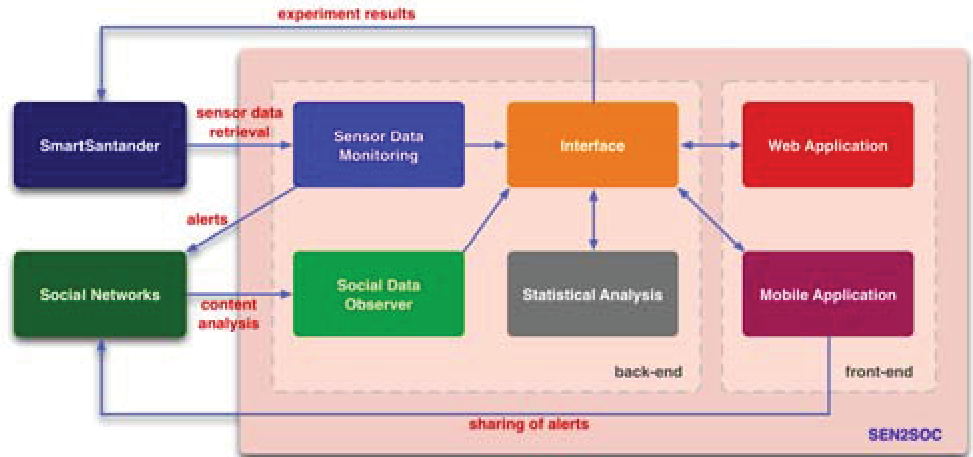 Figure 1: The component-based architecture of the SEN2SOC platform.
From Data to Insight: Heat Maps and Routes
The experiment transformed raw numbers into actionable visualizations. By mapping environmental parameters like Carbon Monoxide (CO) and temperature onto city grids, the system provides "Heat Maps" that are easy for both citizens and administrators to interpret.
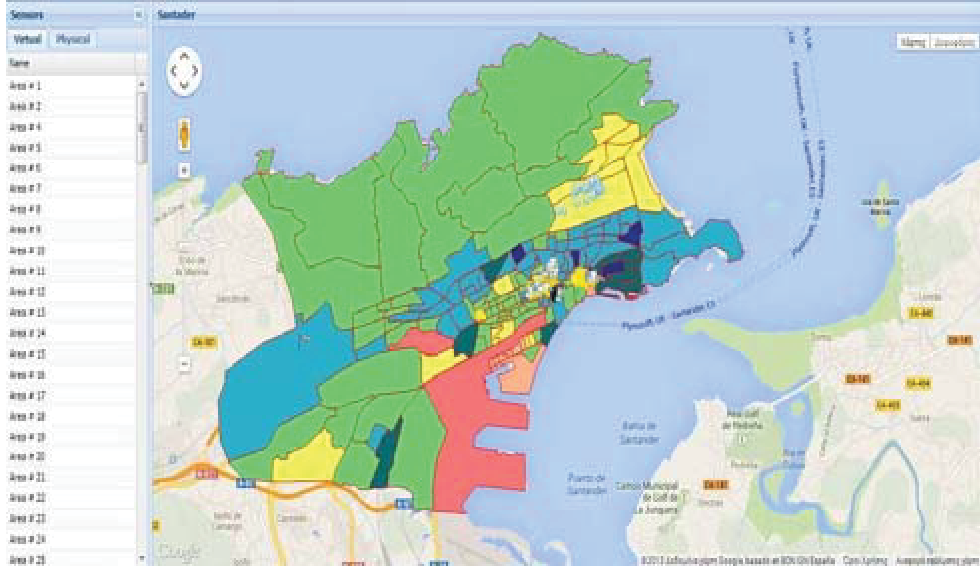 Figure 2: Real-time CO metric visualization across Santander.
Beyond mere observation, the Mobile Application utilizes this data for "Healthy Routing"—recommending walking paths with the lowest pollution levels or the most favorable weather conditions based on real-time sensor updates and shared social experiences.
Industrial Value and Collective Awareness
The paper highlights a critical shift: Citizens as Sensors. Through participatory sensing, users can "validate" what the sensors are reporting. If an environmental alert is triggered, a citizen can confirm the situation via a social post, creating a feedback loop that increases system reliability.
From an industrial perspective, this integration supports:
- Smart Governments: Better decision-making through accurate, multi-validated information.
- Smart Economy: New market opportunities for vendors like Ericsson and Intel to provide hybrid data platforms.
- Sustainable Living: Optimizing street lighting, parking space utilization, and waste management based on real-time human-sensor demand.
Conclusion & Future Outlook
While the SEN2SOC experiment was a pioneering effort in 2014, its core philosophy—that a city's "smartness" is measured by the synergy between its citizens and its infrastructure—remains the gold standard for urban development. The next frontier involves utilizing AI to automate the "natural language generation" aspects of this bridge, making the dialogue between sensors and humans even more seamless.
Limitations
- Data Privacy: The paper focuses on the technical integration but acknowledges the complexity of managing citizen data.
- Scalability: While successful in Santander, moving this to mega-cities with noisier social streams presents a significant computational challenge in signal-to-noise ratio.
Takeaway
The future of Smart Cities isn't just about more sensors; it's about better integration. When the city "feels" through sensors and "speaks" through its people, it becomes a truly intelligent ecosystem.