
Driving with Mindfulness: A Smart HMI for Real-Time Emotion Prediction
A smart HMI for driving safety using emotion prediction of EEG signals
The paper proposes a Smart Human Machine Interface (SHMI) for driving safety that utilizes real-time EEG-based emotion prediction and On-Board Diagnostics (OBD) data. It employs a combination of Higuchi Fractal Dimension (HFD) and Power Spectral Density (PSD) for feature extraction and Support Vector Machines (SVM) to classify emotions into four states: happy, sad, relaxed, and angry.
Executive Summary
TL;DR: This research introduces a Smart Human Machine Interface (SHMI) that acts as an emotional watchdog for drivers. By combining EEG brainwave monitoring with real-time vehicle diagnostics (OBD), the system classifies emotional states—specifically targeting anger—to provide immediate visual interventions that enhance road safety.
Background Positioning: This work bridges the gap between theoretical affective computing and practical automotive safety technology. Instead of relying on external cameras (which can be blocked) or speech (which requires the driver to talk), it taps directly into the driver's neural state using Brain-Computer Interface (BCI) principles.
The Problem: The High Cost of Emotional Driving
Driving is a high-level cognitive task requiring simultaneous visual processing, hazard evaluation, and decision-making. However, emotions act as a "governing factor" that can interfere with these processes.
Previous attempts to solve this via facial recognition or speech analysis often suffer from environmental noise or physical obstructions. Furthermore, many high-accuracy EEG studies are offline, meaning they process data after the fact. The authors identify a critical need for a real-time hardware-software integration that can sense and act while the vehicle is in motion.
Methodology: From Neurons to Alerts
The SHMI system relies on a multi-stage pipeline designed for the constraints of a vehicle environment.
1. Feature Extraction: The HFD and PSD Approach
The system extracts features using two primary methods:
- Higuchi Fractal Dimension (HFD): Used to quantify the complexity of the EEG signal. Specifically, the difference in FD between the AF3 and F4 electrodes (frontal lobes) is used to calculate Valence (pleasure vs. displeasure).
- Power Spectral Density (PSD): Analyzes the frequency bands (Delta, Theta, Alpha, Beta, Gamma) to determine the driver's level of alertness and arousal.
2. Architecture & Classification
Using a Support Vector Machine (SVM) classifier, the system maps these features onto Russell’s Circumflex Model. This model plots emotions on a 2D plane of Arousal (intensity) and Valence (positivity).
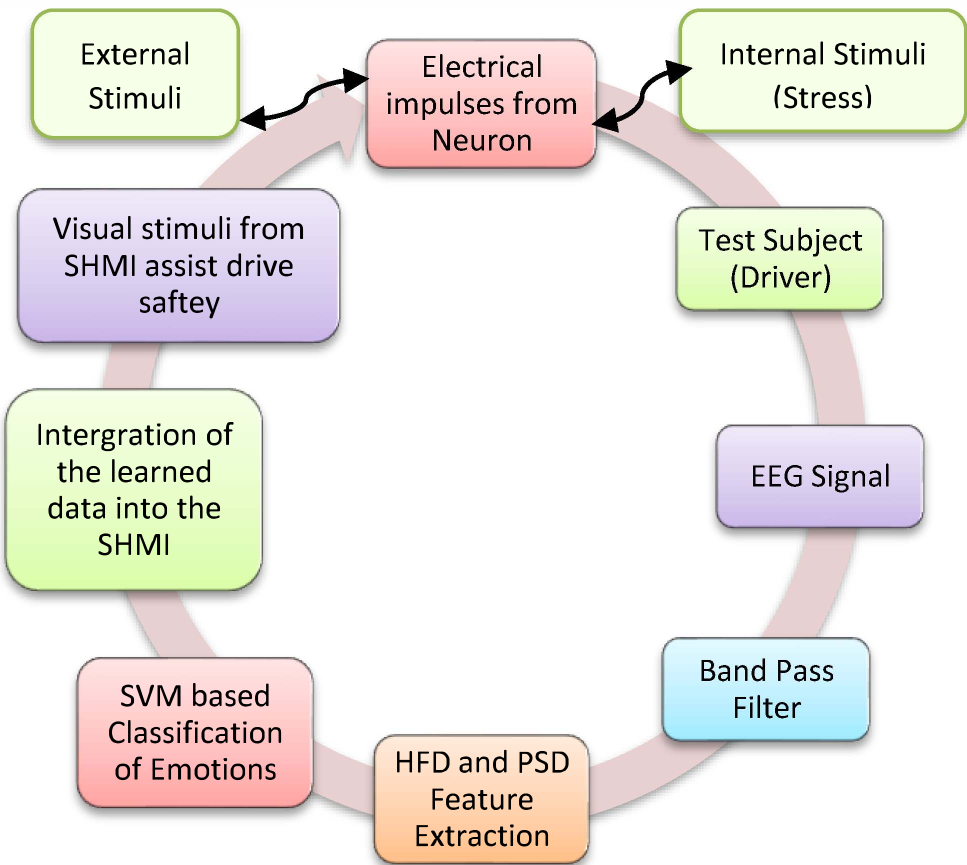 Figure 1: The proposed hardware-software integration involving EEG headsets, Raspberry Pi, and OBD data.
Key electrodes selected include FC6, AF3, and F4, as these are proven to be highly responsive to emotional shifts within the frontal cortex.
Implementation: The Smart Interface
The interface is not just a sensor; it’s a feedback loop. Using an Arduino and Raspberry Pi setup, the system monitors:
- Brain Activity: Real-time streaming graphs of brainwaves.
- Vehicle Health: Basic OBD information (speed, engine status).
- Safety Alerts: If the SVM classifies the driver's state as "Angry," the SHMI triggers an alert: "It’s time to Relax!!"
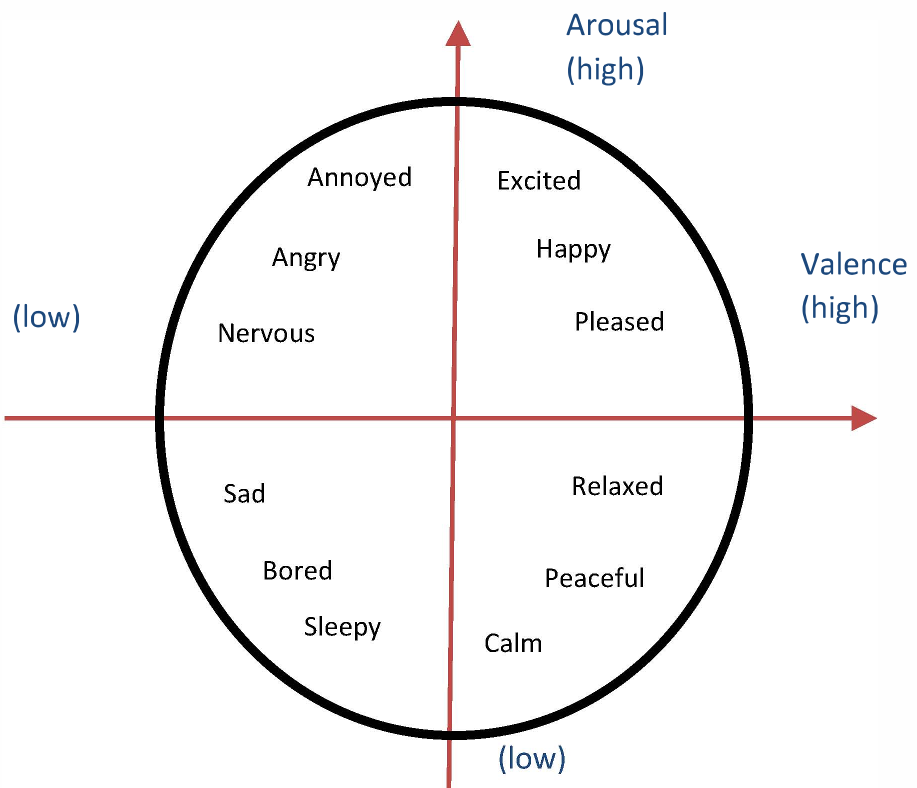 Figure 2: Emotional states in the Valence/Arousal plane used for SVM training.
Experiments and Benchmarks
The paper provides an extensive meta-analysis of existing EEG emotion recognition (see Table 1 in the paper). While their current proof-of-concept focuses on the hardware integration, they leverage findings where SVMs have reached accuracies of 85% to 92.73% in controlled settings.
The transition from a "Subject-dependent" model (trained on one person) to a "Subject-independent" model remains the primary experimental challenge for the SHMI to work for any driver out of the box.
Critical Insight & Evaluation
Why this matters
The integration of OBD data with EEG is an underrated move. It allows for "context-aware" safety. For instance, an "Angry" state paired with high vehicle speed could trigger more aggressive safety interventions than the same state at a stoplight.
Limitations
- Hardware Intrusiveness: Even low-profile EEG headbands can be uncomfortable for long-term driving.
- Signal Noise: A car is a noisy electrical environment. The paper mentions band-pass filters (1-30 Hz), but motion artifacts (movement of the head) remain a hurdle for dry-electrode reliability.
Future Outlook
The next step for this technology lies in multimodal fusion—combining this EEG approach with heart rate variability (HRV) and steering wheel pressure sensors to create a high-fidelity emotional map of the driver, ultimately reducing the 1.3 million annual road deaths worldwide.
Conclusion
The SHMI presented here is a significant step toward "Cognitive Vehicles." By moving emotion detection from the lab to the dashboard, the authors provide a viable blueprint for a future where cars understand their drivers just as well as they understand the road.