
SIoT: Why Your Toaster Should Have Its Own Social Circle
Smart things in the social loop: Paradigms, technologies, and potentials
This paper explores the paradigm shift from the Internet of Things (IoT) to the Social Internet of Things (SIoT), proposing a framework where smart objects mimic human social behavior to establish autonomous relationships. It outlines the integration of objects into the "social loop" to enhance service discovery, scalability, and trustworthiness.
TL;DR
The Internet of Things is moving from simple "connectivity" to "socialization." This paper introduces the Social Internet of Things (SIoT), a paradigm where smart objects autonomously build relationships (like "friendships" or "co-workers") to solve the massive scalability and discovery challenges of the future Web of Things.
The Scalability Crisis in a World of Trillions
As we transition from the Web of Things (WoT) toward an ecosystem of trillions of devices, traditional discovery mechanisms (like centralized directories) break down. The authors argue that the current M2M (Machine-to-Machine) models are too rigid and hard for humans to manage.
The Insight: Humans have already solved the "trillion-node" discovery problem through Social Networks. By "clothing" the network of things in social metaphors, we gain two massive advantages:
- Scalability: Navigating a social graph is faster than searching a flat database.
- Trust: We can assess a device's reliability based on its "social standing" or "mutual friends" (other objects we trust).
Methodology: The Anatomy of Object Relationships
The core of the SIoT is the definition of autonomous relationship types among objects, mimicking human societal structures:
- Parental Object Relationship (POR): Objects from the same manufacturer/batch.
- Co-location/Co-work Relationships (CLOR/CWOR): Objects that frequently occupy the same physical or functional space.
- Ownership Relationship (OOR): Objects belonging to the same user.
- Social Relationship (SOR): Objects that "meet" because their owners are friends.
Architectural Mapping
The SIoT architecture is envisioned as a three-layer model, but with a highly sophisticated middleware sub-layer for Relationship Management and Service Discovery.
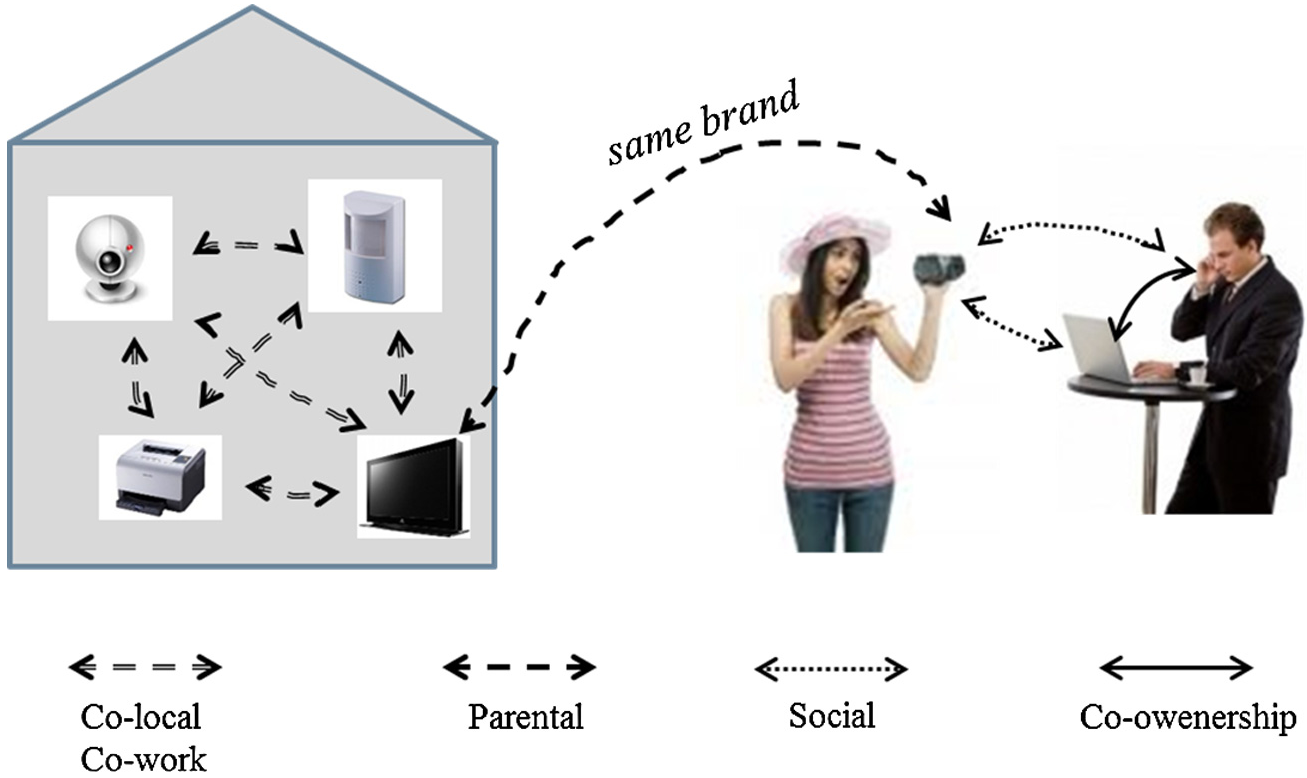 Figure 1: Different types of social relationships between smart objects.
The paper emphasizes the move toward RESTful APIs over SOAP due to their lightweight nature and better fit for "a la Mash-up" integration, which is essential for social-style interactions.
Experimental Proof: From Prototypes to the Cloud
The authors validate these concepts by analyzing non-blocking server performance and referencing actual projects like Paraimpu and IFTTT.
Key Technical Benchmarks:
- The C10K Problem: To support social loops, servers must handle 10,000+ concurrent connections. The paper highlights that asynchronous, non-blocking servers (like Nginx) maintain high throughput with low memory usage compared to traditional threaded architectures (like Apache).
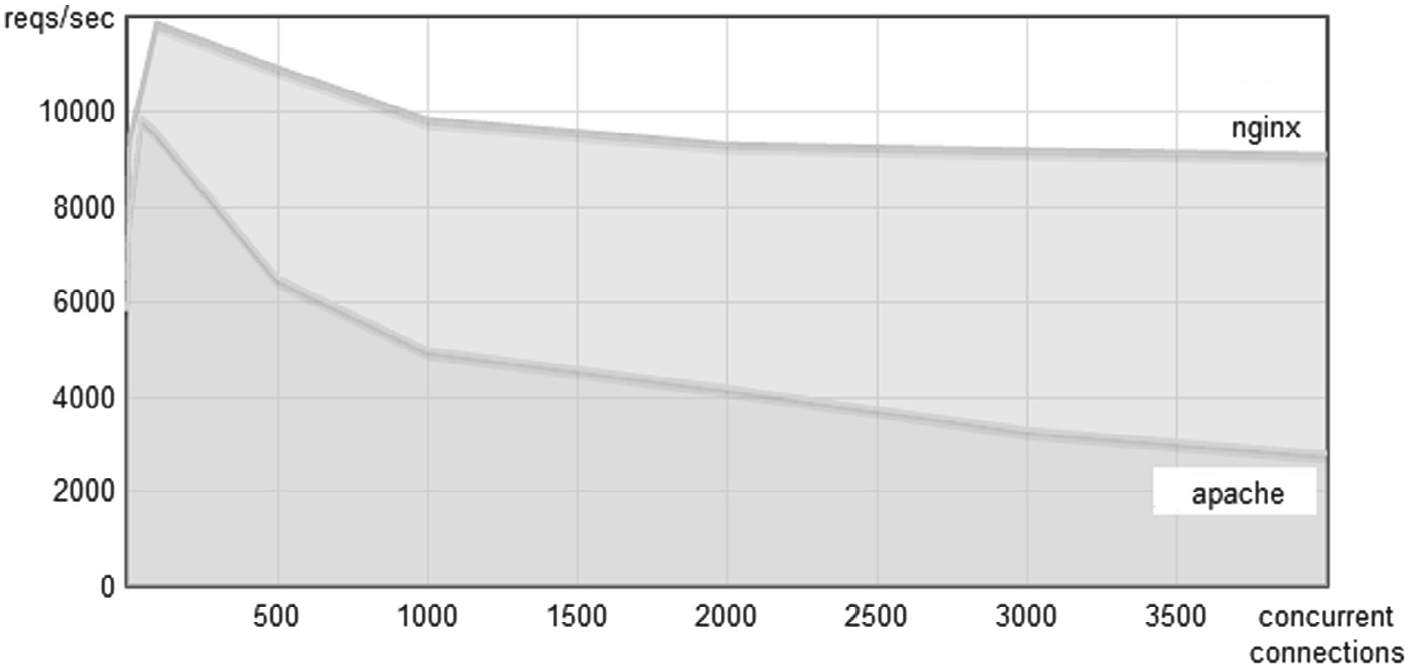 Figure 2: Performance comparison showing the efficiency of non-blocking architectures for high-concurrency IoT applications.
Critical Insight & Future Outlook
The SIoT isn't just about "objects posting on Facebook." It's about a Machine Social Network where devices use social heuristics to find services.
The Value:
- Trustworthiness Management: By calculating "centrality" in the social graph, the system can identify "landmark" objects that act as trusted brokers.
- Participatory Sensing: Social structures allow for "crowd sensing" where data reliability is filtered through user-device social circles.
Limitations: While the concept is powerful, the 2013-era implementation was fragmented. The paper correctly predicts that without a unified ontological classification and semantic engine, automatic discovery across different brands remains the primary bottleneck.
Conclusion
This paper serves as a foundational roadmap for a human-centric IoT. By treating things as social peers, we can move away from complex, opaque network configurations toward a world where your smart car "asks" a local streetlight for traffic data simply because they are "work colleagues."