
Smart Urban Governance: Moving Beyond the Technocratic Hype of Smart Cities
Smart urban governance: an alternative to technocratic “smartness”
This paper proposes "Smart Urban Governance," a transformative framework for smart cities that integrates spatial (urban challenges), institutional (governance modes), and technological (functional intelligence) components. Moving beyond technocratic, top-down models, it demonstrates through international surveys and case studies (Singapore and Helsinki) how context-specific, demand-driven governance improves city problem-solving.
TL;DR
The promise of the "Smart City" has long been dominated by high-tech vendors and top-down engineering. This paper introduces Smart Urban Governance, a framework that shifts the focus back to the "Urban." By balancing spatial challenges, institutional collaboration, and technological intelligence, researchers argue that true smartness lies in a city's ability to adapt technology to its unique social and political context, rather than adopting a one-size-fits-all digital solution.
The Problem: The Technocratic Trap
For over a decade, the smart city discourse has been split between a technology-driven approach (efficiency and infrastructure) and a human-driven approach (social capital). In practice, however, the technocratic view has won out.
Current governance models often:
- Treat cities as management problems: Assuming data analytics can solve complex social issues like segregation or inequality.
- Side-line the marginalized: High-tech solutions often benefit those with high digital literacy, leaving the "urban poor" further behind.
- Prioritize corporate agendas: Many projects serve as business models for tech giants to market surveillance packages rather than addressing actual resident needs.
Methodology: The Three-Pillar Framework
To solve this, the authors propose a sociotechnical response. Instead of asking "What technology can we buy?", they suggest asking "What urban challenge are we solving?"
1. The Spatial Component (Urban Challenges)
Focuses on the "Sustainability Triangle"—balancing economic growth, social equity, and environmental protection.
2. The Institutional Component (Modes of Governance)
Determines how power is shared. It moves between state-led (authoritative), market-led (competitive), and civil-society-led (cooperative) modes.
3. The Technological Component (Functional Intelligence)
Categorizes ICT into three specific roles:
- Informing: Making data accessible (e.g., open data portals).
- Communicating: Facilitating dialogue (e.g., crowdsourcing platforms).
- Analyzing & Designing: Processing complex patterns (e.g., simulation tools).
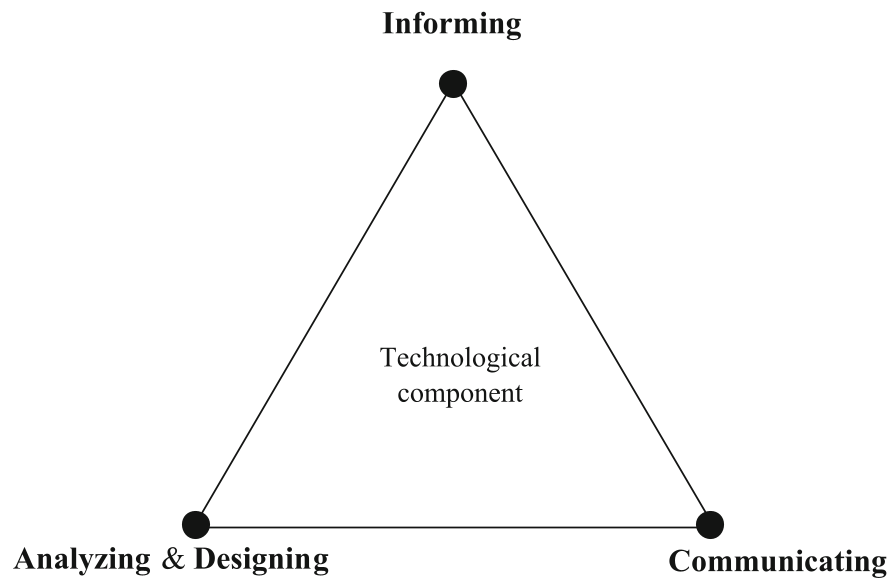 Figure: The Smart Urban Governance Framework illustrating the co-evolution of spatial, institutional, and technological components.
Global Evidence: Singapore vs. Helsinki
The paper validates this framework by comparing two high-performing but contrastingly governed smart cities.
- Smart Nation Singapore: Faced with limited resources and high population density, Singapore uses a centralized, state-led approach. Its ICT focuses on Informing (CODEX platform) and Communicating (AI Singapore) to boost national productivity.
- Helsinki Smart City: Guided by a strong democratic tradition, Helsinki adopts a bottom-up, participatory mode. Projects like Smart Kalasatama treat the city as a "testbed" where citizens co-design services via Communicating ICT platforms.
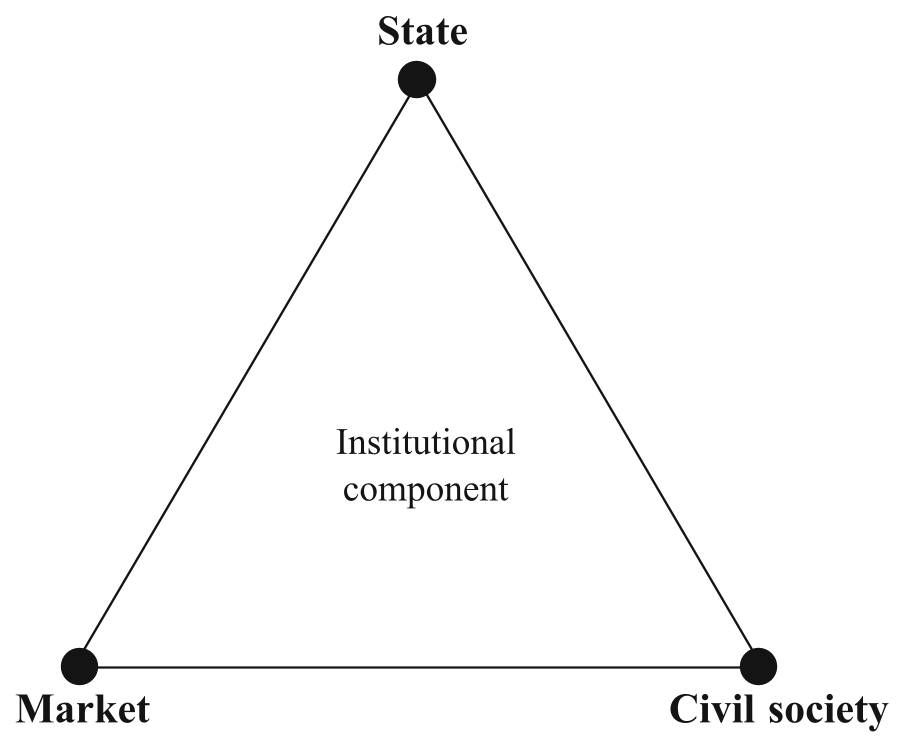 Figure: The Spatial Component—identifying the trade-offs in urban challenges between economic, social, and environmental goals.
Deep Insight: Context is the "Secret Sauce"
The most critical takeaway is that context (political, cultural, and economic) mediates everything. A solution that works in Singapore’s top-down efficiency model would likely fail in Helsinki’s collaborative environment.
Statistical analysis from the survey confirms this: while "Analyzing ICT" is the most popular tool, its success depends entirely on whether it is paired with the right governance mode. For example, interactive governance is better supported by Communicating tools than by pure data-crunching algorithms.
Conclusion & Future Outlook
Smart urban governance isn't about the newest AI or the most sensors; it’s about sociotechnical alignment. The "smartness" comes from the interaction between the urban issue, the stakeholders involved, and the technological tools applied.
Future Implications: Urban planners must stop being passive consumers of tech-vendor packages and start being active designers of governance "modes" that prioritize place-based knowledge. The future of the smart city is not just digital—it is deeply, and necessarily, social.