
Citify: Proactive Smart City Management via Smartphone Crowdsensing and LSTM
A smartphone-enabled crowdsensing and crowdsourcing system for predicting municipality resource allocation stochastic requirements
This paper presents a smart city resource management system that combines smartphone-enabled crowdsensing with a Long Short-Term Memory (LSTM) inference engine. The system, implemented via the "Citify" application in Papagos, Athens, transforms citizens into "human sensors" to report municipality malfunctions, achieving a prediction accuracy of 98.22% for resource allocation when using seasonal data.
TL;DR
Researchers from the University of West Attica have developed a system that turns citizens' smartphones into powerful urban sensors. By combining this "crowdsensing" data with an LSTM (Long Short-Term Memory) neural network, the system can predict which municipality department is needed for various issues—ranging from potholes to illegal parking—with an impressive 98.22% accuracy.
Background: Beyond Reactive Governance
Most cities operate on a "break-fix" model: a pipe bursts, a citizen eventually calls, and a crew is dispatched. This is inherently inefficient. The core challenge is the stochastic requirements of resource allocation—knowing not just that something will break, but which resources need to be ready when it does. The authors position this work as a bridge between "Cities 2.0" (Smart Cities) and human-centric computing.
The Problem: The Complexity of Urban Incidents
Prior systems often treated urban problems as isolated events. However, city malfunctions often follow patterns influenced by geography (road address) and time (month/season). Mapping a reported incident to the correct department (e.g., Waste Management vs. Public Works) in a limited-resource environment is a complex classification task that simple heuristic-based systems fail to optimize.
Methodology: The Four-Layer Architecture
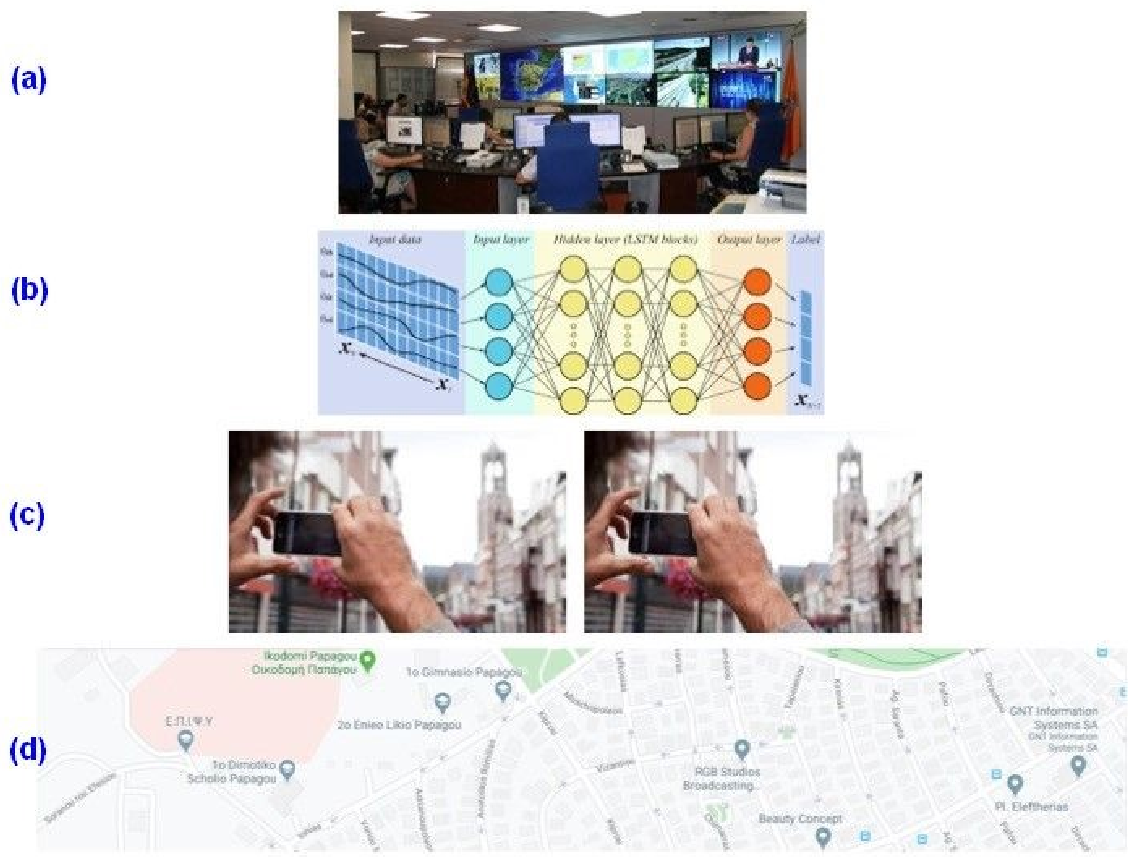
The proposed system, Citify, is built on four distinct layers:
- Environmental Crowdsourcing Layer: The physical map and road infrastructure.
- Smartphone Crowdsensing Layer: The "human sensor" interface where citizens capture photos and text annotations.
- Inference Engine Layer (The Core): This is where the LSTM model resides. It processes attributes like road address, problem type, month, and sector to predict the required department.
- Municipality HQ Layer: A web-based monitoring interface for decision-making and closing the loop once a problem is resolved.
Why LSTM?
The choice of an LSTM neural network is deliberate. LSTMs are uniquely suited for time-series and sequential data. By training on 130,581 real-world records from the municipality of Papagos, the model learns the "rhythm" of the city—understanding that certain problems are more likely to occur in specific sectors during specific months.
Experiments and Results: The Power of Seasonal Context
One of the paper’s most significant findings is the impact of data mutation. The researchers compared two modeling approaches:
- Yearly Model: High accuracy (89.53%).
- Seasonal Model: Near-perfect accuracy (98.22%).
By breaking the data into 3-month seasonal windows, the LSTM was able to filter out global noise and focus on "temporally local" patterns.
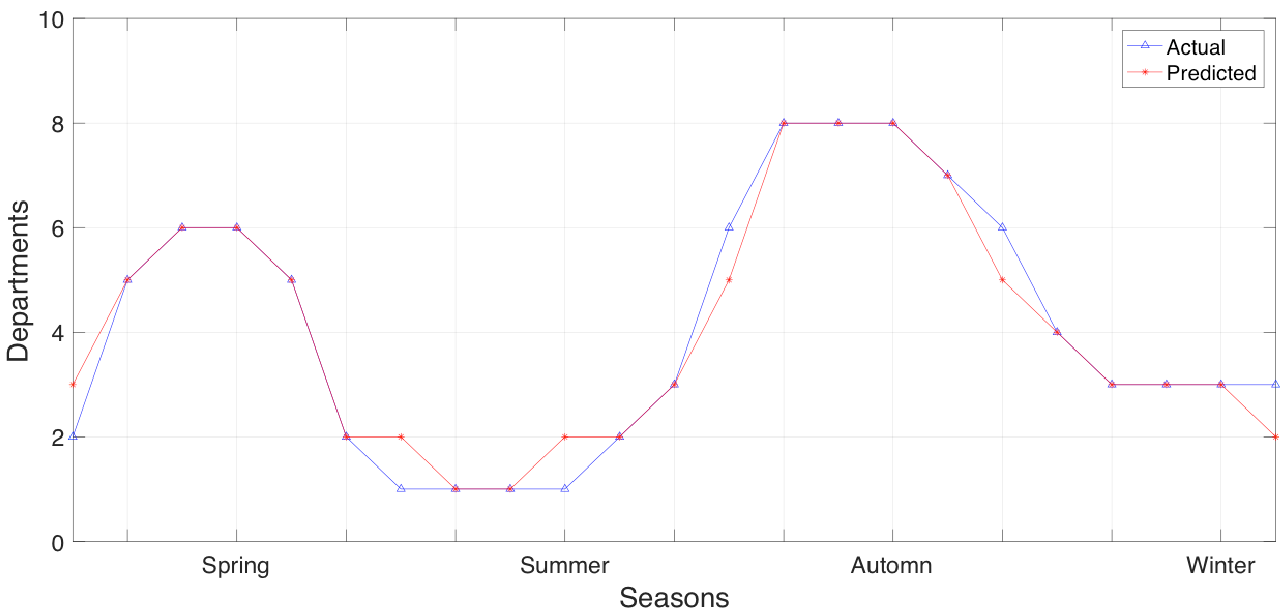
As shown in the distribution charts, the predicted allocation (Orange) mirrors the actual distribution (Blue) with remarkable precision across all 15 problem categories, including abandoned vehicles, stray animals, and water leaks.
Critical Analysis & Conclusion
The Citify system proves that smart cities don't always need millions of dollars in hardware—sometimes they just need to empower the people who already live there.
Key Takeaways:
- Humans as Sensors: Using smartphones for crowdsensing provides high-fidelity, annotated data that traditional IoT sensors might miss.
- Seasonal Intelligence: Predictive urban models should prioritize seasonal data over aggregate yearly data to capture nuanced behavioral and environmental changes.
- Proactive Planning: Armed with ~98% accurate predictions, a municipality can pre-allocate staff and equipment to high-risk sectors before a single report is even filed.
Future Outlook: The authors suggest moving toward even more granular predictions—predicting not just the department, but the specific number of employees required for each incident. This "deep" resource allocation would further optimize the operational efficiency of modern municipalities.