
From Finland to Nigeria: Decoding the Millennial Smartphone Archetype for Precision Marketing
Smartphone Usage Among Millennial in Finland and Implications for Marketing Segmentation Strategies: Lessons for Nigeria
The study investigates smartphone usage patterns among Millennials in Finland to develop a five-level user segmentation model (Beginners to Tech-Savvy). Using quantitative surveys (n=391), it establishes a framework for targeted marketing strategies—such as gamification and instant messaging—benchmarked against a developed market to provide actionable insights for emerging markets like Nigeria.
TL;DR
This research dissects how Millennials in Finland—a global leader in mobile tech adoption—actually use their smartphones. By segmenting users into five distinct levels (from Beginners to Tech-Savvy), the authors provide a roadmap for marketers to move past "one-size-fits-all" ads. The study highlights that smartphone proficiency is heavily dictated by OS ecosystem and data plan structures, offering a critical blueprint for emerging markets like Nigeria.
The "Homogeneous Youth" Myth
Marketers often assume that being a "digital native" implies high technical proficiency. However, this study reveals a surprising gap: despite high penetration, a vast majority of Finnish youth remain in the "Beginner" to "Intermediate" stages of usage. The pain point identified is clear: if businesses in developed markets struggle to engage users with "Advanced" features, companies in emerging markets (where data is expensive and infrastructure is spotty) face an uphill battle unless they segment by usage depth rather than just age.
Methodology: The Five Levels of Digital Sophistication
The authors categorize the 391 respondents into five tiers based on their interaction with technology:
- Level 1 (Beginners): Basic communication, limited data usage, often using older OS like Symbian.
- Level 2 (Explorers): Increased net surfing, high Android adoption, and primary device replacement (like GPS).
- Level 3 (Intermediate): High reliance on email and flat-rate data plans; iOS starts gaining ground.
- Level 4 (Advanced): Deep integration of social media (Twitter/Facebook) and heavy app downloading.
- Level 5 (Tech-Savvy): Complete device replacement (Music/Camera); almost exclusively on flat-rate plans and premium ecosystems (iOS/Android).
(Note: This conceptual figure illustrates the transition from basic telephony to complete digital ecosystem integration.)
Key Insights: OS and Data as Behavior Drivers
The study reveals a strong correlation between the Operating System and user level:
- Android is the "universal" OS, prevalent across all levels due to its versatility and price range.
- iOS acts as a "filter" for sophistication; its presence increases significantly as users move toward Levels 4 and 5, suggesting its ecosystem encourages (or attracts) advanced usage.
- Data Plans: 80% of high-level users utilize "Flat Rate" plans. This confirms that metered data acts as a psychological and financial barrier to "Exploration" and "Advanced" usage.
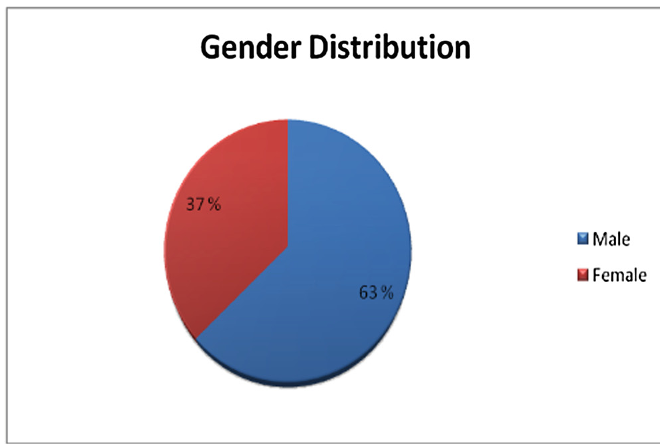 Fig. 6: How smartphones replace secondary hardware like navigation devices and music players.
Marketing Implications for Emerging Markets (Nigeria)
The paper bridges the gap between the Finnish data and the Nigerian context with surgical precision:
- Targeted Outreach: Level 1 users should be reached via SMS/voice. Level 3 requires sophisticated Email/Newsletter campaigns. Level 5 demands immersive experiences like gamification and social commerce.
- Policy Recommendations: For Nigeria to unlock the "goldmine" of mobile marketing, the government must lower the barrier to entry by making data affordable. Without flat-rate pricing, users stay "stuck" in Level 1 behaviors, limiting the ROI for digital businesses.
Critical Analysis & Conclusion
While the study provides a robust behavioral framework, it is limited by its focus on Millennials alone. Future research must address Gen Z, whose relationship with smartphones is even more visceral.
The Bottom Line: Smart marketing isn't about knowing that someone has a phone; it's about knowing how that phone fits into their life. Whether in Oulu or Lagos, the OS in their pocket and the data plan in their budget are the true predictors of consumer behavior.
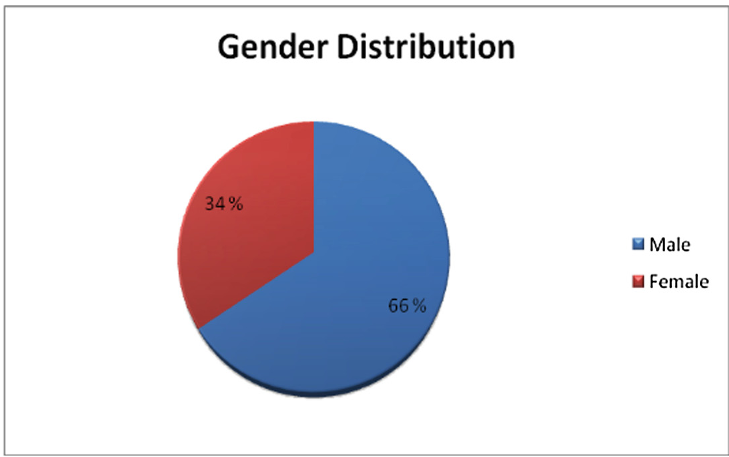 Fig. 2: The distribution of the surveyed sample across the five proficiency levels.