
SNIF: Social Networking In Fur — When Your Dog Becomes Your Social Proxy
SNIF: Social Networking In Fur
SNIF (Social Networking In Fur) is a pioneering wearable system designed to augment social interactions between pets and their owners. By utilizing sensor-equipped collars and leashes, the system captures real-world pet encounters and synchronizes them with an online community platform, effectively turning pets into "natural social devices."
TL;DR
SNIF (Social Networking In Fur) is a visionary project from the MIT Media Lab that transforms pet ownership into a digital social experience. By embedding sensors into collars and leashes, the system tracks real-world interactions between dogs, allowing owners to build a social network grounded in their pets' physical encounters. It effectively turns man's best friend into a "wearable social facilitator."
Background: The Pet as a Social Catalyst
In the realm of Human-Computer Interaction (HCI), we often focus on screens. However, SNIF looks at the leash. With over 65 million dogs in the US (at the time of writing), pets are natural "icebreakers." The authors argue that pet owners are already a massive offline community; what’s missing is a digital layer to capture and nurture these organic bonds.
The Problem: Connecting the Digital and the Physical
Existing social networks (like Friendster or Orkut in 2005) require manual input. You have to claim you know someone. SNIF challenges this by using Physical Proximity as a ground truth. The pain point identified is the friction in initiating human interaction during pet walks and the lack of a "memory" for who our pets have interacted with.
Methodology: The "Petworking" Ecosystem
The researchers moved beyond simple GPS tracking to create a sophisticated hardware/software feedback loop.
1. The Collar: The Identity Hub
Equipped with IR (Infrared) and RF (Radio Frequency) transceivers, the collar broadcasts a "Collar Tone"—a unique LED pulse sequence. When two SNIF-enabled dogs meet, their collars exchange IDs.
2. The Leash: The Control Interface
The leash isn't just a tether; it’s a data bridge. It features:
- Two-way RF communication: Uploading collar data to a central server.
- User Feedback Buttons: Owners can tag an interaction as "Positive" or "Incompatible," training the system on which human-pet pairs to avoid or seek out.
3. The Docking Station: Ambient Intelligence
Back at home, the leash holder doubles as an ambient display. If a "friend" dog is currently out for a walk in the neighborhood, the docking station pulses with that dog's specific collar tone, signaling a "serendipity opportunity" for the owner.
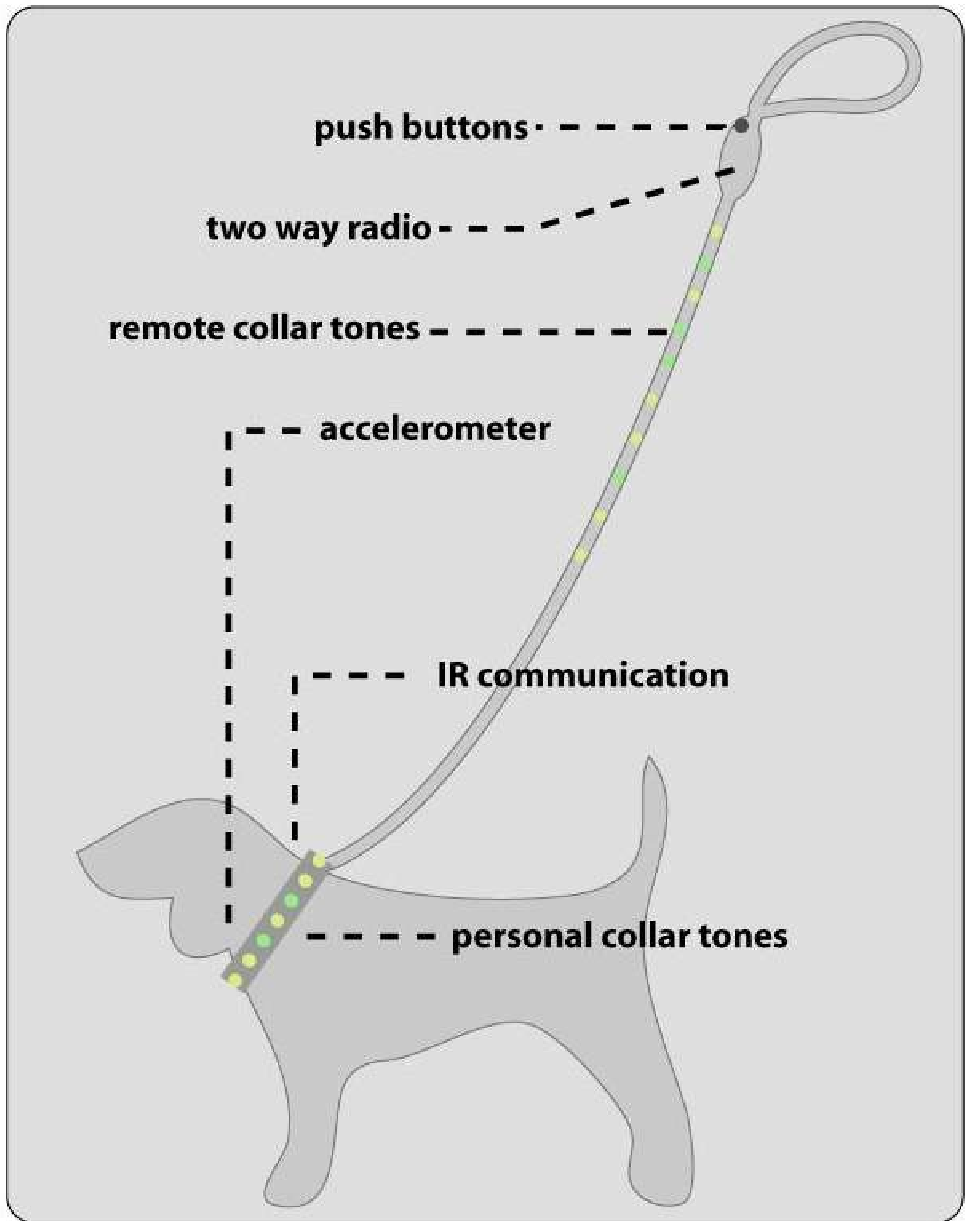
From Barking to Data: The Prototype
The team built their prototype using the UbER-Badge platform, a versatile wearable computing board. This allowed them to test the logic of proximity sensing and the "Collar Tone" display in a controlled environment.
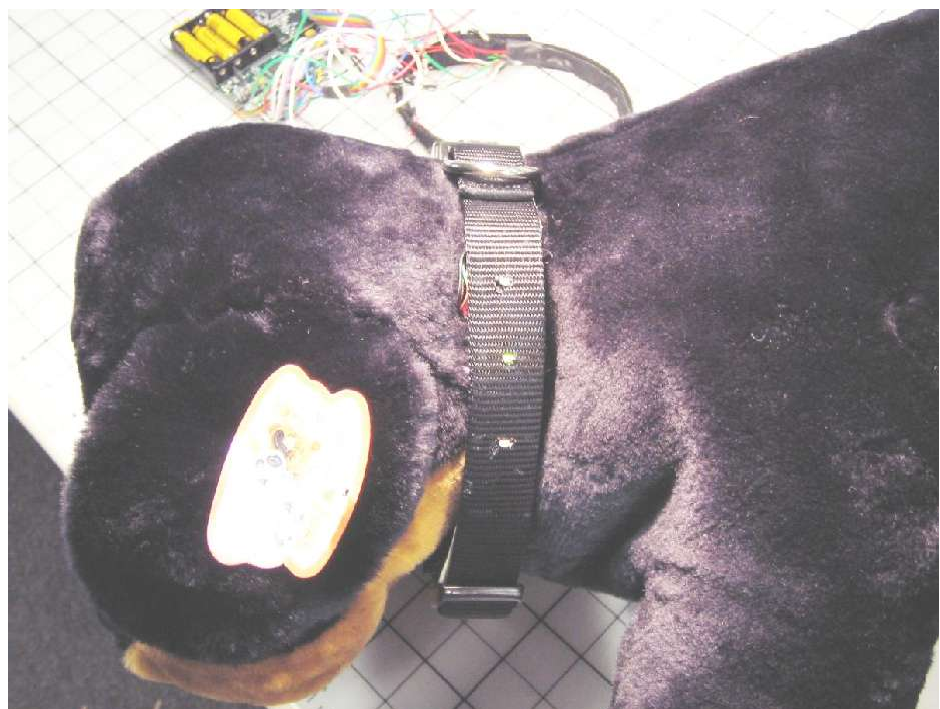
Core Insight: Relationship Syncing
The most profound contribution of SNIF is the Online Community Correlation. The system assumes that if two pets interact frequently and positively, their owners likely share common schedules, locations, and interests. By centralizing this data, SNIF creates a social graph that is earned through physical activity rather than just clicked into existence.
Critical Analysis & Future Outlook
While SNIF presents a charming vision of "Petworking," it raises significant Privacy Issues. Sharing one's walking route and schedule involves disclosing sensitive daily patterns. The authors rightly acknowledge that explicit authorization and data screening are non-negotiable for such a system to scale.
Takeaway
SNIF was ahead of its time, pre-dating the explosion of the "Internet of Things" (IoT) and modern social apps like Strava. It teaches us that Wearable Computing doesn't always have to be for humans—by augmenting the creatures we spend the most time with, we can create more natural, less intrusive ways to connect with our own species.
Note: This paper was presented at CHI 2005 and remains a foundational text in Animal-Computer Interaction (ACI).