
SOAF: When Services Become Your Social "Friends"
SOAF – Design and Implementation of a Service-Enriched Social Network
This paper introduces SOAF (Service of a Friend), an architectural framework that integrates software services into social networks by extending the Friend of a Friend (FOAF) vocabulary. It establishes a unified network where humans and services coexist, enabling social-based service discovery and dynamic relationship management.
TL;DR
Social networks aren't just for people anymore. This paper introduces SOAF (Service of a Friend), a framework that weaves software services into the social fabric. By treating services like human contacts—mapping who "knows," "uses," and "provides" them—SOAF replaces failed centralized registries with a dynamic, decentralized discovery ecosystem.
Background: The Gap Between SOA and Web 2.0
For years, Service-Oriented Architecture (SOA) relied on rigid, centralized registries. However, as the "Internet of Services" vision grew, these registries became bottlenecks or ghost towns. Meanwhile, social networks (Web 2.0) thrived on decentralized, bottom-up connections.
The authors identify a critical missing link: the human factor. Most service discovery involves a human asking a colleague, "What tool did you use for this?" SOAF formalizes this intuition by extending the FOAF (Friend of a Friend) standard to include technical services.
Methodology: Expanding the Social Vocabulary
To bridge the gap, the researchers extended the FOAF data model. Every entity in a SOAF network is treated with the same relational logic, whether they are a human, an organization, or a piece of code.
1. The Core Ontology
The authors introduced a Connection Class to overcome FOAF's limitation (where the knows relation is just a simple link). This class allows for rich metadata, such as:
- Uses: A person or service calling another service.
- Provides: An organization or human offering a service.
- Temporal Context: Timestamps for when a connection was established or active.
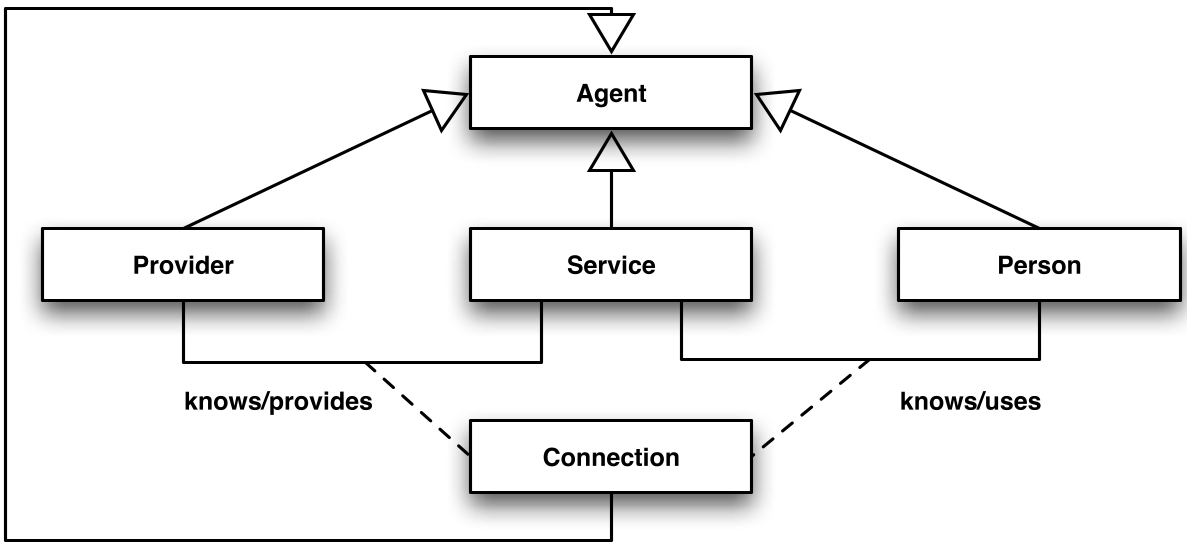 Figure 1: The SOAF Data Model extending FOAF Agents.
2. Dynamics and Lifecycle
Unlike human friendships, service connections are highly volatile. SOAF categorizes usage into:
- Once: For one-off registrations.
- Continuously: For persistent integrations.
- Deprecated: Marking services that are still alive but no longer maintained.
Epidemic Discovery: How it Works
Imagine you need a specific currency conversion service. Instead of searching a global directory, you look at what your "friends" (trusted peers) are using. If they don't have what you need, you can subscribe to their Atom feeds. When they discover or start using a new service that fits your criteria, you are notified automatically. This "epidemic" discovery avoids the staleness of centralized databases.
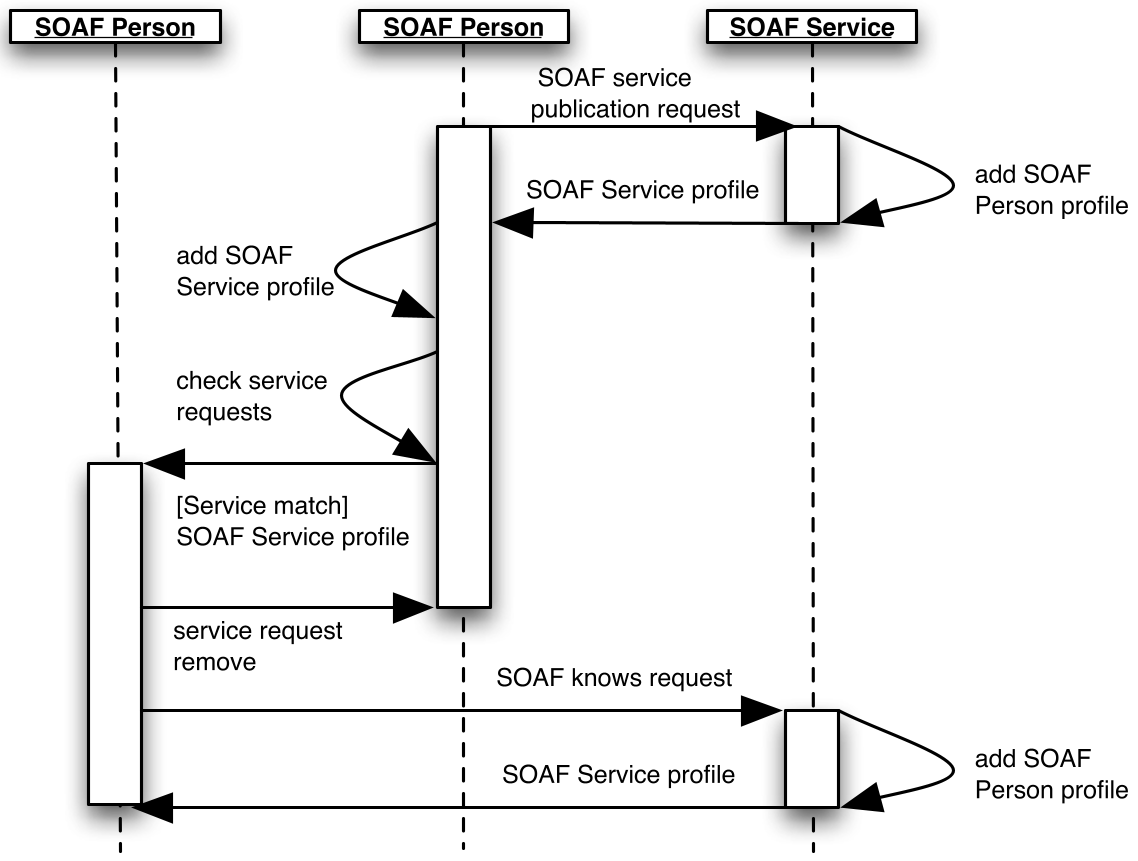 Figure 2: The SOAF publication protocol for local, decentralized registration.
Critical Insight: Community Clustering
One of the most profound aspects of SOAF is the emergence of Service Ecosystems. By observing the uses and provides links, the system can automatically identify "clusters" of popular or highly compatible services. These clusters emerge naturally through collective usage rather than being pre-defined by rigid ontologies.
Conclusion and Future Outlook
SOAF represents a shift from "Service as a Utility" to "Service as a Social Entity." While the prototype uses RDF and XML, the underlying philosophy—that technical discovery should mimic social trust—remains highly relevant in today's world of microservices and AI-agent collaborations.
Limitations: The authors acknowledge that as the network grows, scalability and human intervention (the effort to update links) will become challenges. Future work points toward simulating human behavior to better predict how these social-service networks evolve over time.
Takeaway for Architects
Stop building monolithic registries. If you want a resilient service ecosystem, find ways to map the existing social and organizational dependencies between your developers and the tools they actually use.