
SCC: Revolutionizing Ad Hoc Caching through the Lens of Social Intelligence
Social Attributes Based Cooperative Caching in Ad Hoc Networks
The paper introduces SCC (Social attribute based Cooperative Caching), a novel caching framework for wireless ad hoc networks. It leverages social metrics—Friendship, Interest Similarity, and Centrality—to optimize cache placement and discovery, achieving significant reductions in data access delay compared to non-social baselines.
TL;DR
Cooperative caching is vital for resource-constrained ad hoc networks, but finding where to put data and how to find it remains a bottleneck. This paper proposes SCC (Social Cooperative Caching), which replaces blind broadcasting with targeted "social" discovery. By analyzing user interests and friendships, SCC achieves a higher cache hit ratio and lower latency than traditional topology-aware methods.
The "Social" Insight: Moving Beyond Physical Hops
In a typical wireless ad hoc network, nodes are often treated as mere routers. However, these nodes are usually operated by humans with specific Interests and Friendships.
The authors argue that existing SOTA methods (like LRU or simple frequency-based placement) fail because they treat data requests as independent events. In reality, if your "friend" (a node you frequently interact with) is interested in Technology news, there is a high statistical probability that you will be too. Why query the whole network when you can just ask your technologically-inclined friends?
Methodology: The SCC Framework
The core of the paper lies in redefining two fundamental caching operations using social metrics:
1. Social-Aware Cache Discovery
Instead of flooding the network, SCC uses a targeted query mechanism:
- High Centrality Friends (HCF): Querying nodes that act as "hubs" in the social graph to propagate requests faster.
- Interest-Similar Friends (SFS/NSFS): Querying nodes within a certain distance that share the same data category interests.
2. Social-Driven Cache Placement
The significance of a data item is no longer just about how many times it was accessed, but who accessed it.
- Placement Metric (): Data is given a higher priority if it matches both the local node's interest and its social circle's interests.
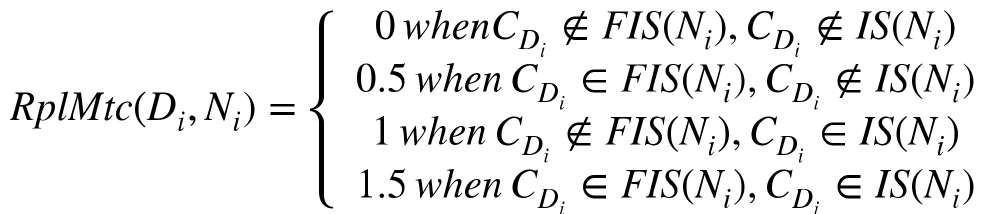 Figure 1: The significance metric used for cache replacement decisions.
Performance Benchmarks
Using ns-3 and real-world data from the SNAP Facebook dataset, the authors compared SCC against a non-social baseline (CMP).
- Cache Hit Ratio: SCC consistently outperformed CMP. As the "Interest Factor" (the focus of a user's requests) increased, SCC's ability to leverage social circles allowed it to find cached data much more effectively.
- Access Delay: By finding data at nearby "friend" nodes rather than trekking to the distant Internet Gateway, SCC significantly lowered the average waiting time for users.
- The Message Cost Trade-off: Interestingly, SCC's message cost is slightly higher or comparable to CMP. This is because SCC uses unicast to specific friends rather than efficient (but blind) physical layer broadcasting. However, the gains in latency far outweigh this minor overhead.
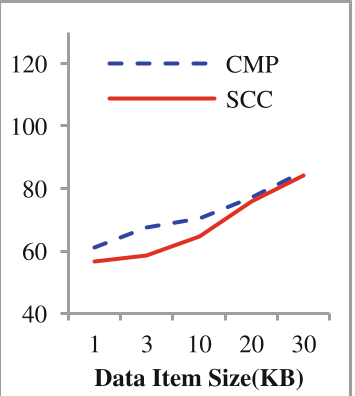 Figure 2: Cache hit ratio under varying request rates and interest factors.
Critical Analysis: Why This Matters
The brilliance of this work is its Inductive Bias. By assuming that social structures exist in ad hoc networks (which they do in disaster recovery, battlefields, or campuses), the algorithm "prunes" the search space of the NP-hard cache placement problem.
Limitations & Future Work:
- Privacy: The model assumes nodes know their friends' interests. In a real-world deployment, privacy-preserving interest sharing would be required.
- Mobility vs. Social Stability: While social ties are stable, physical links are not. The paper assumes the network remains connected, but extreme mobility might break the "Social Factor" updates.
Conclusion
SCC proves that "who you know" is just as important as "where you are" in networking. By bridging social science with distributed systems, this paper provides a robust template for future 6G and edge computing caching strategies where user behavior is the primary driver of data traffic.