
DIFFUSE: Optimizing Multimedia Content Diffusion in Social Pocket Switched Networks
12960_Social-Based Content Diffusion in Pocket Switched Networks.
This paper introduces DIFFUSE, a social-based content dissemination protocol for Pocket Switched Networks (PSNs). It optimizes the selection and scheduling of relay nodes to maximize message distribution across multi-community social networks, achieving up to 2.45x improvement in recipient count over existing SOTA unicast protocols.
Executive Summary
TL;DR: The paper presents DIFFUSE, a novel framework designed for "blind" content dissemination (like advertising or IPTV) in Pocket Switched Networks (PSNs). Unlike traditional routing that targets specific users, DIFFUSE aims to "infect" the maximum number of nodes possible. By combining a mathematical scheduling model with social-aware metrics, it outperforms standard protocols like PROPHET by 2.45x in large-scale multi-community environments.
Positioning: This work moves beyond simple probability-based forwarding by introducing temporal awareness (contact duration) and social utility (contribution to uninfected groups) into the routing logic.
Problem & Motivation: The "Island" Effect in Social Groups
In a PSN, data moves via "store-carry-and-forward" when mobile devices (held by people) come into physical proximity. Most existing protocols (Epidemic, PROPHET) fail in large-scale scenarios for two reasons:
- Social Homophily: Users spend most of their time with the same group (e.g., classmates). Standard protocols keep circulating data within these "islands," failing to bridge the gap to other communities.
- Transmission Bottlenecks: High-definition video or large files take time to transfer. Previous works assumed transfers were instantaneous. If you only have a 5-minute contact but a 10-minute file, the transfer fails.
The authors' insight is that a relay's value isn't just how many people it meets, but how many new people it meets who don't already have the message.
Methodology: The DIFFUSE Framework
The core of DIFFUSE is a distributed optimization problem where each relay must decide: Who should I give this file to first to maximize the network-wide spread?
1. Forwarding Scheduling Model
The authors formulate this as a maximized contribution problem. Since a relay might meet several people at once in a "group," it must schedule transfers. They use a Backward Induction Algorithm that runs in pseudopolynomial time to ensure that nodes with short contact durations are prioritized if their "contribution" (potential to spread data further) is high.
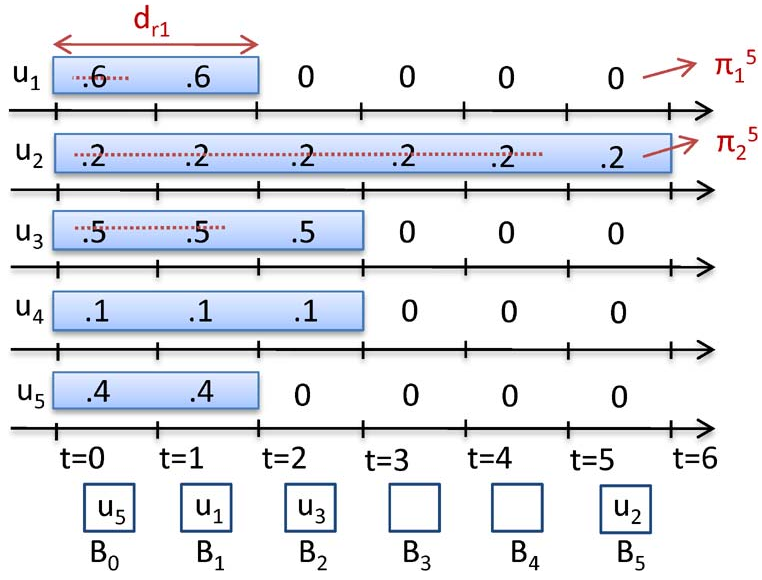 Figure 1: Illustration of the scheduling logic where limited time slots are allocated to the most "valuable" contacts.
2. High-Precision Metrics
- Contribution Metric (): Modeled using a homogeneous Poisson process. It estimates the probability that a node has not yet received the content. A node is valuable if it encounters many nodes with high values.
- Cluster-based Duration Prediction: Instead of simple averages, DIFFUSE uses k-means clustering on "event vectors" (sets of people seen together). If the current group looks like a "History Class" group, the system predicts a duration consistent with previous history classes.
Experiments & Results
The authors used the NUS (National University of Singapore) student trace, which is unique for its large scale (22k students) and distinct community structures.
- Massive Reach: While Epidemic and PROPHET reached early saturation within local clusters, DIFFUSE continued to bridge new communities, reaching nearly 1,500 users compared to ~600 for PROPHET over a 7-hour period.
- File Size Resilience: As file sizes increased (making the transmission time more critical), DIFFUSE’s advantage grew, proving that its scheduling component is vital for multimedia content.
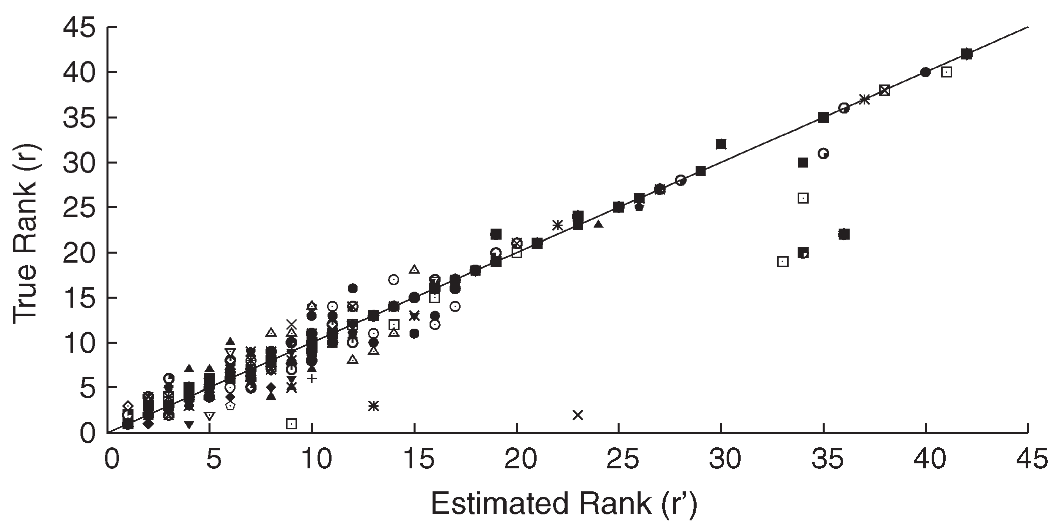 Figure 2: Performance of DIFFUSE vs. Baseline protocols across different deadlines and file sizes.
Critical Analysis & Conclusion
Takeaway
DIFFUSE proves that social context is the key to efficiency in opportunistic networks. By recognizing when a contact is a "bridge" to a new community and accounting for the physical reality of transmission time, it achieves SOTA results in realistic, large-scale deployments.
Limitations
- Privacy: Exchanging contact history and "event vectors" to calculate contributions raises potential privacy concerns for users.
- Compute Overhead: While the algorithm is pseudopolynomial, the constant recalculation of Poisson probabilities across frequent contacts might tax older mobile hardware.
Future Outlook
This approach could be highly relevant for 5G/6G D2D (Device-to-Device) offloading, where cellular networks offload heavy data to local opportunistic meshes to save bandwidth.