
The Invisible Asset: Leveraging Social Capital to Bridge the Online Learning Gap
Is social capital effective for online learning?
This study investigates the impact of social capital on the effectiveness of online learning using exploratory/confirmatory factor analysis and Structural Equation Modeling (SEM). It validates that online learning facilitates social capital across dimensions like trust, community, and cooperation, and confirms that social capital significantly predicts student satisfaction and group-based learning outcomes.
TL;DR
Is online learning destined to be a lonely experience? This study proves otherwise. By analyzing MBA students over several semesters, researchers found that "Virtual Social Capital"—the trust and cooperation built through screens—is the secret sauce for student satisfaction. While it doesn't always boost individual test scores, it is critical for successful group collaboration and high-quality project outcomes.
Background: Beyond Content Delivery
For years, online education was viewed through the lens of Cognitivism: a simple transfer of data from professor to student. However, the "V-Gen" (Virtual Generation) demands more. The shift toward Social Constructivism suggests that learning happens through interaction. The core question is: can we build "Social Capital" (intangible assets like trust and community) in a world of avatars and discussion boards?
The Problem: The "Interactivity" Mystery
Previous studies have struggled to explain why some online courses feel vibrant while others feel like digital graveyards. We knew interactivity mattered, but we lacked a rigorous way to measure the "Relational Assets" formed during these interactions. Furthermore, it was unclear if synchronous tools (live chat) or asynchronous tools (email/forums) were better at building these bonds.
Methodology: Mapping the Virtual Social Web
The researchers broke down online communication into three distinct channels:
- Group-based (GL): Intense, small-team interactions.
- Class-based (CL): Broader, voluntary peer interactions.
- Instructor-Learner (IL): Pedagogical and mentorship-focused loops.
They utilized Structural Equation Modeling (SEM) to test the causal paths between the formation of social capital (Community, Trust, Cooperation, Communication, Sociability) and outcomes like satisfaction and actual grades.
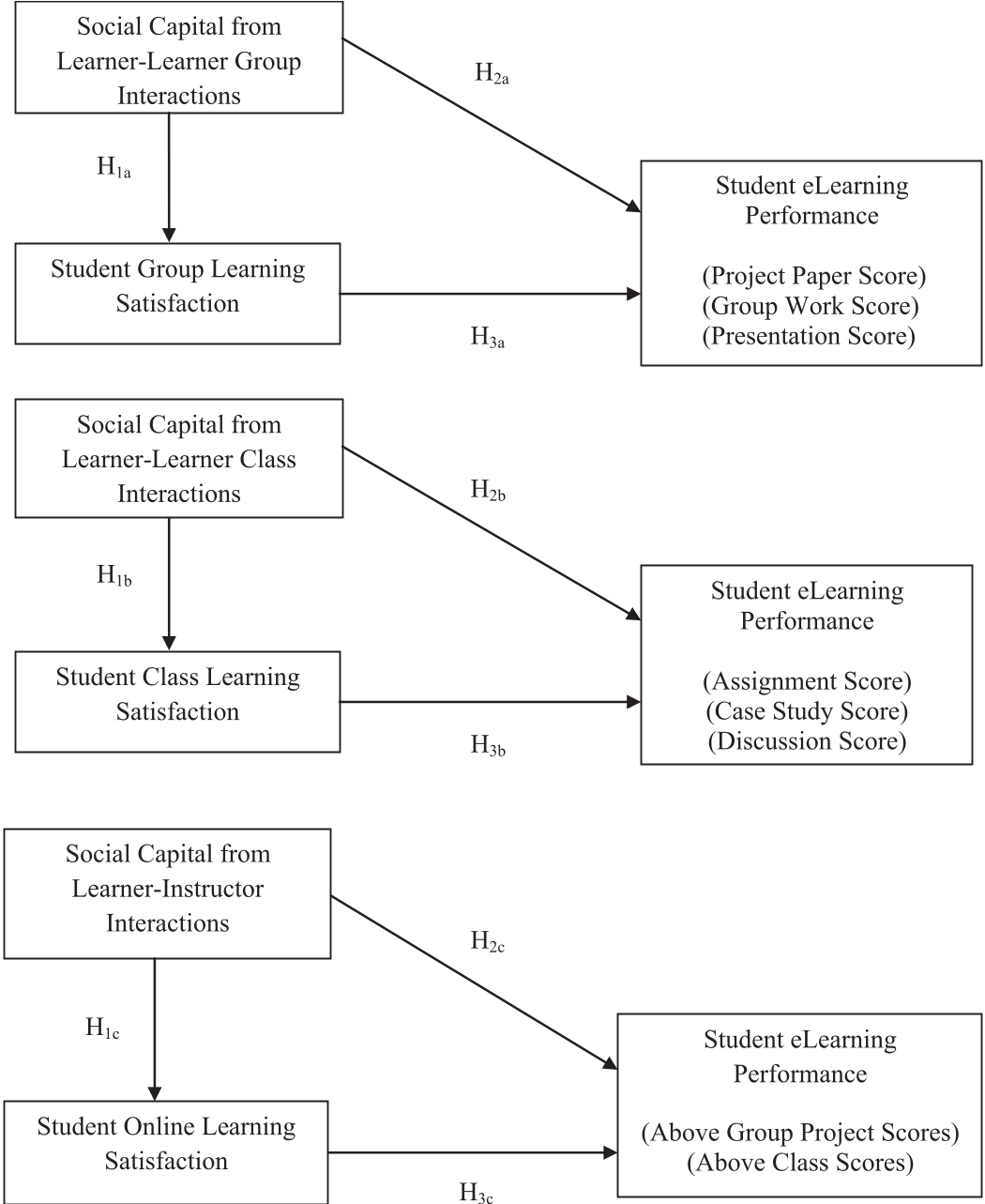 The conceptual model illustrates how media-based interactions fuel social capital, which in turn drives satisfaction and performance.
Key Insights: What Actually Works?
1. Satisfaction is Powered by Relationships
The results were striking: Social Capital accounted for 73% of the variance in group satisfaction. If students feel a sense of trust and community, they are exponentially more satisfied with the course, regardless of the technology used.
2. The "Density" Effect in Learning
Social capital significantly improved group project scores but had negligible impact on individual class scores. This suggests that social capital is a "collective asset"—it helps teams solve complex problems together, but it isn't a substitute for individual study for exams.
3. Asynchronous vs. Synchronous Synergies
Surprisingly, students favored asynchronous tools (Blackboard Email) for building trust. The flexibility to reflect before responding helped non-traditional students (working adults) manage their cognitive load. However, the best results came from a blended approach where live meetings (Adobe Connect) supplemented the forums.
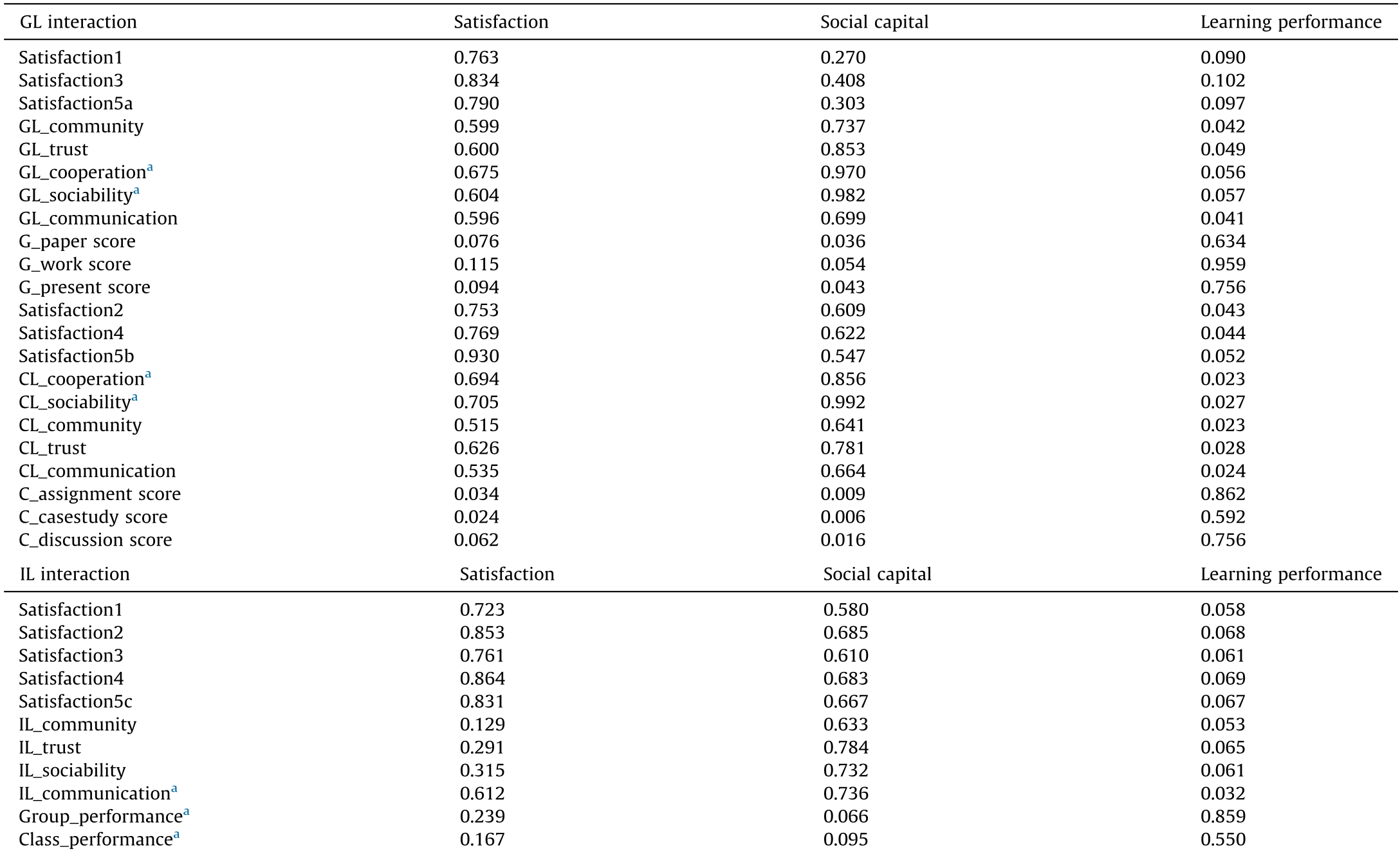 Factor loadings confirm that dimensions like 'Cooperation' and 'Sociability' are the strongest indicators of social capital in virtual teams.
Critical Analysis & Future Outlook
While the study confirms the power of social capital, it also highlights a paradox: Satisfaction does not equal Performance. A happy student isn't necessarily a high-achieving one. This suggests recruiters and educators should look beyond "Star Ratings" and focus on "Social Cohesion" as the true metric of a successful online program.
Limitations
- The Empowerment Gap: The study found no evidence of "Political Action" or "Empowerment," likely because students were focused on tasks rather than influencing course governance.
- Sample Specificity: The findings are based on MBA students; younger undergraduates might exhibit different social dynamics.
Conclusion
Social capital is not just a "nice-to-have"; it is the functional infrastructure of virtual collaboration. For educational designers, the takeaway is clear: Design for trust, not just for content. By integrating diverse networking tools and encouraging task-based teamwork, we can transform online learning from an isolated task into a thriving social ecosystem.