
Beyond the A-to-B: How Ridesharing Fosters Social and Cultural Capital
Support for Social and Cultural Capital Development in Real-time Ridesharing Services
2018-04-20
Summary
Problem
Method
Results
Takeaways
Abstract
This research paper explores the development of social and cultural capital within real-time ridesharing services like Uber. By conducting qualitative interviews and diary studies with 26 drivers and riders, it identifies how these platforms facilitate the exchange of informational, emotional, and instrumental resources, ultimately establishing ridesharing as a modern venue for social asset building.
## TL;DR
In a world where commuting is often seen as a lonely endeavor, new research from the University of Michigan suggests that **Uber and Lyft are inadvertently becoming hubs for social and cultural growth.** By analyzing interactions between drivers and passengers, researchers found that the "shared space" of a vehicle facilitates the exchange of job leads, emotional support, and cultural history—transforming a simple transaction into a mechanism for building social capital.
**Academic Positioning**: This work bridges the gap between Human-Computer Interaction (HCI) and sociology, extending classic theories by Putnam (Social Capital) and Bourdieu (Cultural Capital) into the modern gig economy.
## The Problem: The "Bowling Alone" Crisis of Modern Transit
Sociologists have long argued that the collapse of social capital in the US is partially due to long, solitary commutes. While public buses and trains allow for "incidental" social interactions, the private car has historically been a bubble of isolation.
The authors argue that current ridesharing technology focuses primarily on the **utility** (arrival times, pricing) while ignoring the **social value** created within the vehicle. This research asks: *Can these technologies actually help us reconnect and gain resources?*
## Methodology: Peering Into the "Shared Space"
The researchers conducted two qualitative studies:
1. **Driver Study**: 13 Uber drivers in Detroit, focusing on their use of online Facebook groups and offline interactions with riders.
2. **Rider Study**: 13 individuals from transportation-scarce areas, using diary studies to record conversations in real-time.
They looked specifically for four types of social resources:
* **Informational**: Useful suggestions or job leads.
* **Instrumental**: Tangible help (e.g., moving groceries).
* **Emotional**: Empathy and encouragement.
* **Companionship**: A sense of belonging.
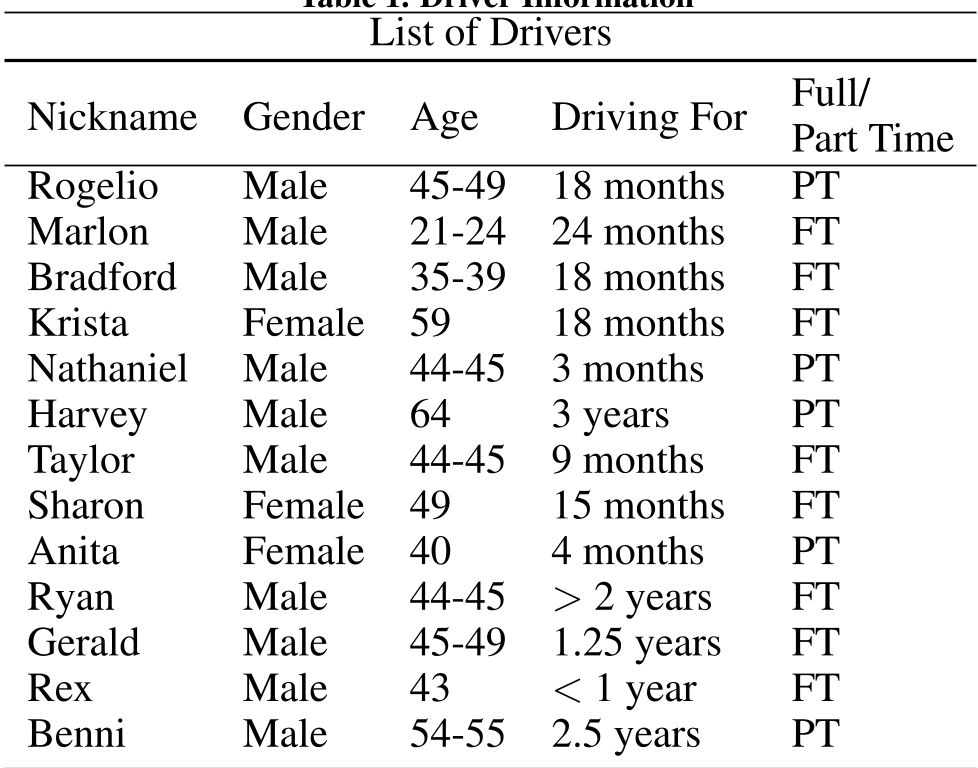
*The study involved a diverse range of drivers and riders, predominantly in the socio-economically complex landscape of Detroit.*
## Core Findings: The Car as a Classroom and Counselor
The results reveal that the interactions within an Uber are far from just small talk.
### 1. Social Capital Exchange
Riders often acquired **informational resources**—one rider learned how to lease a car for employment, while another received direct job leads. Conversely, drivers used Facebook groups for "algorithmic sensemaking," sharing tips on avoiding tickets and finding surge zones.
### 2. The Burden of Emotional Labor
Perhaps the most striking finding was the level of **emotional labor** performed by drivers. Drivers reported acting as "unpaid psychologists," consoling riders who were coming out to their families or dealing with domestic abuse.
> _"One lady... started crying... She came out to me. I sat there with her for 15 minutes so she could get calmed down." - Rogelio (Driver)_
### 3. Embodied Cultural Capital
Conversations often revolved around the history of Detroit, the "Black Lives Matter" movement, and cultural shifts in neighborhoods. These exchanges allow both parties to develop **embodied cultural capital**—a deeper understanding of the social rules and histories of different cultural groups.
## Design Implications for the Future of HCI
The paper argues that HCI and Ubicomp (Ubiquitous Computing) technologies should move beyond navigation and distraction-reduction.
* **Location-Based Services**: Apps could suggest "scenic" or "historical" routes for out-of-towners to enhance cultural exchange.
* **Recognizing Labor**: Platforms should move beyond simple "star ratings" and allow riders to give "badges" for specific support (e.g., "Great Emotional Support" or "Local Historian") that could be used by drivers in other job applications.
* **In-Car Interfaces**: Collaborative screens could allow riders to see if a driver has shared interests or skills, facilitating "instrumental" help like job networking.

*The study highlights how real-time ridesharing creates a unique intersection of digital coordination and physical social exchange.*
## Critical Analysis & Conclusion
**Takeaway**: This study proves that the gig economy isn't just about economic transactions; it's a social ecosystem. The "additional labor" drivers perform is a significant asset to society that is currently uncompensated and largely invisible to the platform algorithms.
**Limitations**: The study is localized to Detroit, a city with a unique history of racial and economic tension, which likely heightened the nature of the "cultural exchanges" observed.
**Future Outlook**: As we move toward **Autonomous Vehicles (AVs)**, we risk losing this social fabric. If the driver is removed, we lose the "psychologist," the "historian," and the "mentor." Future HCI research must ask: *How do we replace the social capital generated by human drivers in a robotaxi world?*