
Reno: Beyond Coordinates—The Social Grammar of Location Sharing
Social Disclosure of Place: From Location Technology to Communication Practices
This paper introduces Reno, a mobile social location disclosure service that enables users to share their current "place" with a social network manually or automatically. Leveraging GSM cell-tower IDs and SMS transport on Nokia Series 60 phones, it successfully facilitates lightweight communication by mapping raw coordinates to socially meaningful labels.
TL;DR
Reno is a pioneering social location service that treats location as a communication act rather than a sensor reading. By allowing users to define personal "places" (like "Merchant Mick's") and setting automatic SMS triggers for friends and family, the system proves that social context matters more than GPS accuracy. In an era before ubiquitous smartphones, Reno demonstrated how lightweight, low-precision data could coordinate complex human lives.
Background: Space vs. Place
In the world of Ubiquitous Computing (UbiComp), there is a fundamental tension between space (latitude and longitude) and place (a location with social meaning). Most early 2000s technology focused on the former. Reno, however, sits firmly in the camp of the latter. It asks: How can we use the mobile phone as a medium for social disclosure without needing a central server to track our every move?
The Problem: The High Cost of "Where Are You?"
Before Reno, sharing location usually meant a phone call ("Hey, I'm almost home") or a manual SMS. This has a high interaction cost. While GPS existed, it failed indoors and drained batteries. More importantly, prior works like AT&T's "Find People Nearby" lacked personal labeling; telling your spouse you are at "4th and Main" is less useful than saying you are at the "Bus stop by work."
Methodology: Peer-to-Peer Wisdom
The authors took a pragmatic, "always-on" approach with three technical pillars:
- Cell-Tower Fingerprinting: Instead of GPS, Reno listens for GSM cell-tower IDs. When a user is at a meaningful spot, they "record" the visible towers.
- SMS Transport: Messages are sent via peer-to-peer SMS. This removes the need for a "Big Brother" server, ensuring privacy and interoperability.
- Automatic Triggers: Users can set up "Push" notifications (e.g., "Tell Phoebe I'm at the Easton Hotel when I arrive").
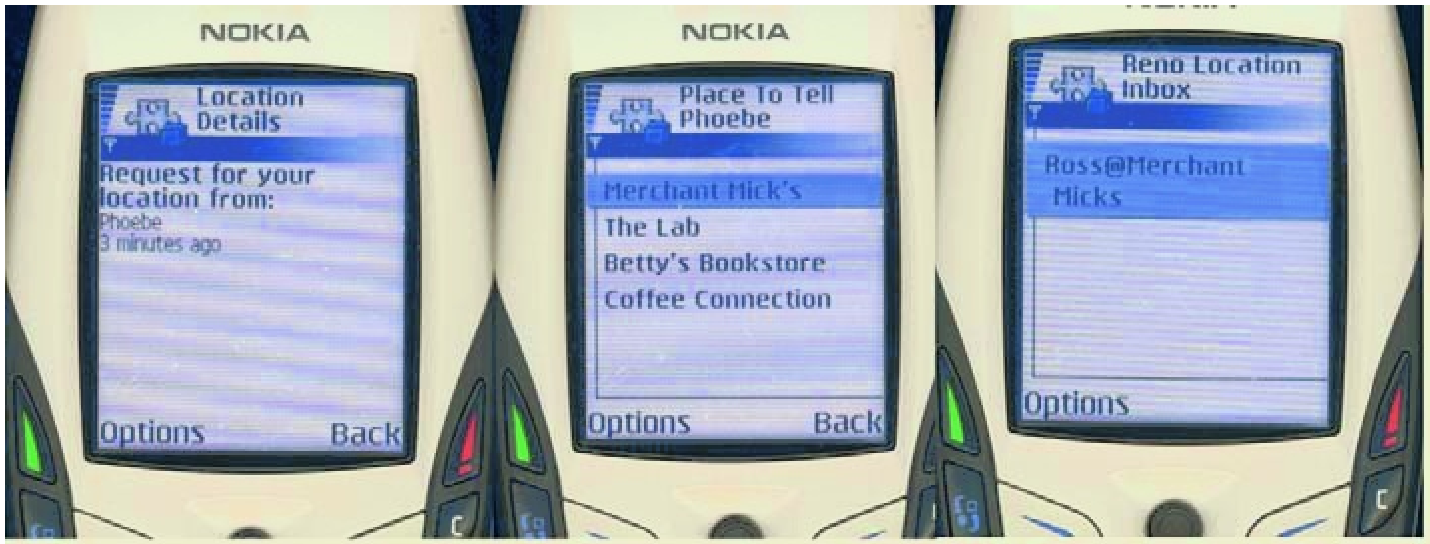 Figure 1: The Reno interface showing location queries and manual updates.
Experimental Insights: The Social Lens
The 5-day pilot study revealed that people don't use location data literally. They use it as a proxy for activity.
- The Interpretation Hierarchy: The study found three levels of interpretation: Location (Literal), Path (Path + Speed = ETA), and Activity (Place = Task).
- Shared Context: One participant saw a disclosure from the airport and remembered their friends were arriving—a memory triggered by a simple place name, not a map pin.
- The Double-Edged Sword: Automatic disclosures provided "utility" (e.g., getting kids to bed before a spouse arrives home) but also "violation" (e.g., feeling "weird" when a late-night errand triggered a notification).
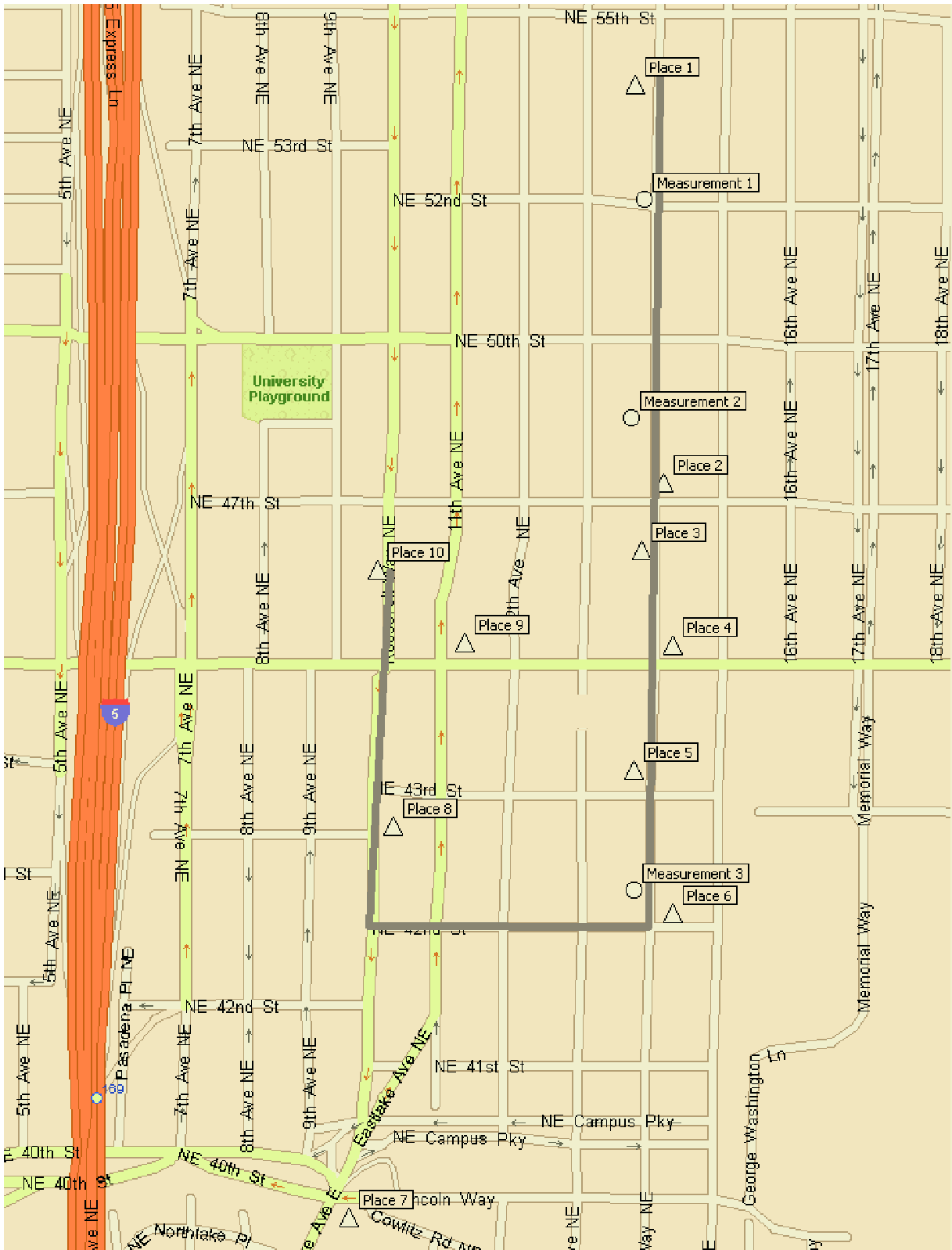 Figure 2: Testing the accuracy of the cell-tower-based "Nearby Places" algorithm.
Critical Analysis & Conclusion
Reno’s brilliance lies in its simplicity. It acknowledges that human social networks are already "smart." We don't need a complex AI to tell us what a friend is doing at a coffee shop; if we know the friend and the shop, we fill in the blanks.
Takeaway: Effective social technology should emphasize semantic meaning and control over raw data precision.
Limitations: The "management burden" of teaching the phone about places remains high. Furthermore, the lack of plausible deniability in automatic triggers (where a user can't "hide" the fact that the system sent the message) remains a core challenge for future social-location apps.
Ultimately, Reno serves as a foundational study in how we transition from "Location-Based Services" to "Communication Practices."