
Social vs. Economic Capital: Why "Small Worlds" Rule the Economy
A Model of Social and Economic Capital in Social Networks
The paper introduces an agent-based model to simulate the dynamics of social and economic capital within various network topologies. Using a Watts-Strogatz framework, it defines bonding social capital (utility from similarity) and economic utility (payoffs from a Prisoner's Dilemma game), demonstrating that Small World networks provide an optimal equilibrium between these often-conflicting capital types.
TL;DR
Is a tight-knit community better for you than a sprawling, random network of acquaintances? This paper proposes an agent-based model to find out. By simulating agents on different network topologies, the researchers found that Bonding Social Capital (community) and Economic Utility (wealth) are in constant tension. The sweet spot? Small World networks, which balance the trust of local clusters with the efficiency of global connections.
The Tension Between Trust and Trade
Most economic models treat "social capital" as a vague, positive force. However, the authors argue that social capital is not a monolith. There is a distinction between:
- Bonding Social Capital: Ties with people similar to you (high trust, low diversity).
- Bridging Social Capital: Ties that connect different social clusters (low trust, high information/opportunity).
The problem is that real-world data on these structures is hard to get, and previous theoretical models were too simple. This paper aims to bridge that gap using a Multi-Agent System (MAS).
Methodology: The Watts-Strogatz Simulator
The authors place agents on a circle. Their "similarity" is defined by their distance along this circle. They then use the Watts-Strogatz algorithm to create the network:
- Regular Lattice (): You only know your immediate neighbors. High similarity, high "Bonding" capital, but no reach.
- Random Network (): You are connected to random people regardless of similarity. High diversity, but lower "local" trust.
- Small World: A few "rewired" links create shortcuts across the circle.
 The similarity index ensures that agents initially prefer those in their own "social neighborhood."
The Economic Engine: Prisoner's Dilemma
To simulate economic utility, agents play a Prisoner's Dilemma. Their willingness to cooperate () isn't random; it depends on:
- Heterophily (): How diverse their friends are (experience).
- Social Distance (): How many "hops" away the partner is (acquaintance).
Key Insights and Results
1. The Great Trade-off
The simulation results show a clear conflict. If you want maximum Social Utility, you stay in a lattice (regular) graph where everyone is similar. If you want maximum Economic Utility, you move toward a random graph where "shortcuts" allow for more frequent and diverse interactions.
2. The Small World Optimum
The "Small World" network—characterized by high clustering but low average path lengths—provides the best balance. It maintains enough local structure for bonding while introducing enough "bridges" for economic efficiency.
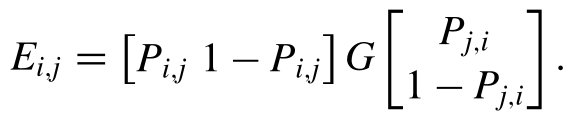 The expected payoff integrates the probability of cooperation based on network position, showing why "where" you are in a network determines "what" you earn.
3. The "Bridge" Advantage
At the individual level, the "Bridges"—agents who connect parts of the network that would otherwise be distant—win in both categories. They enjoy high social importance (Bridging Capital) and high economic utility because they facilitate transactions.
Critical Analysis & Conclusion
This work provides a rigorous mathematical foundation for what we intuitively know: diversity pays, but community sustains.
Takeaways:
- For Research: The model quantifies Putnam’s theories of social capital, moving from qualitative descriptions to measurable agent interactions.
- Limitations: The model assumes a static network. In reality, agents choose to rewire their own links based on utility, which could lead to different emergent topologies.
- Future Work: Applying this to "Echo Chambers" in social media or labor market productivity in different urban layouts would be a natural next step.
Ultimately, the paper suggests that if we want a productive society, we shouldn't just build bridges; we must ensure those bridges don't burn the local communities they connect.