
Social Engineering: The Psychology of the "Human Hack" in Social Media
Social Engineering: Application of Psychology to Information Security
This paper explores the intersection of psychology and information security, specifically focusing on how Social Engineering leveraged through deceptive advertising on social networks can manipulate users into revealing credentials. The authors propose and execute an ethical attack strategy on Facebook, demonstrating how psychological triggers like curiosity and authority are used to compromise user accounts.
TL;DR
While we often harden our servers with firewalls and encryption, the most vulnerable port remains the human mind. This paper demonstrates an ethical Social Engineering attack on Facebook that tricked over a hundred users into handing over their credentials via a simple "personality quiz." By leveraging psychological triggers, attackers can bypass complex security systems without writing a single line of exploit code.
Background: Security is Subjective
In the landscape of Information Security, we frequently treat data protection as a purely technical challenge. However, this research posits that security is subjective. Every individual perceives risk differently based on their psychological state, education, and immediate environment. The authors argue that hackers are essentially "applied psychologists" who use social networks as a window into a victim's day-to-day life.
The Problem: The Weakest Link
Prior work in cybersecurity often concentrates on "Zero-day" exploits or network anomalies. The authors identify a gap: the lack of focus on how deceptive advertising on social platforms exploits human weaknesses like self-esteem, curiosity, and the need for social approval. Despite technical improvements, users still rely on symbolic references (birthdays, pets, hobbies) to create passwords, making them easy targets for anyone who can manipulate their trust.
Methodology: Anatomy of an Ethical Attack
The researchers proposed a 6-stage strategy designed to emulate a real-world attacker’s workflow.
1. The Trap: Deceptive Advertising
The study utilized a Facebook fan page to host a fake quiz titled “¿Qué tan buen borracho eres?” (How good of a drunk are you?). This catchy, informal title served as a "hook" to bypass the user's critical thinking.
2. The Manipulation: Distractors and Data Harvesting
The quiz contained ten questions. Six were "distractors" (to make it look like a legitimate survey), while four were designed to extract personal information (hobbies, favorite drinks, birthdays).
3. The Extraction: Fake Login Form
Once the quiz was finished, a pop-up window appeared—an exact replica of the Facebook login page—requesting the user's email and password to "view results."
 Figure 1: The 6-stage proposed strategy from initial navigation to data retrieval.
4. Technical Analysis
To process the harvested data, the authors used Single Pass In-Memory Indexing. This allowed them to cross-reference captured passwords with the personal data shared in the quiz to see if they "matched."
 Figure 2: The client-server architecture used to store and analyze stolen credentials.
Experimental Results: Why It Works
The results from the week-long trial were startling:
- Reach: 11,645 people accessed the fake site.
- Vulnerability: 127 users provided their actual email and password.
- The "Personal" Connection: 41.73% of the captured passwords matched information provided in the quiz (like favorite drinks or birthdays).
- Password Weakness: Over 50% of victims used exactly one capital letter, and 16.5% used only lowercase letters.
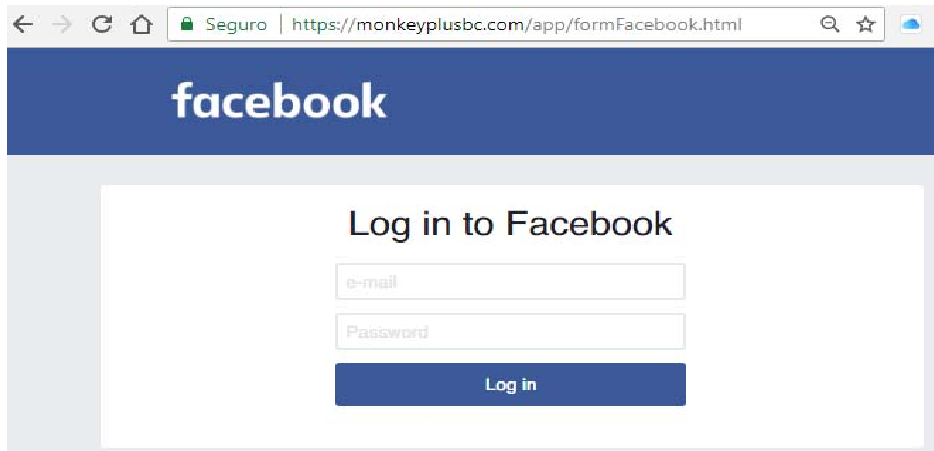 Figure 3: The deceptive login window used to trick users.
The study highlights that most passwords are "functional" (easy to remember) rather than "secure." Attackers don't need to crack a 256-bit encryption key if they can simply guess that your password is Beer1985! based on your quiz answers.
Critical Insights & Recommendations
The research concludes that psychology is the "Pandora’s Box" of information security. By triggering curiosity (responding to the test) and trust (the familiar Facebook interface), attackers can bypass the "human firewall."
Key Takeaways for Users:
- Don't Trust Proxies: Never enter your password into a pop-up window to view quiz results.
- Avoid Symbolic Patterns: Do not use birthdays, pets, or hobbies in your password. Attackers look for these specific "tracks" in your social media feed.
- Complexity Matters: Use special characters and multiple capital letters. Avoid using your email handle as part of your password.
Conclusion
This study serves as a stark reminder that as long as humans are behind the keyboard, psychological manipulation will be a viable attack vector. Moving forward, the authors suggest expanding this research into different cultures and investigating whether the introduction of financial stakes (e.g., online payments) makes users more or less susceptible to these "psychological games."