
Scaling Semantic Vision: A Social and Spatial Framework for Auto-Annotation
A Social Framework for the Organisation and Automated Annotation of Personal Photo Collections
This paper proposes a social framework for the automated annotation of personal photo collections using a multi-stage clustering approach. It fuses SIFT-based local features with spatial (GPS) metadata and SVM classifiers to achieve high-level semantic tagging, achieving near real-time performance through spatial filtering.
TL;DR
Managing massive digital photo libraries requires more than just pixels—it requires context. This paper introduces a framework that fuses Spatial Metadata (GPS), Local Image Features (SIFT), and Social Interaction to automatically tag images. By clustering photos into "viewpoint models" and using SVMs for classification, the system bypasses the computational nightmare of point-to-point matching, enabling near real-time semantic retrieval at scale.
The "Trillion Comparison" Problem
The central challenge in modern image retrieval is the Semantic Gap. While we want to search for "Tourist sites in Florence," computers see colors and edges. State-of-the-art local features like SIFT are great for matching, but they are incredibly "heavy."
As the author points out, matching a single image against a 100,000-image database using raw SIFT keypoints would require 12 trillion comparisons. This makes real-time performance impossible without a radical rethinking of the architecture.
Methodology: Spatial Pruning and Viewpoint Clustering
The core innovation lies in the three-stage organization of the image database:
- Spatial-Based Clustering: Before comparing a single pixel, the system uses GPS coordinates to filter images. If a photo wasn't taken in Italy, it's immediately excluded from the "Florence" search, drastically reducing the search space.
- Image-Content Based Clustering: Images within a geographic area are sub-clustered based on their visual content. The goal is to group all photos of the same landmark taken from similar angles.
- SVM Model Training: Instead of matching points, the system trains a Support Vector Machine (SVM) for each viewpoint cluster.
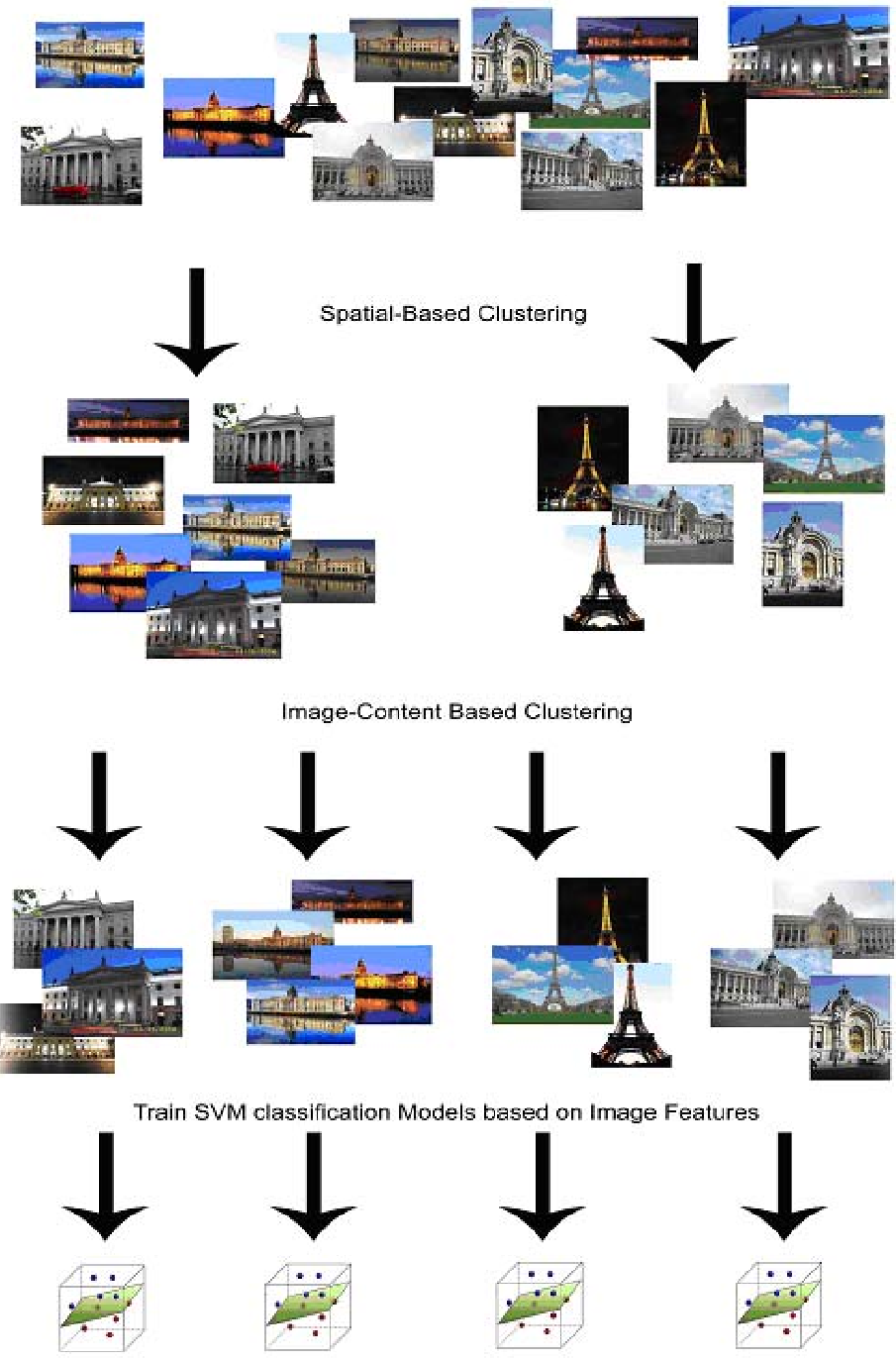 Figure 1: Diverse viewpoints of the same object are clustered to create a robust model of a specific scene.
The Social Feedback Loop
The "Social" aspect is the engine of the framework. By adopting a model similar to Flickr or Facebook, the system leverages user behavior:
- Crowdsourced Training Data: Users upload geo-tagged and captioned images that serve as the training set.
- Continuous Improvement: When the system suggests an automated tag, users can confirm or correct it. These corrections are fed back into the SVM models, making them more robust over time.
Experimental Insight: Speed vs. Robustness
The paper argues that clustering multiple views into a single SVM model provides two massive advantages:
- Computational Efficiency: Classifying an image through an SVM is orders of magnitude faster than matching thousands of individual SIFT keypoints.
- Robustness: By training on multiple images of the same landmark under different lighting and angles, the SVM learns a more generalized representation of the site.
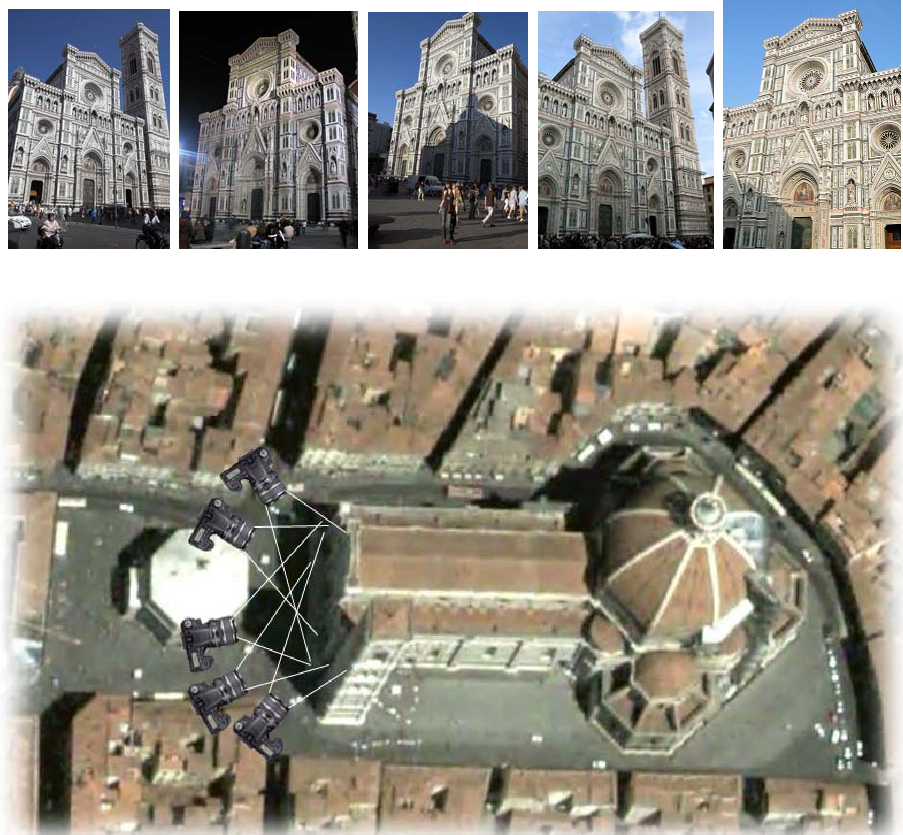 The iterative process of extracting features and refining tags through spatial and visual data.
Conclusion and Future Outlook
This framework provides a blueprint for managing the "data deluge" of personal photo collections. By moving away from brute-force computer vision and toward a context-aware, social-fused architecture, the author demonstrates that high-level semantics are achievable at scale.
Key Limitations: The system's accuracy is highly dependent on the precision of GPS data (which can be flaky in urban canyons) and the initial volume of user-contributed tags. As we look toward the future, integrating this spatial-social logic with modern Neural Radiance Fields (NeRFs) or Foundation Models could further bridge the gap between human memory and digital storage.