
Leveraging Social Groups: A New Frontier for Cold-Start Video Recommendation
Social Group Based Video Recommendation Addressing the Cold-Start Problem
This paper introduces a social-group-based video recommendation framework designed for the Tencent Video platform, targeting the new-user cold-start problem. By leveraging explicitly formed QQ groups (interests, classmates, etc.) rather than just direct friends, the method employs a group-scoring and rank-aggregation mechanism to provide personalized suggestions for users with no viewing history.
TL;DR
Addressing the "New User" cold-start problem is the holy grail of recommendation systems. Researchers from Tencent and the Chinese University of Hong Kong have moved beyond simple "friend-based" suggestions to Social-Group-Based Recommendation. By mining the collective viewing habits of explicitly formed QQ groups, they expanded the candidate video pool by nearly 3x and significantly boosted both Click-Through Rate (CTR) and content diversity in a live production environment.
Problem & Motivation: The Sparsity Trap
Standard Collaborative Filtering (CF) is powerless when a user has a blank history. While the industry has turned to Social Networks (SN) for help—recommending what your friends watch—this often hits a "sparsity wall."
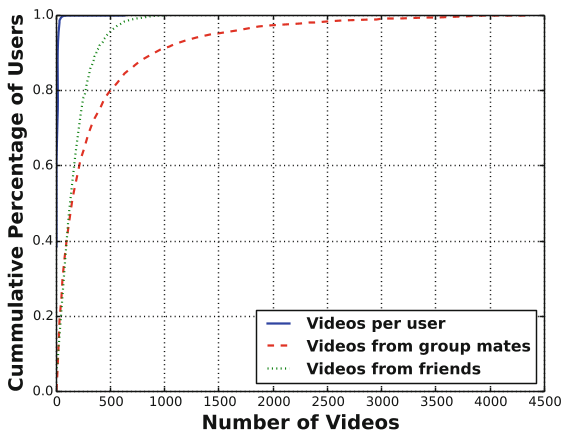
As shown in the paper's analysis of Tencent's ecosystem, a typical user might have ~36 friends but belongs to multiple groups containing hundreds of members. This group affiliation is a goldmine:
- Data Volume: The group video candidate pool is nearly 3 times larger than the friend-based pool.
- Semantic Intent: Unlike random friend lists, groups (interest-based, colleagues, classmates) provide an inherent "context" or "topic" for the recommendation.
Methodology: From Group Wisdom to Individual Ranking
The authors propose a hierarchical ranking framework to transform group viewing data into a personalized Top-R list.
1. The Single Affiliation Problem (Intra-group Ranking)
How do we know which video represents a group? The authors define a Representative Score () based on two factors:
- Local Popularity (): How many group members watched it?
- Discrimination (): Is this video unique to this group? (e.g., a niche sports clip is more "representative" of a sports group than a viral breaking news story watched by everyone).
2. The Multiple Affiliation Problem (Rank Aggregation)
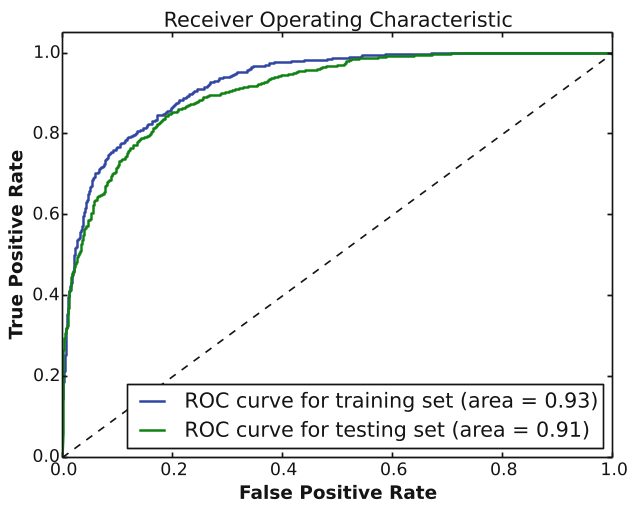
Since most users belong to many groups, the system must decide which group’s "opinion" matters most. They use Supervised Learning (Logistic Regression) to score groups () based on:
- Social/Interest Activeness: How much do they talk/watch?
- Social/Interest Conformity: How tight-knit is the group, and do they share similar tastes?
Finally, these scores weight a Borda Fuse algorithm, which aggregates individual group rankings into one master list for the user.
Experiments & SOTA Comparison
The researchers skipped offline simulations and went straight to Online A/B Testing on the Tencent Video system. They compared their approach against:
- Implicit CF: Matrix factorization tailored for implicit feedback.
- Ontology-CBF: Content-based filtering using metadata concepts.
Key Findings:
- Relevance: The Social-Group algorithm achieved the highest CTR, proving that group members’ tastes are a strong proxy for personal interest.
- Diversity: It also yielded the lowest Gini coefficient, meaning it doesn't just recommend the same 5 blockbusters to everyone; it surfaces niche content relevant to specific group identities.
Critical Analysis & Conclusion
This work is a masterclass in utilizing specific platform features (QQ Groups) to solve a universal problem (Cold Start).
The Insight: The "discrimination score" () is essentially an Inverse Document Frequency (IDF) logic applied to social groups. It prevents the system from collapsing into a "top-trending" recommender.
Limitations:
- Privacy: The method relies on explicit group memberships, which might not be available on all platforms (e.g., Netflix).
- Dynamics: Social groups evolve; a classmate group 10 years later might no longer share interests. Future work could incorporate temporal decay into the group scoring.
Final Takeaway: For platforms with community features, the group is a more robust unit of analysis than the individual "friend." Social-group-based recommendation effectively bridges the gap between generic "popular" lists and data-hungry personalized models.