
From Engineers to Editors: The Social Metamorphosis of Bitnet and Listserv (1985–1991)
11900_A Social History of Bitnet and Listserv, 1985-1991.
This paper explores the social evolution of Bitnet and Listserv between 1985 and 1991, detailing how these technologies transitioned from technical "back stage" tools for engineers into "front stage" platforms for organized global communities. It highlights the pivotal role of Eric Thomas's Listserv software in establishing the first systematic archives of electronic discourse.
TL;DR
Before the World Wide Web, there was Bitnet—an academic network that birthed the modern mailing list. This paper argues that the true "settling" of the digital frontier wasn't a feat of engineering, but a sociological shift. Using Listserv as the catalyst, early users transformed "back stage" technical playgrounds into "front stage" professional organizations, laying the governance blueprints for every Reddit sub and Slack channel we use today.
The Problem: The Invisible Social History
History books are filled with the "plumbing" of the internet—TCP/IP, packet switching, and fiber optics. Yet, we know very little about how regular people—librarians, historians, and activists—learned to exist in "Cyberspace." The authors point out that early digital history is ephemeral; chat logs and instant messages vanished the moment computers were unplugged. It was only with the arrival of Listserv that systematic archives were created, providing a fossil record of how human society migrated online.
Methodology: Goffman’s Stage on the Digital Frontier
The authors utilize the sociological framework of Erving Goffman, specifically his concepts of Front Stage and Back Stage behavior:
- Back Stage (The Wild West): In 1984, Bitnet was an informal "back stage" area. Technical staff talked in shorthand, rules were ill-defined, and authority was exerted through personal friendships or phone calls rather than digital policy.
- Front Stage (The Settled Town): As general users joined, the network needed "front stages"—formal areas where roles (moderator, editor, subscriber) were delineated and code of conduct was enforced.
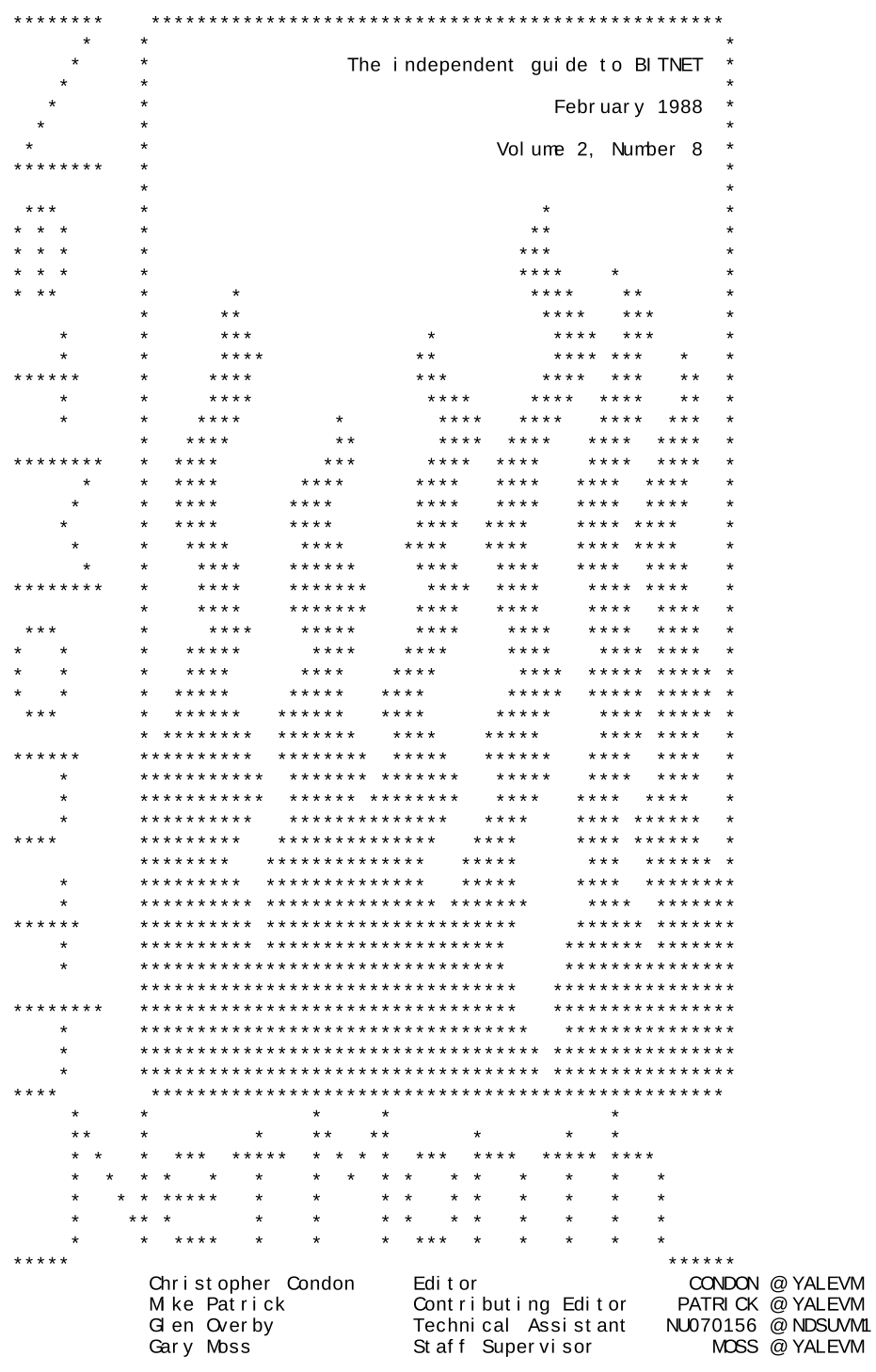 Caption: Early digital "Cover Art" from Netmonth, representing the transition to a formal electronic periodical.
The Core: Listserv as the Great Formalizer
In 1986, Eric Thomas wrote Listserv. Unlike previous brittle scripts, Listserv was stable and flexible. It allowed the creation of:
- Open Forums: Unrestricted discussion.
- Moderated Groups: Censorship and direction by a leader.
- Electronic Periodicals: Systematic publishing (the ancestor of the newsletter).
The paper highlights Netmonth, a periodical created by undergraduate Chris Condon. Condon acted as a "discrepant" character—someone who lived in the technical world but spoke to the general user. He used Listserv to teach "digital citizens" how to behave, effectively building the first "Front Stage" of the network.
Case Studies in Social Survival
The transition wasn't always smooth. The authors examine several "transitory" vs. "permanent" groups:
- The Failures (USSR-L): A group discussing Soviet politics that collapsed because the moderator was too committed to absolute "free speech." A single disruptive user (a "troll" in modern terms) killed the community because the social "front stage" lacked the rules to expel him until it was too late.
- The Successes (China News Digest & Humanist): These groups survived because they implemented social discipline. China News Digest (CND) moved from a loose email tree to a formal editorial hierarchy. The Humanist list stayed alive by requiring users to post biographies, forcing a "public commitment" to the group.
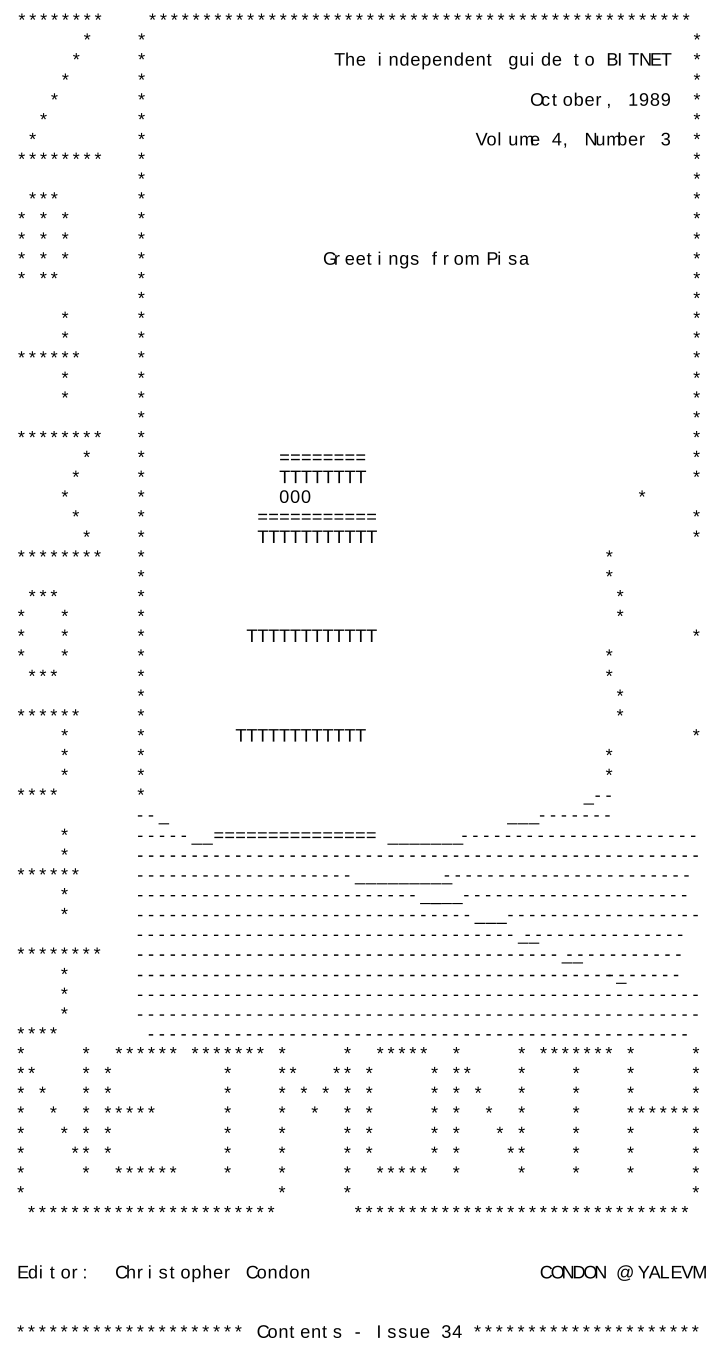 Caption: Visual representation of early Bitnet ASCII art, showcasing the cultural creativity emerging from the new user base.
Critical Insight: The Legacy of Bitnet
By 1991, the technology of Bitnet (IBM mainframes and RSCS protocols) was dying, outpaced by the Internet (TCP/IP). However, the social structures built on Bitnet remained. Listserv was ported to Unix, and the communities migrated to the Internet.
The paper concludes that the "Golden Age" of Bitnet was defined by the realization that unfettered communication is not always in a community's best interest. To move from a "savage frontier" to a "civilized society," digital spaces required leadership, editing, and rules of engagement—lessons we are still relearning in the age of social media.
Conclusion
- Takeaway: The success of an online community is determined by its social architecture, not just its technical bandwidth.
- Limitations: The paper focuses heavily on the IBM/Bitnet ecosystem; a comparative study with contemporaneous Usenet culture would provide a broader view of early "Front Stage" development.
- Future Impact: This work serves as a foundational text for "Digital Sociology," reminding us that every technical protocol eventually requires a social protocol to survive.