
Social Immunity: A Bio-Inspired Shield Against Online Rumors
A social immunity based approach to suppress rumors in online social networks
The paper proposes a novel anti-rumor information spreading approach inspired by "social immunity" observed in honeybees and termites. It utilizes a Competitive Cascade (CC) model and opinion dynamics to identify influential spreaders, achieving state-of-the-art results in suppressing rumors across various online social network (OSN) topologies.
TL;DR
Researchers have developed a new rumor suppression framework called RC-SI (Rumor Containment via Social Immunity). Inspired by the way social insects like honeybees develop collective "social fever" to fight pathogens, this method uses opinion dynamics and a competitive cascade model to spread truth faster than lies. It reduces rumor presence by up to 30% more than traditional epidemic models.
Context & Positioning
In the digital age, rumors are often described as "digital viruses." While previous research treated rumor containment as a simple epidemic problem (SIR/SIS models), the paper “A social immunity based approach to suppress rumors in online social networks” elevates this to a collective behavioral strategy. It positions itself as a SOTA (State-of-the-art) solution for scale-free networks where community structure and user trust (opinion dynamics) are paramount.
The Problem: Why Current "Vaccines" Fail
Most anti-rumor strategies rely on "blocking" nodes or randomly spreading truth. This is inefficient because:
- Ignoring Competition: Rumors and truth compete for the same "mindshare" (Ignorant users).
- Static Seed Selection: They don't account for the intensity of the rumor; you shouldn't use a sledgehammer to crack a nut, nor a needle to stop a flood.
- Overlooking Trust: Influence isn't just about the number of followers (degree); it’s about Belief Closeness.
Methodology: The "Social Immunity" Insight
The core of the paper is the Competitive Cascade (CC) Model, which tracks four states: Ignorant, Spreader, Protector, and Prosocial.
1. Opinion Dynamics (The Extended HK Model)
Instead of assuming users believe everything, the authors use a belief update mechanism. A user only updates their opinion if the information comes from a neighbor within a "trust threshold" ().
2. Strategic Seed Selection
The "Biological" part of the algorithm identifies two types of influencers:
- Herding Influencers: Influential individuals within a community who trigger a local cascade of truth.
- Gateway Influencers: Bridge nodes between communities that prevent the rumor from jumping from one social group to another.
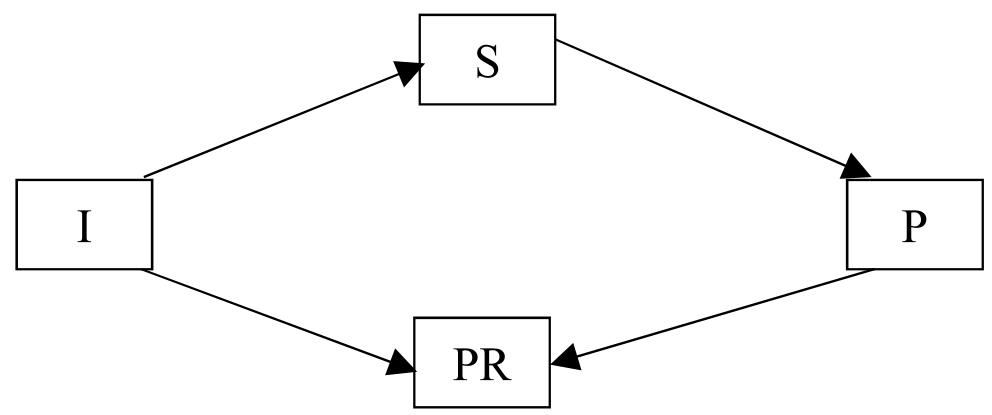 Figure 1: The CC Model showing the transition of users from Ignorant to Protector or Prosocial states.
3. Dynamic Thresholds
The system measures Rumor Depth (). If the rumor is widespread, the system deploys more "Protectors." This mimics the "social fever" in honeybees, where the hive temperature rises in proportion to the fungal infection.
Experiments and Results
The authors tested the RC-SI model on 6 datasets, including massive scale-free networks like ego-Twitter (81k nodes).
- Scalability: The method performed exceptionally well in scale-free networks with high clustering coefficients.
- Efficiency: Truth spreaders (Protectors) in this model had a higher "average protector degree," meaning they were more strategically positioned than in the SEIR or Delayed Start models.
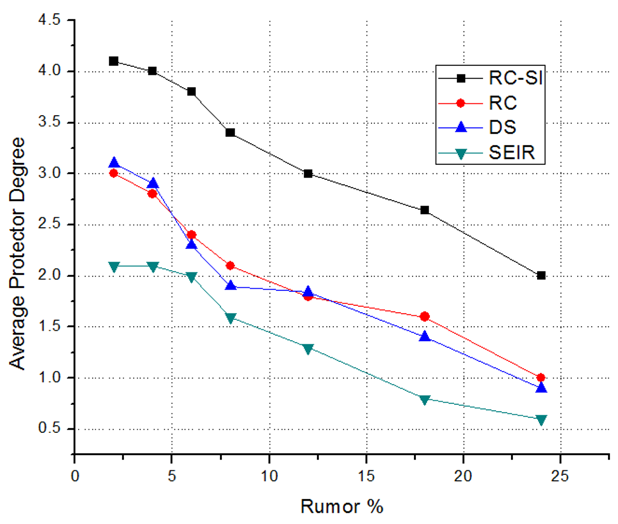 Figure 2: Protector Influence Comparison across different datasets. RC-SI (dark line) consistently maintains higher influence than competing methods.
Critical Insight: Why This Matters
The most profound takeaway is that rumor containment is a trade-off between cost and intensity. By using the "Social Immunity" rule: Authorities can decide exactly when the "intervention" is no longer cost-effective. This provides a mathematical framework for government and official bodies to manage their communication budgets during crises.
Conclusion & Future Outlook
While the RC-SI model is robust, it primarily assumes a "reactive" stance. Future work could integrate LLM-based sentiment analysis to further refine the "Belief Closeness" metric, making the model even more sensitive to the nuance of the rumors being spread.
Takeaway: To stop a rumor, don't just shout the truth; find the "gatekeepers" and "herders" within the community to build collective immunity.