
Social Interaction Assistant: Bridging the Non-Verbal Gap with Person-Centered AI
Social Interaction Assistant: A Person-Centered Approach to Enrich Social Interactions for Individuals With Visual Impairments
The paper introduces the Social Interaction Assistant (SIA), a person-centered multimedia system designed to help individuals with visual impairments perceive non-verbal social cues. It combines wearable hardware (camera-equipped glasses and a haptic belt) with novel machine learning approaches, including Batch Mode Active Learning (BMAL) for face recognition and Latent Facial Topics (LFT) for expression analysis.
TL;DR
Human communication is 65% non-verbal, leaving those with visual impairments at a significant social disadvantage. This paper presents the Social Interaction Assistant (SIA), a wearable system that uses computer vision and haptic feedback to "translate" social cues. By integrating personalized machine learning—specifically Batch Mode Active Learning and Conformal Predictions—the system doesn't just work for the user; it learns and adapts with them through a philosophy called Co-adaptation.
Background: The Invisible Wall in Social Interaction
For the sighted, a raised eyebrow or a subtle smile provides instant context. For the visually impaired, these cues are invisible, often leading to social isolation or misunderstandings. Current technologies are typically "one-size-fits-all," ignoring the fact that blindness is a spectrum. The authors argue for Person-Centered Multimedia Computing (PCMC), where the system is designed to handle the specific routines and cognitive adaptations of each individual.
Methodology: The Three Pillars of Intelligence
The SIA system hardware consists of discreet camera-glasses and a haptic belt that vibrates to indicate the location and distance of interaction partners. However, the true "brain" lies in three algorithmic innovations:
1. Efficient Learning via BMAL
To recognize people in a user's life, models must be trained on captured video. Manually labeling thousands of frames is impossible. The authors propose a Batch Mode Active Learning (BMAL) framework. Instead of random labeling, the system selects a "batch" of images that are both high-uncertainty and representative of low-density data regions.
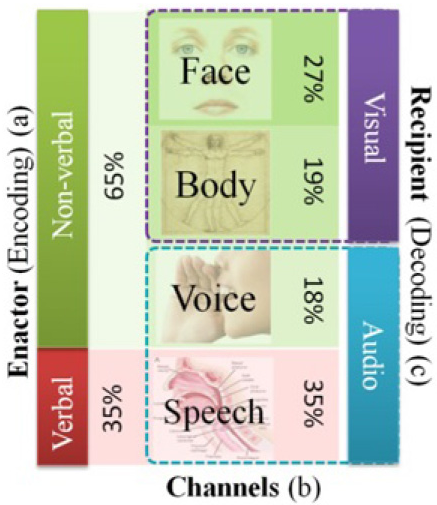 Fig 1: The Social Interaction Assistant (SIA) hardware and user requirement survey results.
2. Reliable Predictions with Conformal Mapping
In social settings, a "wrong guess" by an AI (e.g., misidentifying a boss as a family member) is worse than no guess at all. The Conformal Predictions (CP) framework allows the SIA to provide a "confidence guarantee." If a user sets a 95% confidence threshold, the system is mathematically guaranteed to have an error rate of no more than 5% in the long run.
3. Latent Facial Topics (LFT)
Instead of just mapping faces to "Happy" or "Sad," the paper uses Topic Modeling (usually used for text) to find "Latent Facial Topics." These are atomic movements (similar to Action Units) that allow the system to describe complex, subtle emotional states rather than just basic categories.
Experiments and Results
The researchers validated their approach across several standard datasets (VidTIMIT, MBGC, and CK+).
- Facial Recognition: The context-aware BMAL (which uses the user's location to prioritize likely people) consistently outperformed context-ignorant versions.
- Facial Expression: Using Latent Facial Topics (LFTs) with an SVM achieved an accuracy of 85.62%, a nearly 19% improvement over traditional shape-based features (SPTS).
- Multimodal Fusion: By combining audio and video through the CP framework, the system achieved a highly calibrated error rate, proving its reliability for real-world deployment.
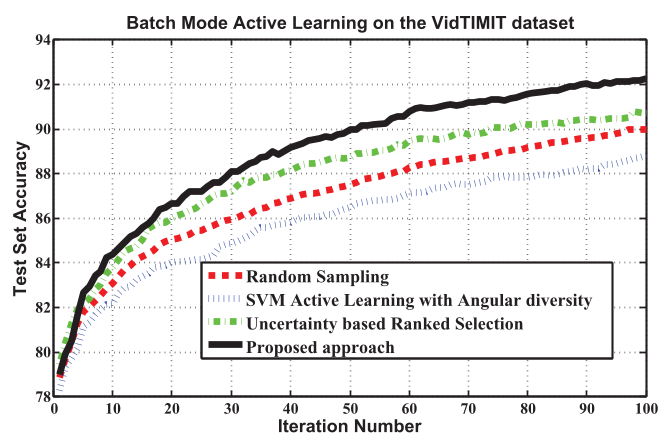 Fig 2: Comparison of BMAL performance against traditional sampling methods, showing faster accuracy convergence.
The Power of Co-Adaptation
The most profound insight of this paper is the feedback loop.
- The System detects a face and vibrates the belt.
- The User feels the vibration and turns their head (an "instant reflex").
- The System now has a clearer, frontal image for recognition, making the "hard" computer vision problem "easy."
This is the essence of Person-Centeredness: the human and the machine work together to overcome the limitations of the technology and the disability.
Conclusion and Future Outlook
The SIA is more than a tool; it is a blueprint for future assistive AI. By focusing on co-adaptation and reliability metrics, the authors move away from the "black box" AI approach towards an interactive partner. While designed for the visually impaired, the authors correctly note that these technologies often pave the way for broader applications—such as enhancing remote communication for everyone in "vision-denied" environments.
Limitations
While the algorithmic results are strong, the physical form factor (glasses and haptic belt) still presents a social barrier. Future work may need to miniaturize these components further to ensure complete "discretion," a key requirement identified by the focus groups.