
The Rise of Social Objects: Tackling Interoperability and Autonomy in SIoT
Social Internet of Things: Interoperability and Autonomous Computing Challenges
This paper explores the Social Internet of Things (SIoT), a paradigm integrating Social Networking with IoT to enable autonomous "friendships" between smart objects. It provides a comprehensive taxonomy of UO (User-Object) and OO (Object-Object) relationships while focusing on solving the critical bottlenecks of interoperability and autonomous computing.
Executive Summary
TL;DR: The Social Internet of Things (SIoT) is the next evolution of connectivity, where devices don't just transfer data—they build "social networks" to discover services and establish trust. This paper demystifies the structure of SIoT and identifies interoperability and autonomous computing (self-management) as the twin pillars required to handle the complexity of billions of connected nodes.
Academic Positioning: This work serves as a high-level technical survey and taxonomy. It bridges the gap between traditional social network analysis and IoT protocol management, categorizing current SOTA efforts into actionable research gaps.
Problem & Motivation: Beyond "Dumb" Connectivity
The traditional IoT paradigm is increasingly hitting a wall. We have billions of devices, but they are often "socially isolated"—locked within specific vendor APIs (e.g., Apple HomeKit vs. Samsung SmartThings).
The authors argue that we need a Social Loop. Without social intelligence, IoT systems face:
- Poor Navigability: Finding a specific service in a network of billions is computationally expensive without a "friend-of-a-friend" discovery mechanism.
- Lack of Trust: How does a sensor know the data it receives from a stranger-node is valid?
- Management Overhead: Human intervention cannot scale to manage the self-healing and optimization of global-scale networks.
Methodology: The Architecture of Object Relationships
The core of the paper lies in its rigorous classification of how "Things" interact. Unlike human social networks, SIoT defines specific relationship heuristics:
1. Object Relationship Taxonomy
The paper divides interactions into User-Object (UO) and Object-Object (OO) categories.
- CLOR (Co-Location Object Relationship): Objects in the same physical space.
- CWOR (Co-Work Object Relationship): Objects collaborating on a specific task (e.g., a smart crane and a payload sensor).
- POR (Parental Object Relationship): Relationships between identical objects from the same manufacturer.
2. The Path to Autonomy
The authors advocate for Autonomous Computing, a concept rooted in IBM’s 2001 vision, featuring four "Self-*" properties:
- Self-Configuration: Automated setup of new nodes.
- Self-Healing: Automated diagnosis and recovery from failures.
- Self-Optimization: Continuous performance tuning.
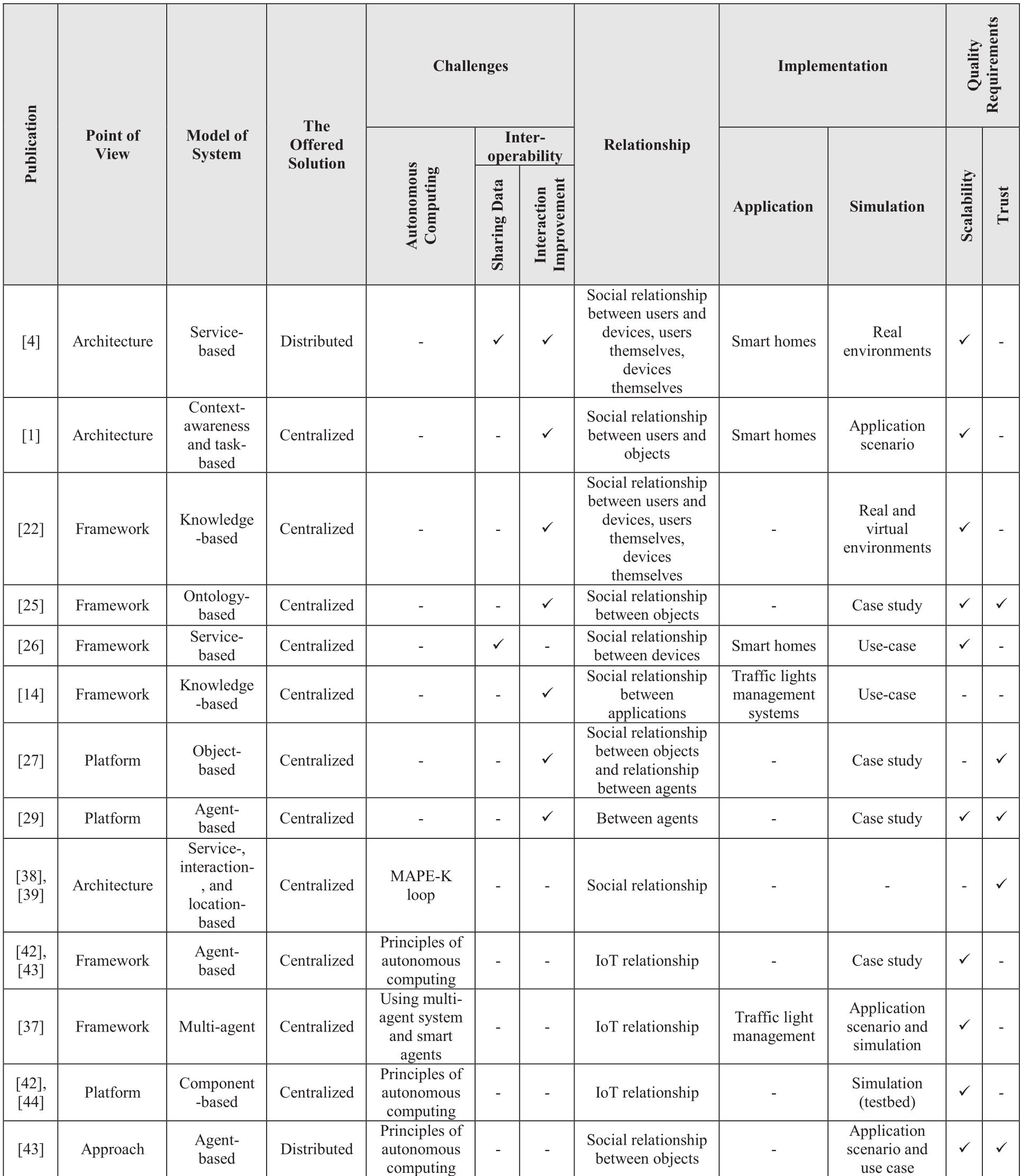 Figure 1: Comparison of existing studies across architectural, framework, and platform perspectives.
Critical Insights & Discussion
The paper provides a synthesized comparison of 13 major works. A few critical observations emerge:
- Semantic Hegemony: Most current interoperability solutions rely on Ontology (RDF/OWL). While effective for data meaning, they often fail to address the "access mechanism" layer—how do different OSs actually talk to each other?
- The Scalability Paradox: While SIoT improves navigability, the overhead of managing social relationships (friendship requests, trust scores) can itself become a bottleneck if not implemented with "Edge Computing" strategies.
- Missing Link: There is a profound lack of "Holistic Work." Research tends to solve interoperability or autonomy, but in the real world, a failure in self-organization often leads to a break in interoperability.
Conclusion: What’s Next for SIoT?
The paper concludes that while the "Social" metaphor provides an excellent framework for discovery and trust, the technical implementation is still fragmented.
Key Takeaways for Researchers:
- Focus on Cross-OS Interoperability: Stop assuming all devices will use the same programming language or data structure.
- Integrate AI for Self-Healing: Move beyond rule-based MAPE-K loops toward cognitive management frameworks that can predict system failures before they occur.
- Trust is Quantitative: Future systems must treat "Trustworthiness" as a dynamic metric that evolves through object interactions, much like a human credit score.
Senior Editor's Note: This paper is an essential read for those looking to understand why their "Smart Home" isn't actually "Smart" yet. It moves the conversation from low-level networking to high-level systemic intelligence.