
Implementing the Social Internet of Vehicles: When Cars Start Making Friends
Towards the implementation of the Social Internet of Vehicles
This paper introduces a comprehensive implementation of the Social Internet of Vehicles (SIoV), a paradigm where vehicles autonomously establish social relationships to enhance service discovery and trust. The authors propose a cloud-based architecture leveraging the Lysis platform, a low-cost On-Board Unit (OBU) prototype, and validate the system through real-world experiments comparing Bluetooth, Wi-Fi, and 802.11p for neighbor discovery.
TL;DR
Researchers have moved beyond theoretical models to build a functional Social Internet of Vehicles (SIoV). By equipping cars with a custom, low-cost On-Board Unit (OBU) and connecting them to a cloud-based "Social Virtual Object" (SVO) layer, vehicles can now autonomously form social ties. This work proves that standard Wi-Fi and 802.11p are sufficient for cars to "discover" neighbors and establish long-term "friendships," enabling smarter services like distributed diagnostics and collaborative parking.
Problem & Motivation: The Loneliness of the Connected Car
The current Internet of Vehicles (IoV) is efficient at moving packets but inefficient at moving meaning. In traditional VANETs, a car might receive data from hundreds of sources, but it has no inherent way to know which source is trustworthy or which "neighbor" is a regular commuter on the same route.
The authors argue that by infusing Social Networking principles into the IoT, we can solve the "discovery" problem. If a car knows its "friends" (other vehicles it meets frequently), it can prioritize their data, just as humans prioritize advice from known acquaintances over strangers.
Methodology: The Architecture of Socializing Machines
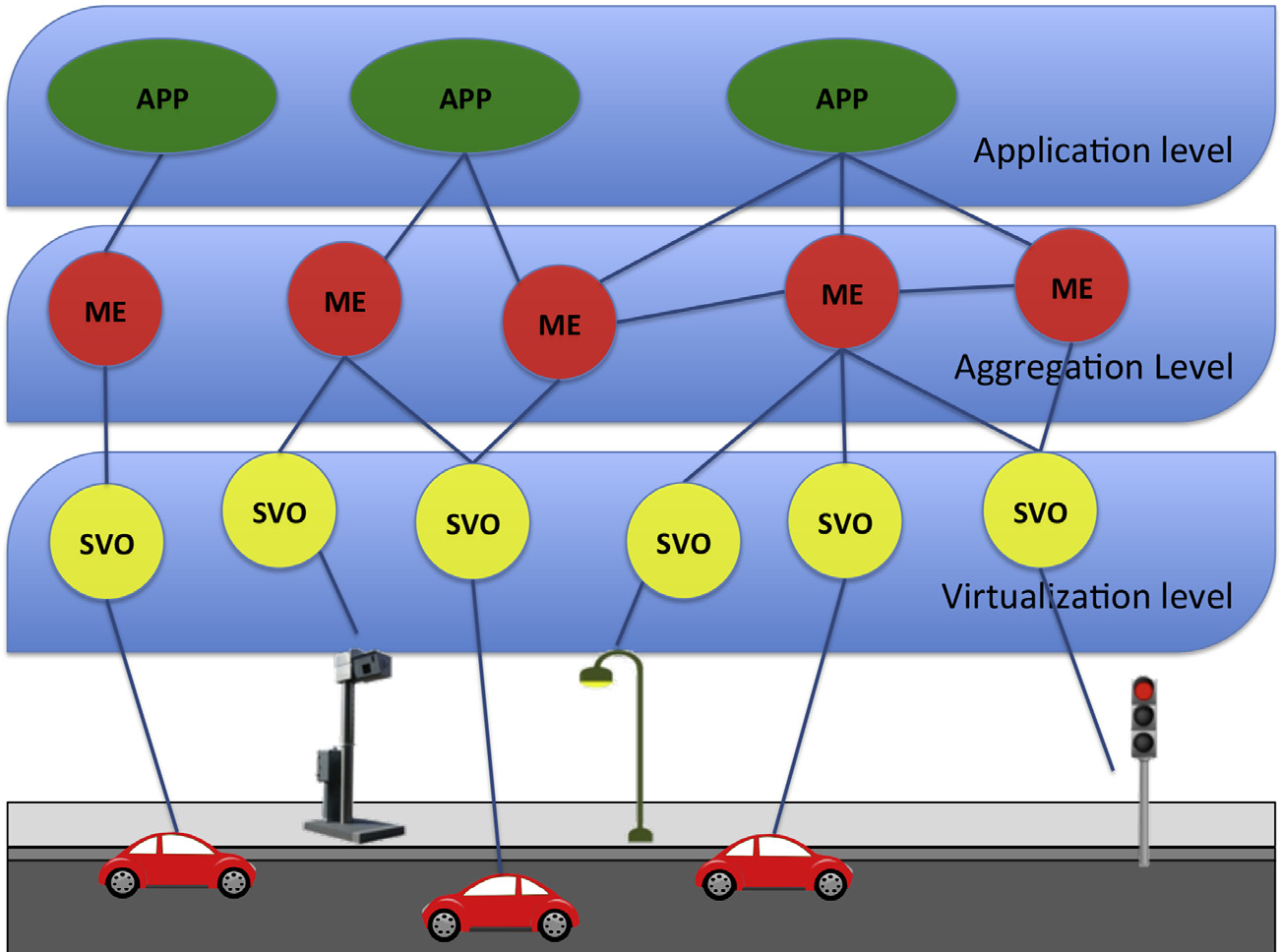
The core of the system is the Social Virtual Object (SVO). Rather than forcing the car's limited hardware to process complex social graphs, the heavy lifting is done in the cloud.
1. The Cloud-SVO Layer
Each physical vehicle has a digital twin in the cloud (hosted on the Lysis platform). This twin manages:
- Relationship Management (RM): Deciding when to create or terminate a link.
- Trustworthiness Management (TM): Evaluating the reputation of friends.
- Social Discovery (SVOS): Searching the social graph for specific services.
2. The Relationship Taxonomy
The paper defines four specific bond types:
- Parental (POR): Same manufacturer, same period. useful for technical diagnostic sharing.
- Social (SOR): Formed when vehicles meet frequently on the road.
- Co-Work (CWOR): Relationships with road infrastructure (RSUs).
- Ownership (OOR): All devices belonging to the same human user.
The Hardware: A 115€ Social OBU
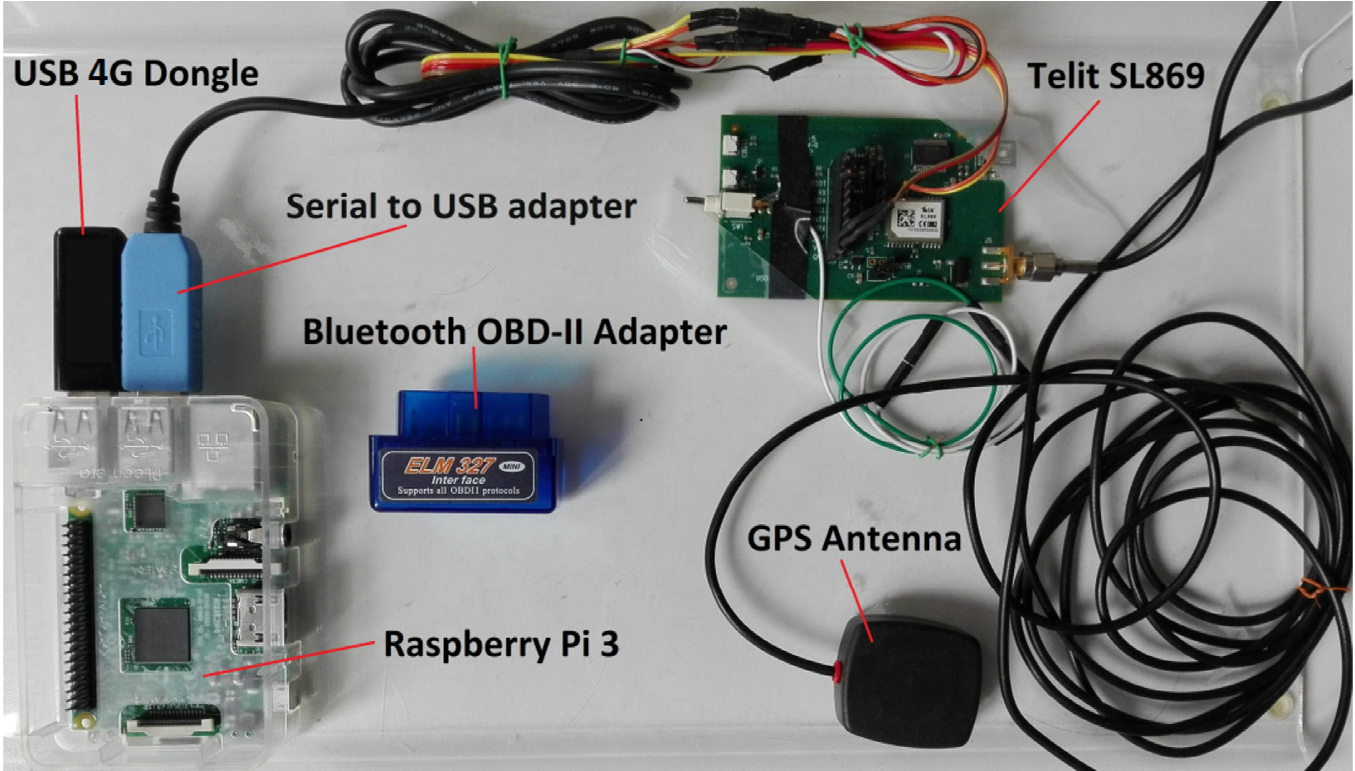
One of the paper's highlights is the implementation of a low-cost OBU using a Raspberry Pi 3, an OBD-II interface (to read engine data), and a 4G LTE dongle. This setup allows any car—even older models—to become a "social vehicle."
Real-World Experiments: Bluetooth vs. Wi-Fi vs. 802.11p
The authors didn't just simulate; they took two cars (an Alfa Romeo 147 and a Ford Focus) to the streets. They tested the Local Neighbor Discovery (LND) algorithm, which uses radio beacons to identify nearby peers.
Key Findings:
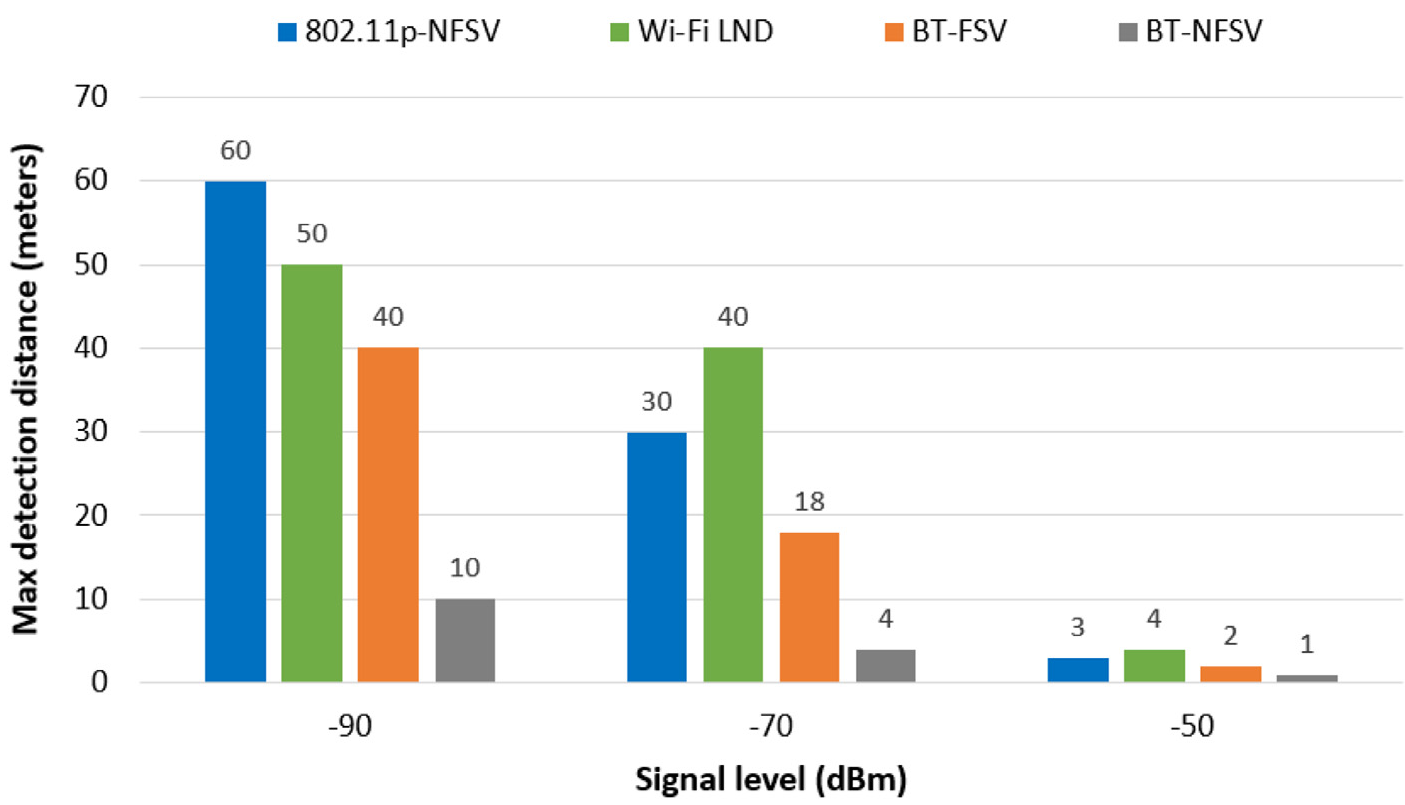
- Range: Wi-Fi and 802.11p maintained stable visibility up to 50 meters, whereas Bluetooth dropped sharply after 10 meters.
- Reliability: Using existing Wi-Fi Access Points (APs) as "common landmarks" proved highly effective. If two cars see the same 5 APs simultaneously, they are likely close to each other.
- Friendship Establishment: By adjusting the "inter-scan time" and the number of required detections, the system can distinguish between a car just passing by and a regular "commute buddy."
Deep Insights: Why This Matters
The shift towards SIoV represents a transition from Object-Human Interaction to Object-Object Interaction.
- Value of Social Ties: In a Smart Parking use case, a car leaving a spot doesn't just broadcast to everyone (creating noise); it alerts its "friends" first, creating a trusted micro-community.
- Extensibility: By aligning the system with the ITS Station Architecture (ISO/ETSI standards), the authors ensure that this social layer can be "plugged into" future smart city infrastructures.
Limitations & Future Work
While the cloud-based approach solves storage and processing issues, it introduces dependency on 4G/5G connectivity. The authors note that 802.11p is currently hampered by a lack of commercial products and clear frequency regulations. Future iterations will likely look into Edge Computing to reduce the latency of these social interactions.
Conclusion
This paper provides the "first stone" for real SIoV implementations. By moving social logic to the cloud and using standard Wi-Fi for neighbor discovery, the authors have demonstrated a scalable path toward a world where your car isn't just a machine, but a socially connected entity capable of collaborating with its peers to make driving safer and more efficient.