
Beyond Readability: Why Plain Language Fails Social Justice in Mortgage Lending
The Social Justice Impact of Plain Language: A Critical Approach to Plain-Language Analysis
This study investigates the implementation of plain-language guidelines in Adjustable-Rate Mortgage (ARM) disclosure statements through a social justice lens. By coupling Critical Discourse Analysis (CDA) with the SEC’s Plain English Handbook, the authors demonstrate how technical documents, despite adhering to readability standards, can still marginalize African-American homebuyers.
TL;DR
Making a document "simple" doesn't necessarily make it "just." This paper argues that even when mortgage disclosures follow official plain-language guidelines, they can still trap marginalized homebuyers—specifically African Americans—through subtle discursive manipulations. The authors call for a shift from a purely "usability" focus to a "human-centered" approach rooted in social justice.
The "Clarity" Trap: Motivation for the Study
For decades, technical communicators have championed plain language as the antidote to "information apartheid." The logic was simple: remove the legalese, use active voice, and everyone wins. However, Natasha N. Jones and Miriam F. Williams argue that this view is dangerously reductive.
In the high-stakes world of home mortgages—an area rife with a history of redlining and predatory lending—simply shortening sentences isn't enough. When African-American applications for conventional loans drop while subprime Adjustable-Rate Mortgage (ARM) applications rise, we must ask: How is language being used to facilitate or hinder agency?
Methodology: Auditing "The Truth"
The authors didn't just check for "clear writing." They paired two distinct frameworks to analyze three representative ARM disclosure statements:
- Phase 1: SEC Plain English Handbook Audit: A formal check against industry standards for text (e.g., no passive voice) and design (e.g., use of white space).
- Phase 2: Critical Discourse Analysis (CDA): An interrogation of power dynamics. Using Huckin’s criteria—Framing, Foregrounding, Omission, and Presupposition—they looked for what the text assumed the reader already knew and what it intentionally left out.
Key Comparisons from the Paper
The study highlights how "Federal Recommendations" are often too vague to be useful.
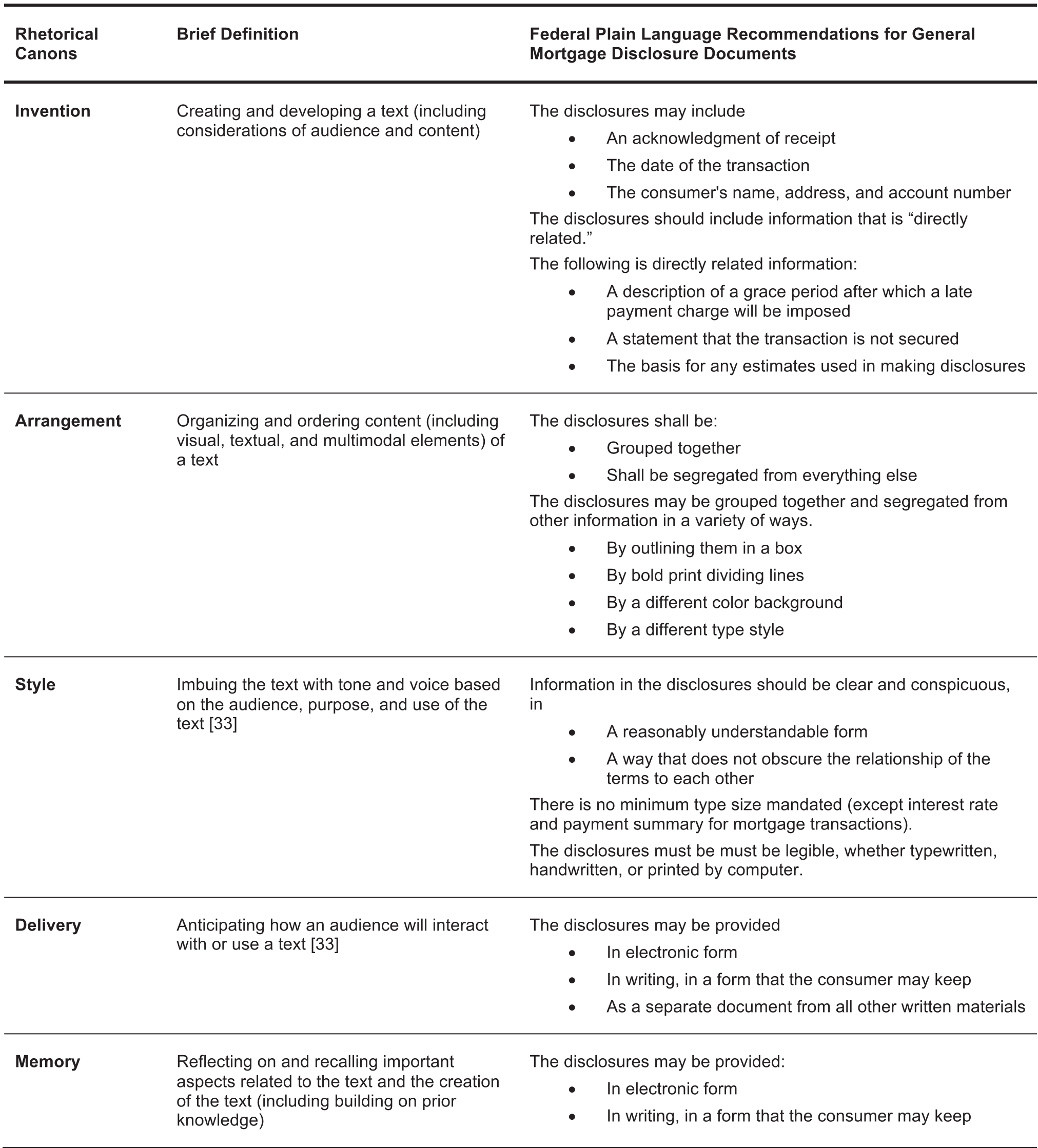 Table 1: The authors show that federal guidelines for "clear and conspicuous" information lack the specific design triggers found in rhetorical theory.
The Findings: The "Best" Design was the Most Dangerous
The results were paradoxical. Disclosure Statement 11 was the most aesthetically pleasing and strictly adhered to SEC design principles (legible fonts, clear boxes). However, the CDA revealed it was the most deceptive:
- Strategic Omission: It mentioned "other ARM programs" were available "upon request" but gave zero contact details or instructions on how to request them.
- Deceptive Labeling: While the document's header stated it was "not a contract," the signature line labeled the reader a "Borrower." For historically distrustful audiences, this shift in "subject position" creates a misleading sense of legal obligation.
- Presupposition: All documents assumed readers were familiar with the Wall Street Journal or the London Market (LIBOR). This "backgrounds" the complexity of financial risk, putting the onus on the vulnerable borrower to "play catch-up."
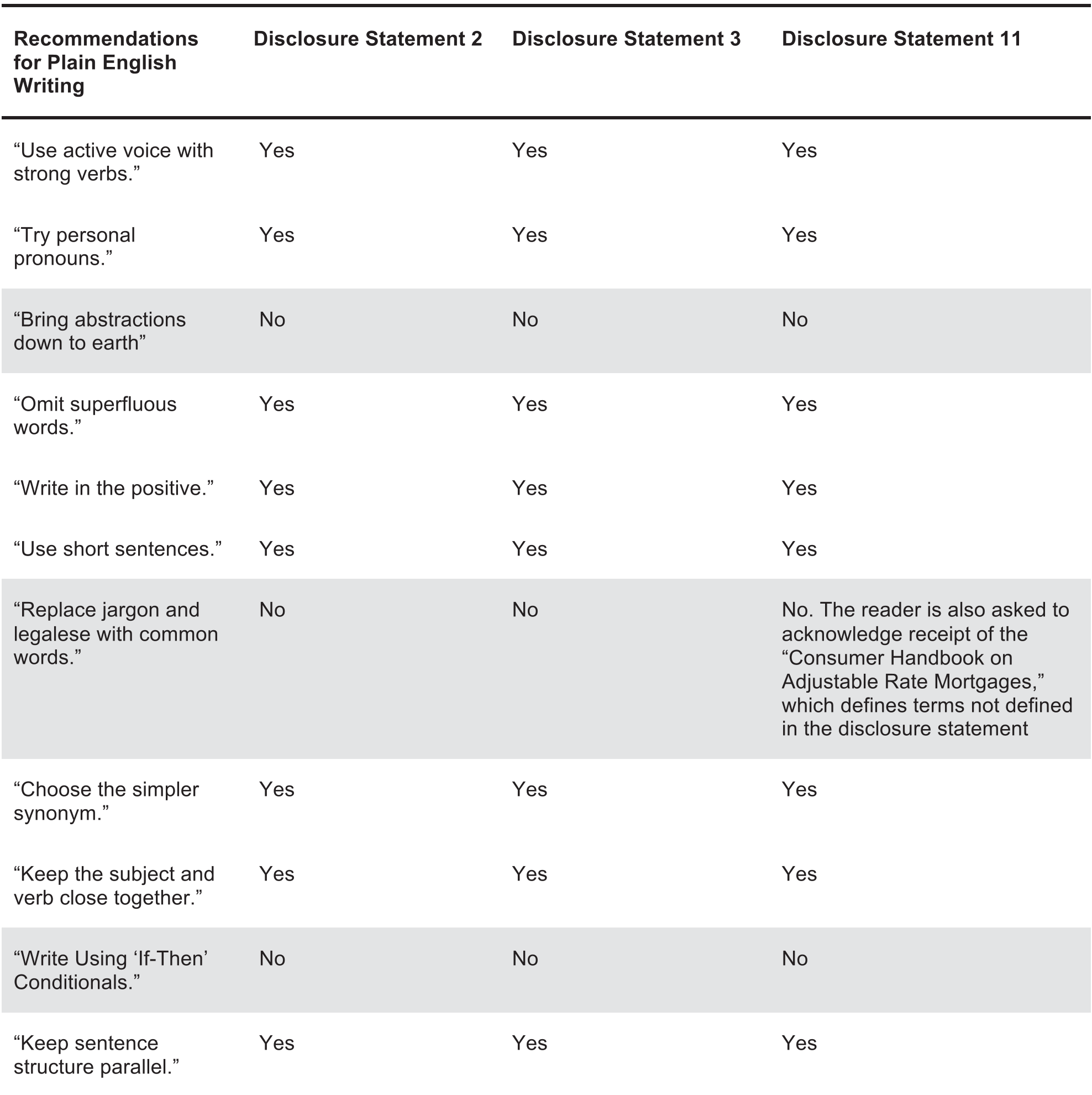 Table 2: Most documents passed the basic writing tests but failed to "bring abstractions down to earth."
Critical Insights: Plain Language as a Mask
The core takeaway is that plain language is value-laden. If a document is clear but incomplete, it isn't helping the reader—it's obscuring the truth with a friendly face. This is particularly harmful to marginalized groups who may already perceive institutionalized bias.
The authors argue that when we ignore the social context and power relations of a document, plain language becomes a tool for "critical analysis" without "critical action."
Conclusion and Practitioner Takeaways
- Go Beyond the SEC Guidelines: Government recommendations are the minimum standard, not the goal.
- Test for Discursive Manipulations: Check your documents for what is missing (omission) and what you assume (presupposition).
- Human-Centered Design (HCD): Involve users—especially those from marginalized communities—at every stage of the design process. Don't just check for readability; check for agency.
As Jones and Williams conclude, technical communication must prioritize comprehensiveness and honesty. Clarity without justice is merely a more efficient way to disenfranchise.