
LinkedIn Accessibility: The Digital Glass Ceiling in Professional Networking
Social Media and Accessibility
This paper presents a critical accessibility audit of LinkedIn, assessing its compliance with the W3C Web Content Accessibility Guidelines (WCAG) 2.0. The study evaluates both web and mobile platforms, revealing significant barriers that hinder employment opportunities for users with disabilities.
TL;DR
Social media is no longer just for leisure; it is the cornerstone of modern employment. However, as documented by Gian Wild, LinkedIn remains significantly inaccessible to people with disabilities. From "Keyboard Traps" to missing ALT text for user posts, these technical failures directly contribute to the declining employment participation rate of the disabled community.
Background Positioning
In the landscape of inclusive design, this paper acts as a critical compliance audit. It bridges the gap between civil rights—specifically the Americans with Disabilities Act (ADA)—and technical implementation, pinpointing how a platform used by 95% of recruiters can inadvertently discriminate through poor code.
The "Invisible" Barrier to Employment
The motivation behind this study is rooted in a startling statistic: while general employment rates have remained steady, the employment rate for people with disabilities has nearly halved since the 1990s. In a world where adding a professional photo makes a candidate 14 times more likely to be found, a screen reader's inability to process profile elements isn't just a bug—it’s a career-ending barrier.
Methodology: Testing the Giants
Using the WCAG 2.0 Framework (focusing on Level A and AA standards), the author tested LinkedIn's desktop and mobile interfaces. The methodology focused on four core pillars:
- Perceivability: Is the content readable for those with low vision?
- Operability: Can the site be navigated without a mouse?
- Understandability: Is the interface logical?
- Robustness: Does it work with assistive technologies?
Architecture of an Inaccessible Interface
The study highlights that while LinkedIn's core site structure is generally sound (using appropriate form elements), the dynamic content layers are where accessibility fails.
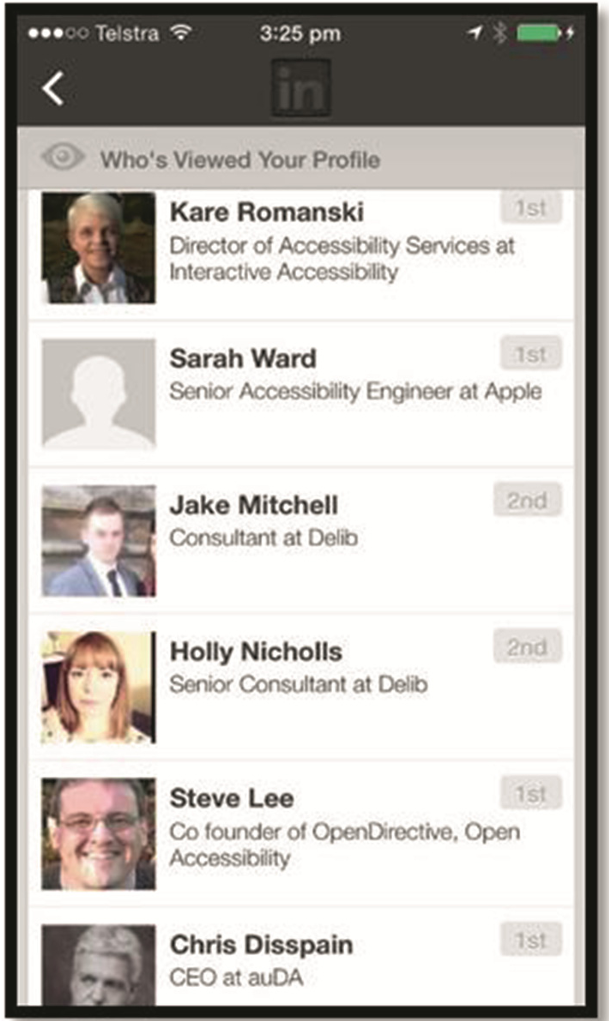 Figure 1: Critical contrast failures in error messaging and contact degrees.
Key Technical Failings
The audit revealed several "show-stopper" issues:
- The Keyboard Trap: New users are often met with "messaging popups" that cannot be closed via keyboard. This requires a user to restart their entire session—a critical failure under WCAG SC 2.1.2.
- Logic vs. Visual Order: In the sign-up process, the "Focus Order" (the sequence an element is highlighted when pressing 'Tab') does not match the visual layout.
- Missing ALT Text: While LinkedIn provides ALT text for its UI icons, it provides no mechanism for users to add descriptions to their own posts, rendering the "social" aspect of the network invisible to the blind.
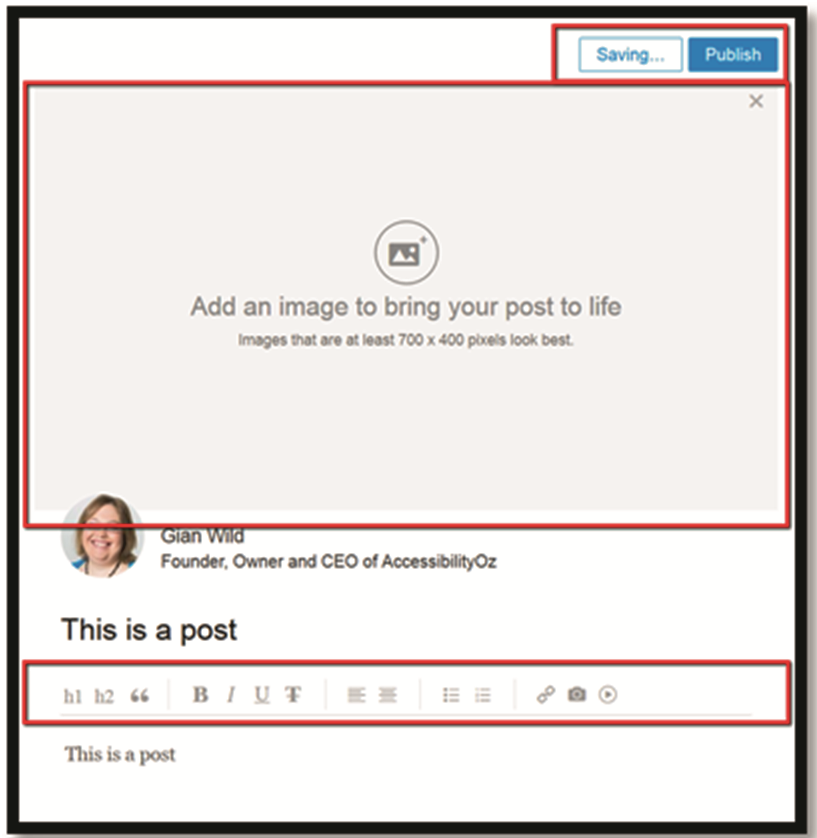 Figure 2: Vital profile-building features like "Save" and "Publish" that are unreachable for mouse-less users.
Deep Insight: The "Agile" Accessibility Gap
The most profound takeaway is the author's analysis of why social media is so inaccessible. The culprit? Rapid Deployment. With platforms like Facebook and LinkedIn refreshing their code multiple times a day, accessibility is often treated as a "post-launch" fix rather than a "pre-launch" requirement. This "Ship Early" culture means that even if a feature is fixed today, it may be broken by an update tomorrow.
Critical Analysis & Conclusion
This paper successfully argues that digital accessibility is a prerequisite for economic equality.
- Takeaway: Accessibility must be automated within the CI/CD (Continuous Integration/Continuous Deployment) pipeline to ensure that daily updates don't regress into discriminatory interfaces.
- Limitations: The study focuses on a specific point in time (2016-era LinkedIn); however, the categorical errors described (dynamic popups, focus mismanagement) remain the primary challenges in modern Single-Page Applications (SPAs).
- Future Vision: We are moving toward a web where AI might automatically generate ALT text for user posts, but until the core navigational logic of professional networks is fixed, the "digital glass ceiling" will remain intact.