
Digital Mayors: What Drives Social Media Engagement in Polish Local Government?
Social Media Activity and Local Civic Engagement in Poland
This study investigates the determinants of Facebook activity and citizen engagement among mayors of Poland's largest cities (population > 100,000). By analyzing 3,844 posts, the researchers identify individual traits, leadership dynamics, and electoral competitiveness as key drivers of digital democracy performance.
Executive Summary
TL;DR: This research decodes the "Facebook Strategy" of Poland's urban leaders. It finds that while political competition forces mayors to post more frequently, true citizen engagement is a "young person's game," heavily influenced by a mayor's age, party affiliation, and the digital activity of their deputies.
Academic Context: Positioned at the intersection of political science and E-government, this paper shifts the focus from institutional transparency to individual political leadership, providing a rare empirical look at personal social media accounts as tools for local governance.
Problem & Motivation: The Gap in Digital Democracy
Most literature on digital government treats "the city" as a monolith, analyzing official municipal pages. However, the real power often resides in the personal brand of the Mayor.
The authors identified a critical gap: we don't know if these personal accounts are used for Information Push (one-way), Political Marketing (self-promotion), or Participatory Democracy (two-way interaction). The motivation was to see if digital tools are actually fostering social capital or just serving as high-tech megaphones for incumbents.
Methodology: Coding the Digital Pulpit
The researchers analyzed 3,844 posts from mayors of the 40 largest Polish cities over a three-month period. They developed two sophisticated coding scales:
- Promotion Scale: Distinguishing between "About Me," "About My City," and "About Other Places."
- Participation Scale: Measuring invites to decision-making bodies vs. simple event notifications.
 Figure 1: The mathematical framework used to calculate Popularity (P3), Commentivity (C3), and Virality (V3) to derive a total Engagement score.
Key Insights: Why Some Mayors "Win" Facebook
The study resulted in several counter-intuitive findings that challenge common assumptions in E-gov research:
1. The Survival Instinct Drive
Activity isn't just about being "tech-savvy." It's about political pressure. Mayors who won their elections by narrow margins or required a run-off election were significantly more active. Facebook, in this context, is a survival tool for those in contested seats.
2. The Multiplicative Effect of Deputies
Interestingly, a mayor's engagement level is positively correlated with the social media activity of their Deputy Mayors. This suggests a "Digital Team" effect—active deputies create a digital ecosystem that amplifies the visibility and engagement of the lead executive.
3. The "Social Science" Advantage
Contrary to the idea that technical backgrounds lead to better tech usage, mayors with Social Science degrees were more active. This implies that Facebook is viewed primarily as a communication and social engineering tool rather than a technical platform.
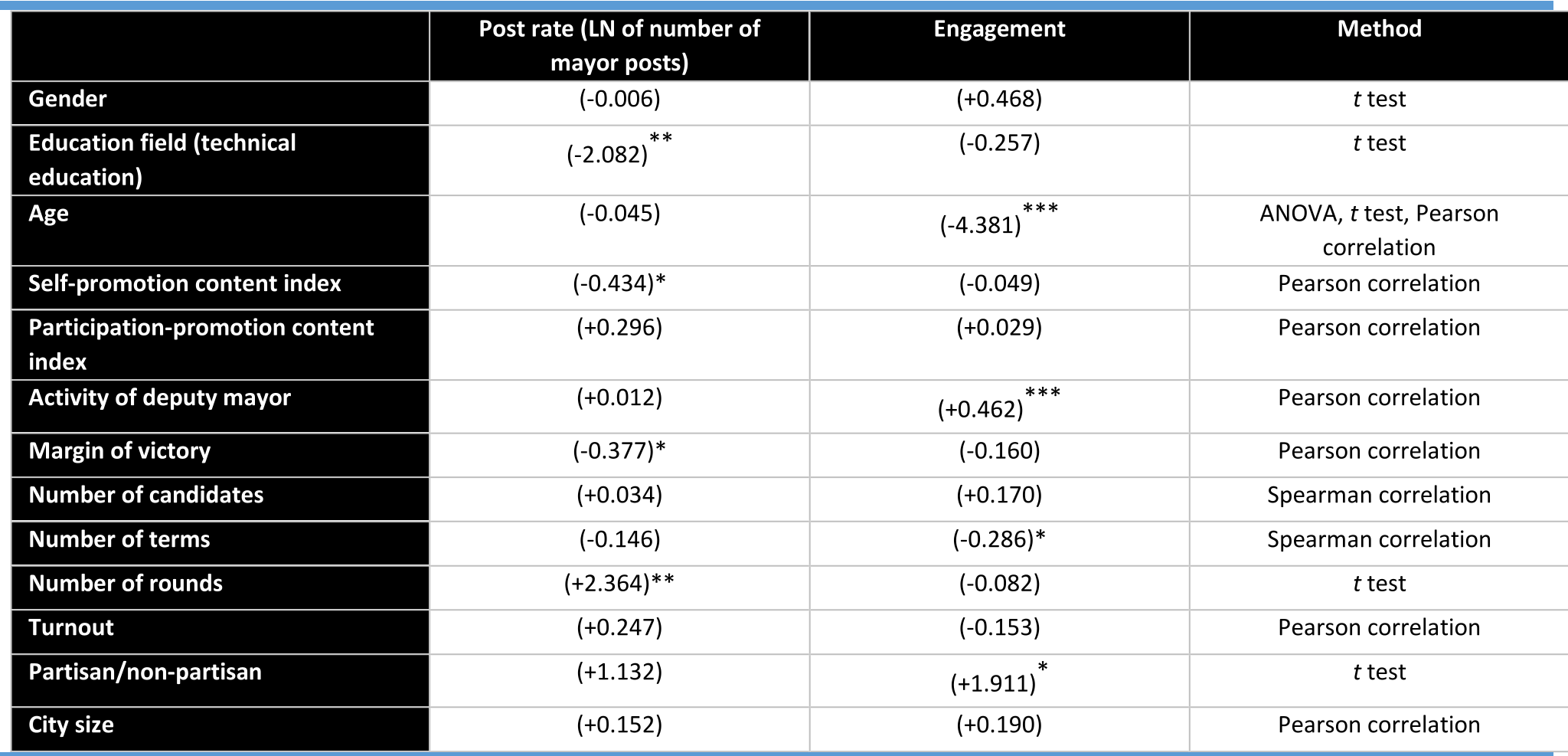 Table 1: Correlation analysis showing the negative impact of age and technical education on digital performance.
Critical Analysis & Conclusion
Takeaway
The paper confirms that social media is increasingly a personalized political arena. In Poland, the transition from institutional communication to "Mayoral Branding" is complete. Engagement is not driven by the size of the city (Population), but by the persona of the leader.
Limitations
- Qualitative Blindness: The metrics measure the quantity of comments and shares, but not the sentiment. A mayor could have high "Engagement" driven by negative backlash or scandals.
- Platform Specificity: Focusing exclusively on Facebook ignores the growing influence of Instagram and Twitter (X) in political mobilization.
Future Outlook
For future research, the authors suggest a longitudinal study to see how these patterns change during an active election cycle. For practitioners, the message is clear: if you want digital engagement, look toward younger leaders and foster a collaborative "digital executive" team rather than a lone-wolf approach.