
The Power of "Like": Decoding Cross-Cultural Aesthetics in Social Media Marketing
Explore the Appeal of Social Media in Aesthetics Communication Among Different Culture
This research investigates the psychological drivers behind social media aesthetics communication across different cultures using Kansei Engineering. By employing the Evaluation Grid Method (EGM) and Quantification Theory Type I, the study identifies "Motivated Sharing" and "Credibility" as the core factors that transform visual aesthetics into marketing efficacy.
TL;DR
Why do we feel compelled to share a photo of a coffee shop or a sunset on Instagram? This study uncovers the "Kansei" (emotional) mechanics of social media aesthetics. By blending qualitative expert insights with quantitative statistical modeling, the researchers reveal that "Motivated Sharing" and "Credibility" are the twin engines of modern net marketing, driven by specific visual triggers like "spectacle images" and the social authority of KOLs.
The "Envy Economy": Why Simple Beauty Isn't Enough
Modern marketing has moved beyond mere product utility. We live in an era of Aesthetics Communication, where users essentially act as free promoters for brands by sharing "enviable" lifestyle snippets. However, what constitutes a "sharable" aesthetic varies significantly across cultures. The researchers identified a gap: we know visual content works, but we don't precisely know why certain design elements trigger the urge to share in different cultural contexts.
Methodology: Mapping the Human Emotion
The study adopts Kansei Engineering, a Japanese consumer-oriented technology for product development that translates human feelings (Kansei) into design specifications.
1. The Evaluation Grid Method (EGM)
The researchers conducted in-depth interviews with marketing specialists and designers to build a "Semantic Hierarchy." This hierarchy connects abstract emotions (e.g., "I want this") to concrete attributes (e.g., "a spectacle image of a graffiti wall").
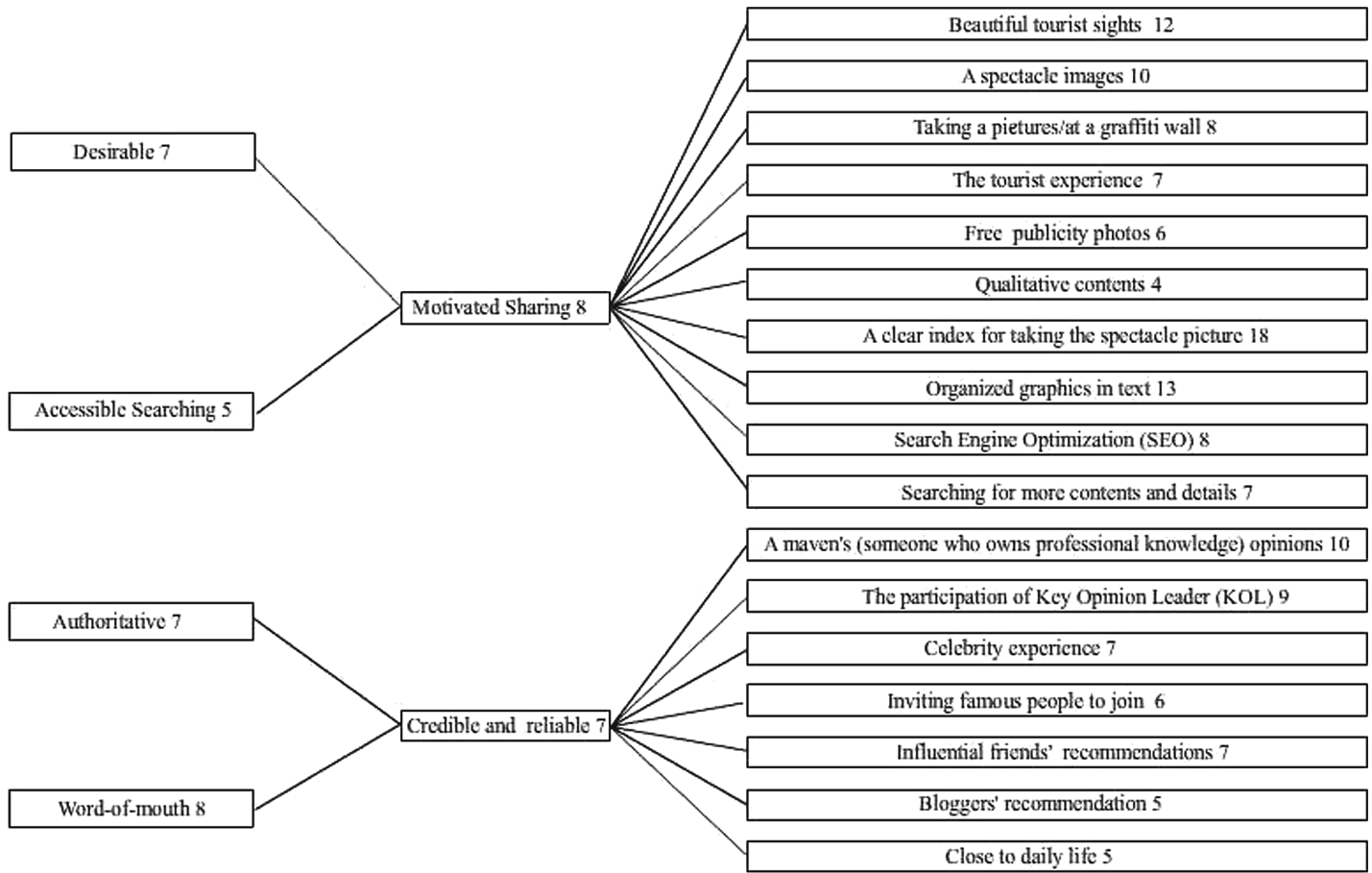 Fig 1: The EGM chart mapping abstract appeal factors to specific technical attributes.
2. Quantification Theory Type I
To move from "feelings" to "data," the study used Quantification Theory Type I (a form of multiple regression). This allowed them to assign specific "Category Scores" to different visual elements, showing exactly how much a specific feature (like a "Maven's opinion") contributes to the overall feeling of "Credibility."
Key Insights: What Actually Drives the "Share"?
The results provide a fascinating look at the hierarchy of digital appeal:
- The "Spectacle" Effect: For the "Desirable" factor, "Spectacle Images" and "Graffiti Walls" carried the highest positive weights. Interestingly, generic "Beautiful Tourist Sights" sometimes had a negative correlation with desirability, suggesting that modern users prefer unique, "staged" spectacles over traditional landscapes.
- The KOL Supremacy: When it came to "Credibility and Reliability," the participation of Key Opinion Leaders (KOLs) was significantly more influential than "Inviting Famous People." This suggests that "expertise" and "relatability" trump raw celebrity status in the digital aesthetics space.
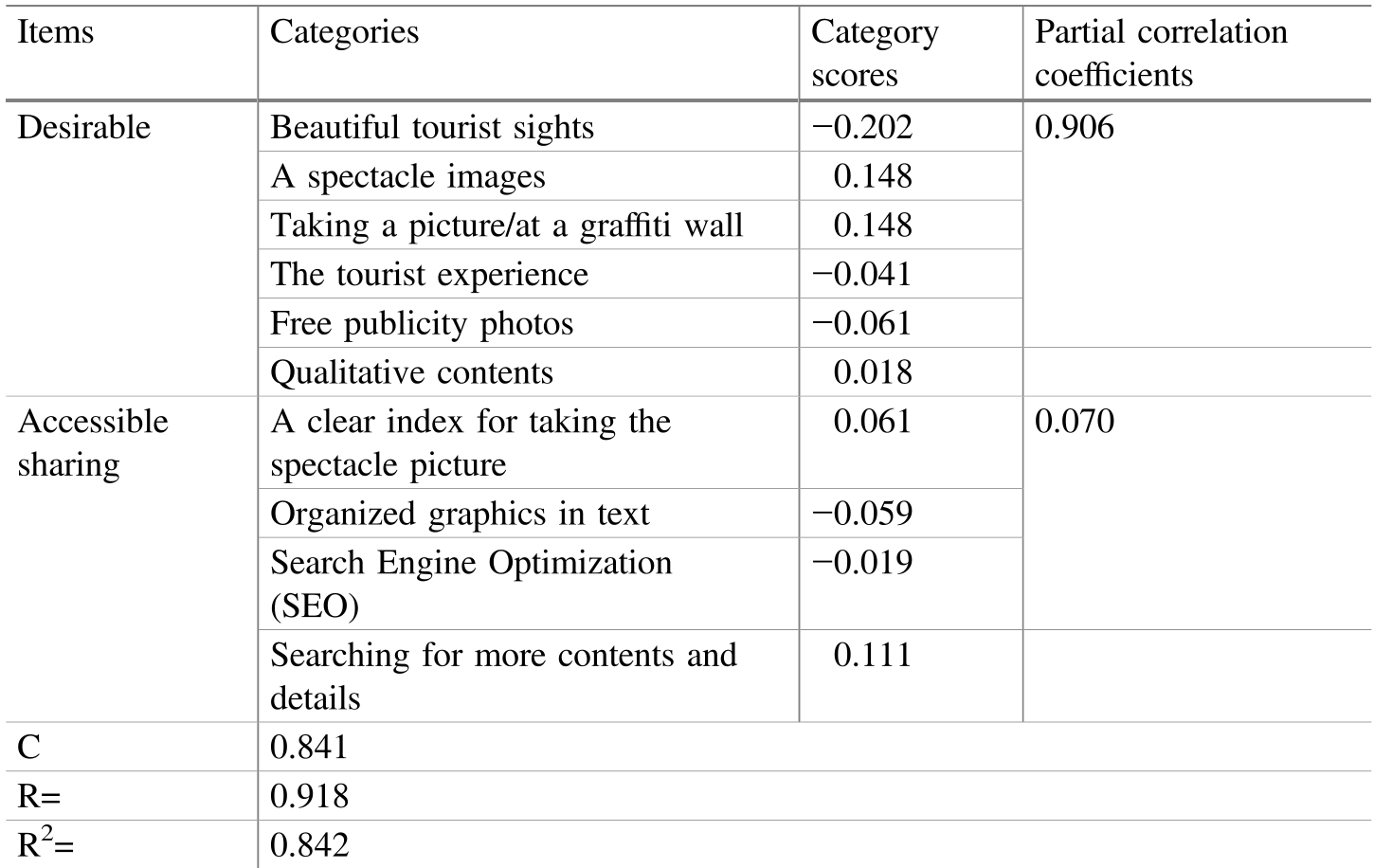 Fig 2: Statistical weights showing the impact of different visual and social categories on "Motivated Sharing".
Cross-Cultural Nuances
The study highlights that while the desire for "Motivated Sharing" is universal, the specific triggers vary. For instance, the Partial Correlation Coefficients reached as high as 0.906 for certain factors, indicating that cultural background dictates the "access points" through which a brand can enter a consumer's social circle.
Conclusion and Future Outlook
This research proves that "Net Aesthetics" is a structured science, not just an artistic fluke. For designers and marketers, the takeaway is clear:
- Design for the "Spectacle": Create environments (like graffiti walls or "Instagrammable" corners) specifically for the camera.
- Leverage Niche Authority: Use KOLs who possess specific "Maven" knowledge rather than general celebrities to build authentic trust.
- Optimize for Searchable Aesthetics: The study found that "Accessible Searching" (SEO and organized graphics) is a hidden but vital component of aesthetics communication.
Limitations: While robust, the study primarily compares Taiwanese and Non-Taiwanese groups. Future research could benefit from a more granular breakdown of specific Western vs. Eastern aesthetic preferences to refine these marketing "winning principles" even further.