
Unleash Your Brand: Navigating the New Frontier of Academic Marketing
Unleash Your Brand! Using Social Media as a Marketing Tool in Academia
The paper introduces a strategic communication framework for academic researchers to utilize social media as a marketing tool. It conceptualizes the "Personal Brand" of scholars and presents a workflow for multi-channel management—ranging from general platforms like Twitter and LinkedIn to academic-specific networks like ResearchGate and SSRN—to enhance professional visibility and differentiation.
TL;DR
Modern academia is no longer just about "publish or perish"; it is about "be seen or be forgotten." This paper provides a comprehensive framework for scholars to transition from passive researchers to active personal brands. By leveraging a structured workflow and understanding the nuances of platforms like ResearchGate, LinkedIn, and Twitter, academics can navigate the competitive landscape and bridge the gap between their research output and professional reputation.
Contextual Positioning: From Ivory Tower to Digital Network
Historically, an academic’s reputation was guarded by the prestige of their institution. However, as the paper argues, the emergence of social media has decentralized this power. We are now in a Networked Reality where the individual researcher is often the primary touchpoint for the public and the scientific community. The authors position this work not as a "how-to" for vanity, but as a survival guide for a hyper-competitive job market where high-quality research is the baseline, and personal branding is the differentiator.
The "Easy Follower" vs. The "Tough Nut"
A core insight of the paper is the Social Media Follower Continuum. Most researchers focus only on their immediate circle (colleagues and students), but the real value lies in the "Persuadable Crowd."
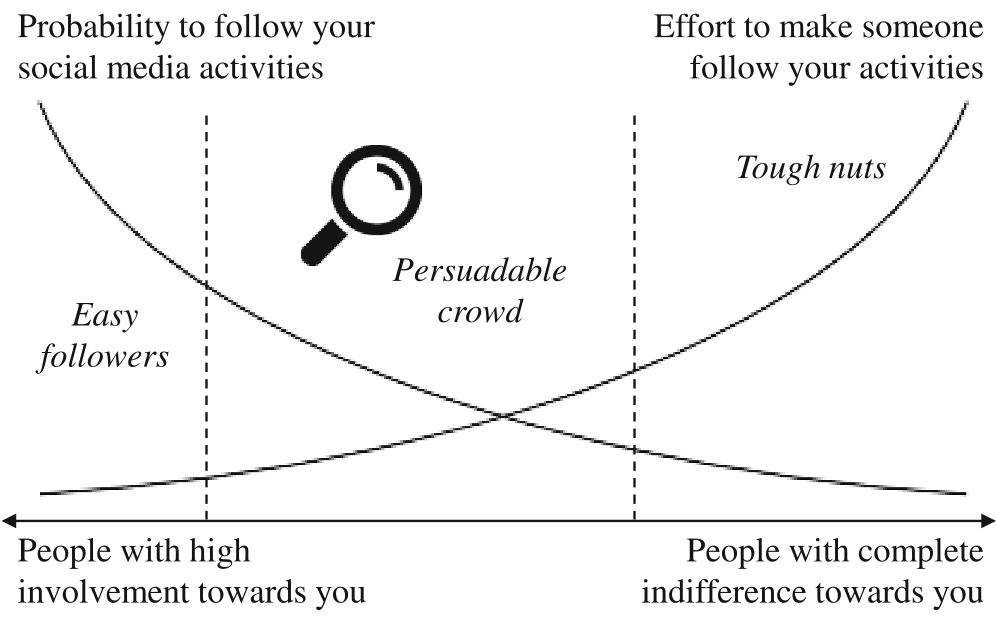
To reach this crowd, academics must embrace Content Marketing—sharing value (information, entertainment, or networking) rather than just self-promotion. The goal is to satisfy the "Uses and Gratifications" (U&G) of the audience: Why should they click? Does this post solve a problem, inform them of a trend, or provide a behind-the-scenes look at the scientific process?
Methodology: The Content-Centric Workflow
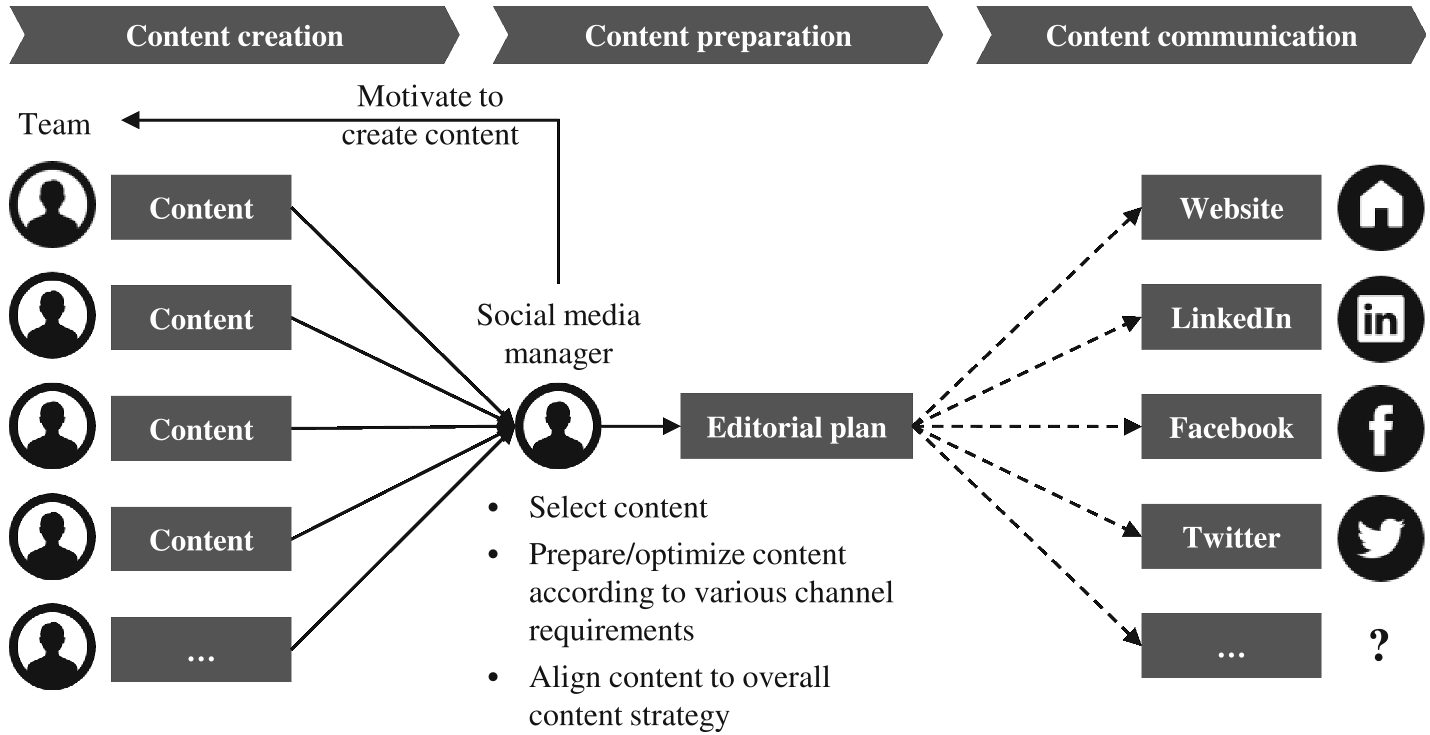
The authors discourage "channel-first" thinking (e.g., "What should I post on Facebook today?"). Instead, they propose a three-step cyclical process:
- Creation: Collecting raw material (papers, conference photos, "behind-the-scenes" stories).
- Preparation: Tailoring that material. A photo from a Venice conference dinner might be perfect for Facebook but inappropriate for the "serious" tone of LinkedIn.
- Communication: Using an editorial plan to ensure consistency without burnout.
Operational Excellence: Hacking the Algorithm
The paper doesn't shy away from the technicalities of social media "Engagements." To defeat the "mysterious algorithms" of platforms like Facebook:
- Visuals are Non-Negotiable: Posts with images or videos significantly outperform text-only posts in user interaction.
- Brevity is King: In an era of infinite scrolling, short "appetizer" texts with "bit.ly" links to detailed university pages are the most effective way to drive traffic.
- Consistency: A cadence of 3–5 posts per week is suggested to maintain visibility without overwhelming the network.

Critical Analysis & Takeaways
The paper succeeds in humanizing the researcher. By citing examples like Barack Obama’s "behind-the-scenes" strategy, the authors demonstrate that accessibility is a powerful component of a personal brand.
Conclusion: Personal branding is not about changing who you are as a scientist; it is about ensuring that the impact of your work isn't confined to a closed PDF. While social media "done right" is indeed a lot of work, it is the only way to ensure your brand is "unleashed" in a globalized, digital network.
Limitations: The paper focuses heavily on Western-centric platforms (Facebook/Twitter) and was written before the massive surge in Short-form Video (TikTok/Reels) and Generative AI, which have further complicated the "noise" in the digital marketplace. Future researchers should look into how AI-generated content affects the perceived "authenticity" of an academic brand.