
Digital Bridges: How Social Media Spillover Sustained the Saudi Women’s Right to Drive Movement
Social media, spillover, and Saudi Arabian Women's right to drive movements: Analyzing interconnected online collective actions
This study investigates the "Social Movement Spillover" effect within the Saudi Arabian Women’s Right to Drive movement by analyzing Twitter data from three sequential 2013 campaigns. Using Betweenness Centrality (BC) metrics, the authors identify key "brokers" who facilitate information diffusion and sustain collective action across interconnected online movements.
TL;DR
This research explores how the Saudi Arabian "Women’s Right to Drive" movement survived and evolved through "spillover"—the transfer of activists, ideas, and influence between sequential online campaigns. By applying computational network analysis to over 116,000 tweets, the study identifies "brokers" who act as vital bridges, ensuring the movement's pulse continues even as specific hashtags change or government pressure increases.
Problem & Motivation: Beyond the Hashtag
In the pre-Internet era, social movements were often studied as localized, physical gatherings. However, today’s activism is a "cyber-collective" phenomenon. The challenge lies in understanding how decentralized movements sustain momentum across different phases. Why does a movement not simply die out when a specific protest date passes?
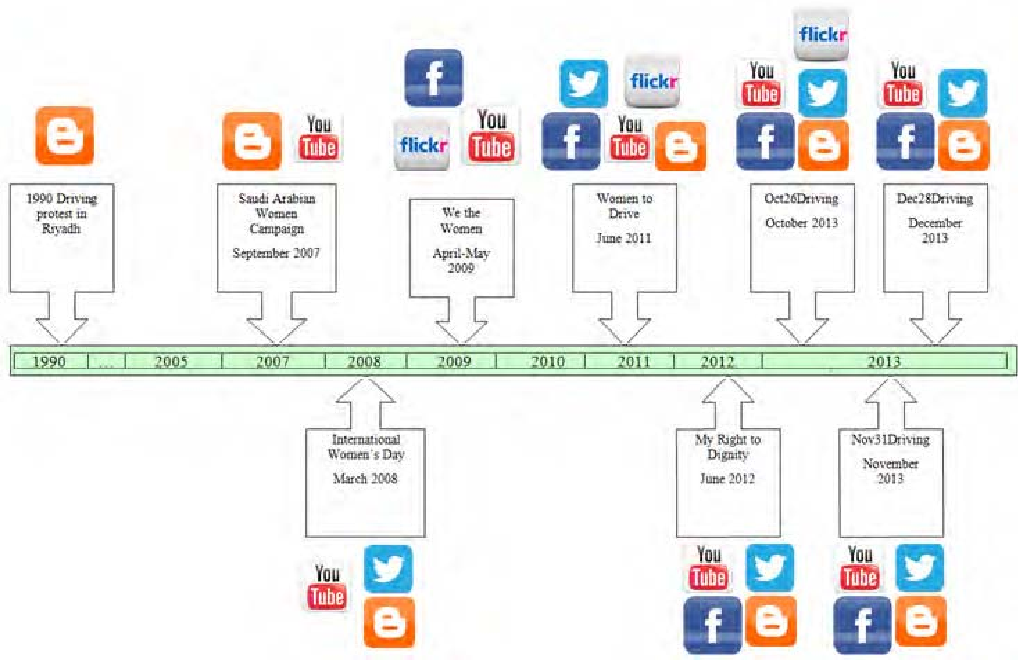
The authors argue that the answer lies in Social Movement Spillover. Traditional sociology suggests movements influence each other by sharing participants and tactics. In the digital age, this happens at lightning speed. The researchers sought to move beyond qualitative observation to quantify this influence using Twitter data from three specific 2013 campaigns: Oct26Driving, Nov31Driving, and Dec28Driving.
Methodology: Identifying the "Brokers"
The core insight of the study is that influence in a movement isn't just about being "popular" (high follower count); it’s about being a "bridge."
Logic of Brokerage
The authors used Betweenness Centrality (BC) to find these bridges. Mathematically, a node with high BC sits on the shortest paths between many other nodes in a network. In a social movement, these are the activists or organizations that link disparate groups of supporters.
Computational Workflow
- Data Harvesting: Collected 116,565 tweets via ScraperWiki.
- Network Construction: Built tweet-retweet matrices to map interactions.
- Ranking: Used MATLAB’s optimized libraries to calculate BC scores for thousands of users, identifying the top 15-30 "brokers" for each campaign.
Experiments & Results: The Evolution of Leadership
The results confirm that activism is a relay race, not a sprint.
The Shift from People to Profiles
In the early stages (#Oct26Driving), charismatic individuals like Saudiwoman and manal_alsharif held high brokerage scores. However, as the movement matured into #Nov31Driving and #Dec28Driving, institutional accounts like @oct26driving took over the top spots. This suggests a transition from charismatic leadership to administrative strategy.
 Table 1: The shift in top-rated brokers across the three campaigns.
Visualizing Spillover
The study found a "mutual support mechanism." Activists from the first campaign didn't just disappear; they redirected their "brokerage" to the next hashtag. Intriguingly, about 3% of users who were "quiet" in the first phase emerged as key leaders in the later stages, likely influenced by the primary brokers.
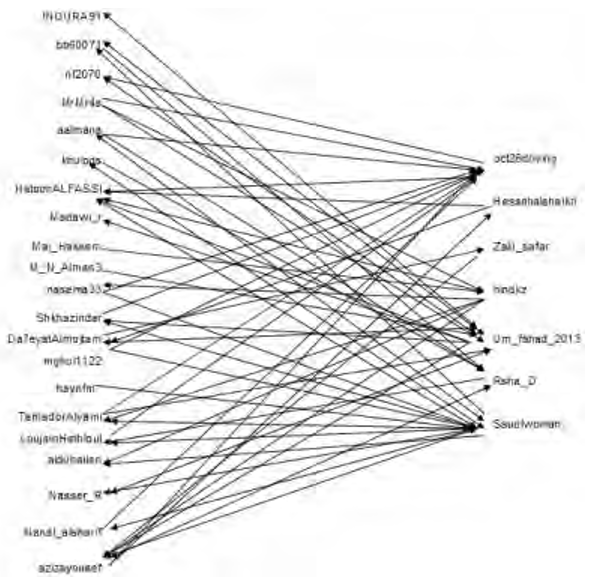 Figure 3: Interrelation between brokers showing how leadership is shared and contested.
Critical Insight: Leadership is Decentralized
This research challenges the "Great Man" theory of history. In the digital landscape, the "Potential for leadership is not aggregated in a few leaders, but dispersed."
Key Takeaways:
- Resource Spillover: Activists reused video and audio content across campaigns to maintain a consistent "collective identity."
- Resilience: When the Saudi government toughened bans after October 26, the movement didn't shatter; it pivoted to the symbolic #Nov31Driving (a non-existent date representing infinite persistence).
- Computational Utility: Betweenness Centrality is a more effective measure for identifying those who sustain a movement than simple "likes" or "mentions."
Conclusion
The "Women's Right to Drive" movement demonstrates that online activism is a complex, interconnected system. By understanding the "brokers" and the "spillover" effects, we can better predict how modern social and information systems will behave in the face of pressure or growth.