
Monitoring the Digital Pulse: Using Social Media to Gauge Student Satisfaction
Monitoring social media: Students satisfaction with university administration activities
This paper introduces an original method for monitoring student satisfaction with university administration by analyzing content and comments on social networks. Focusing on Plekhanov Russian University of Economics (PRUE), the study develops a cyclical model of student online activity and achieves insights into how large-scale institutional events impact digital reputation.
TL;DR
Higher education is shifting toward a "student-as-client" model where rapid feedback is crucial. This study moves beyond traditional, slow-moving surveys by analyzing organic student comments on social networks like VKontakte. By mapping these comments to an "Importance-Satisfaction Matrix," the authors provide a blueprint for university administrations to identify crisis zones—such as the friction caused by institutional mergers—and celebrate successes in real-time.
Background Positioning
While most universities use social media primarily as a promotional megaphone, this work positions social platforms as a dynamic diagnostic sensor. It fills a gap in the literature between "Social Media as Branding" and "Traditional Sociology," proving that the "unfiltered" nature of online comments provides a more honest and timely reflection of student sentiment than official questionnaires.
Problem & Motivation: The Failure of the Survey
The authors argue that traditional surveys are failing for three main reasons:
- Response Fatigue: Students are skeptical of surveys if they don't see immediate action.
- Formality Bias: Official channels lack the "emotional capital" found in natural environments.
- Latency: By the time a survey is processed, the peak of student frustration has often passed.
The research intuition here is simple: Students already talk about their problems online; the university just needs to learn how to listen systematically.
Methodology: The Importance-Satisfaction Matrix
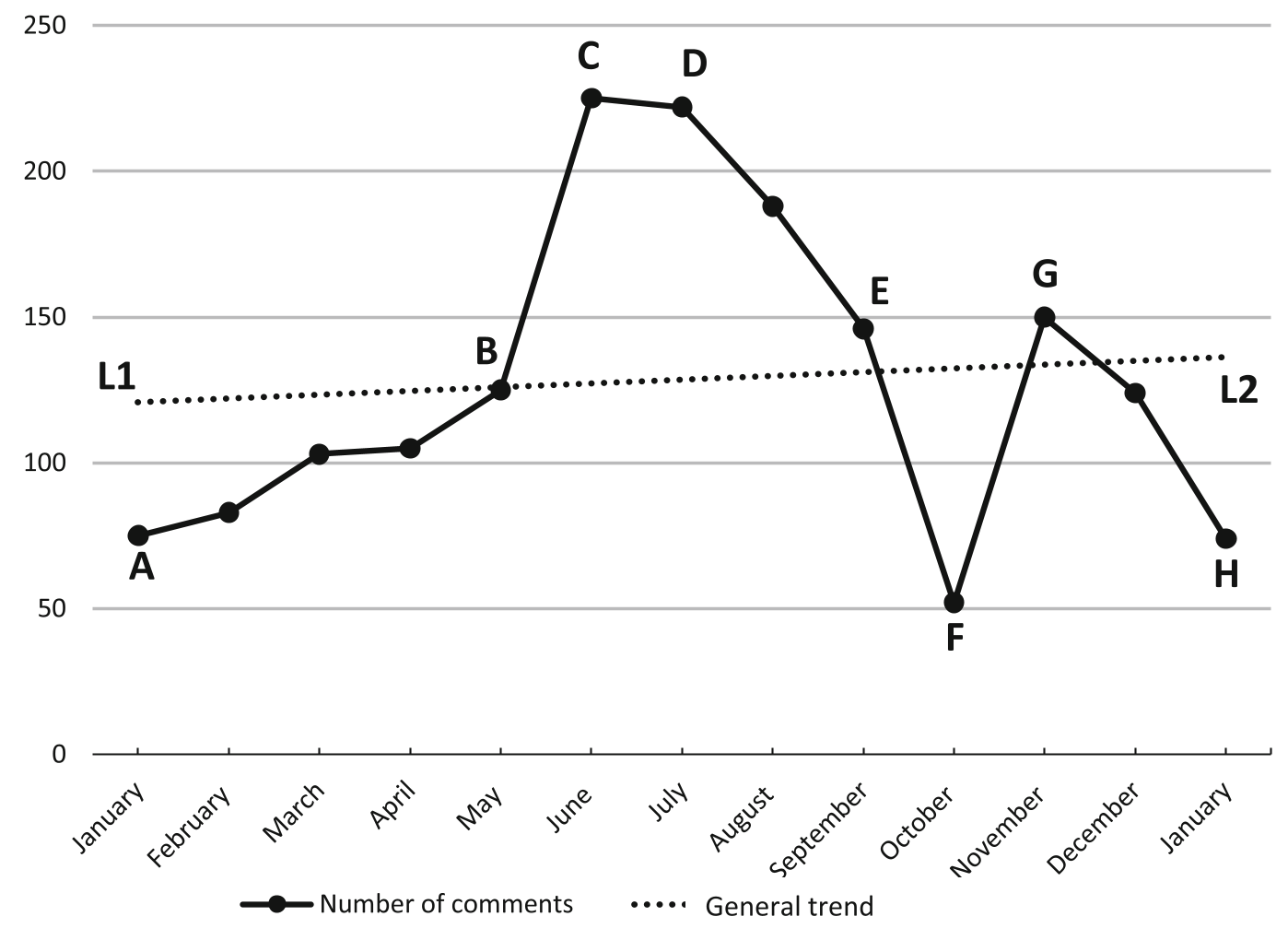
The researchers analyzed nearly 6,000 comments over a calendar year. To translate this "noise" into "signal," they categorized comments by topic and sentiment.
The Cyclical Model of Activity
The study discovered that student interaction follows a predictable Minor and Major Cycle. Activity peaks during admission/graduation (Summer) and exam periods (Winter). This allows administrations to predict when they will need the most resources for digital engagement.
Strategy Prioritization
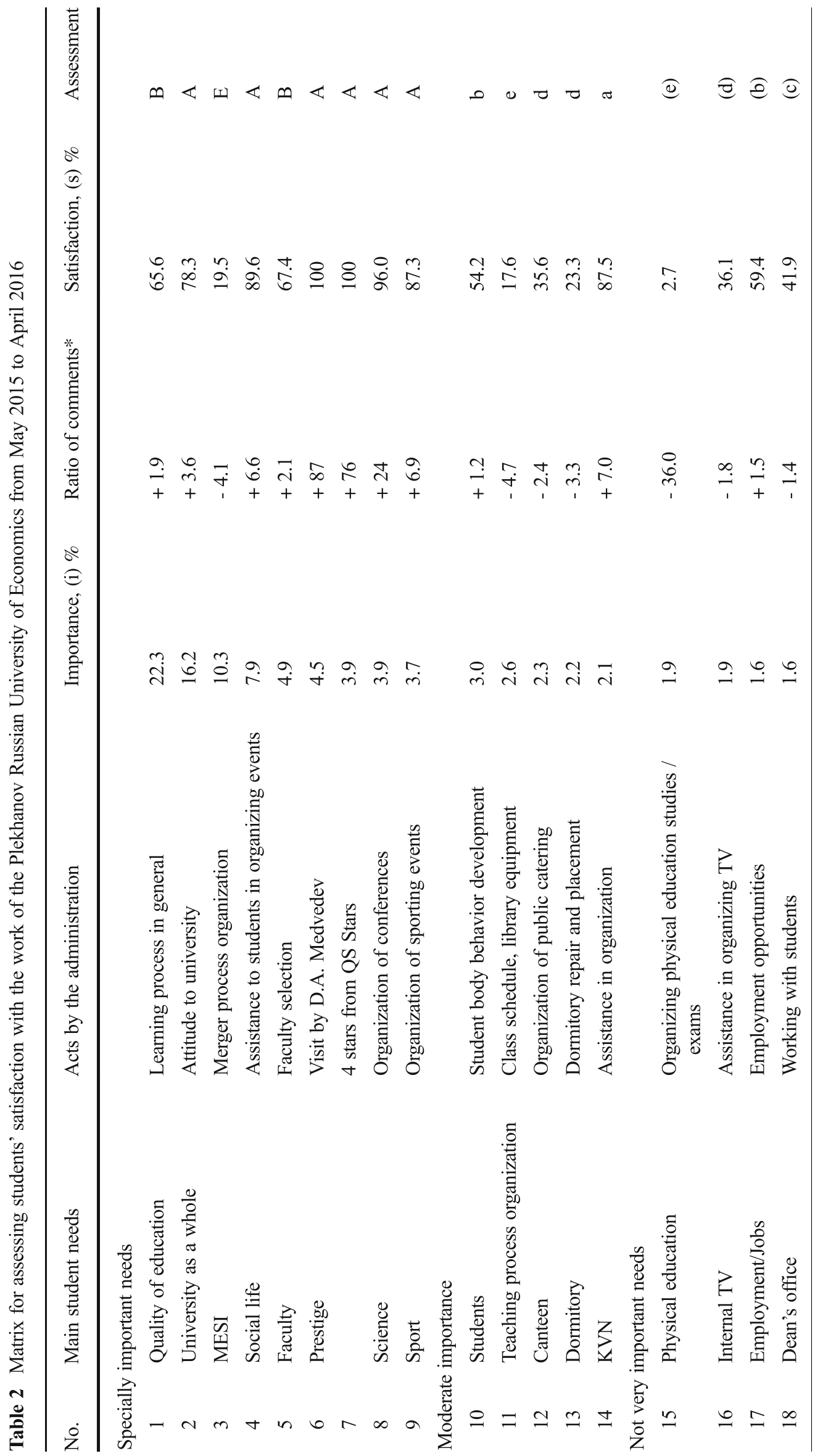
The core of the methodology is the matrix that balances Significance (how much are they talking about it?) with Satisfaction (is the talk positive?).
- Zone A (Critical Success): High significance, high satisfaction (e.g., Social life, University prestige).
- Zone E (Immediate Danger): High significance, low satisfaction (e.g., The MESI merger process).
Key Results: Mergers and Prime Ministers
The data revealed 63.4% positive and 36.6% negative sentiment. However, these numbers were heavily influenced by "Large-Scale Events":
- The Merger Crisis: The merger with MESI created a 7-month delayed explosion of negativity, highlighting that psychological identity takes longer to shift than legal status.
- The "Medvedev" Effect: High-profile visits and ranking achievements (QS 4-stars) acted as "Reputational Compensation," effectively drowning out negative noise from administrative friction.
Critical Analysis & Conclusion
The Takeaway: University administration is no longer just about "running a school"; it’s about managing a real-time information ecosystem. The study proves that "unmet needs of low significance" (like slow Wi-Fi or canteen food) stay small if addressed quickly, but can metastasize into brand-damaging "crises" if ignored.
Limitations:
- Manual Coding: The study relied on human encoders; in 2024, this would be replaced by Large Language Models (LLMs).
- Platform Specificity: The dominance of VKontakte is specific to the Russian context; different results might occur on X (Twitter) or Reddit.
Future Outlook: The future of university administration lies in "Active Listening" platforms that integrate AI to alert deans to sentiment shifts before they become petitions.