
Social Media TV: Bridging the Gap Between Legacy Cable and the Social Web
Social Media Television in Today's Cable Systems
This paper introduces a multiplatform architecture for "Social Media Television," integrating social networking features into traditional Cable TV systems. Utilizing the Enhanced TV (ETV) Binary Interchange Format (EBIF), it successfully bridges legacy set-top boxes with PC and mobile platforms to enable real-time group interaction and shared viewing experiences.
TL;DR
Long before "Watch Parties" became a standard feature of Netflix or Disney+, the cable industry sought ways to modernize the "lean-back" television experience. This paper outlines an architecture that transforms rigid, legacy cable systems into dynamic social hubs. By leveraging middleware known as EBIF and a centralized communication cluster, the authors demonstrate how to sync live TV viewing with real-time social interactions across PCs and mobile devices.
Problem & Motivation: The Silo Problem
By 2008, the rise of web-based social networking had created a stark contrast with traditional television. Web video was inherently interactive, while Cable TV was a "walled garden." The authors identify several critical pain points that made modernization difficult:
- Hardware Silos: Proprietary operating systems from Motorola and Cisco meant software developed for one box wouldn't run on the other.
- Identity Crisis: Cable systems identified "households," not individuals, making personalized social feeds nearly impossible.
- Network Isolation: The two-way path of a set-top box was traditionally cut off from the global internet.
Methodology: The CCC-Proxy Architecture
The core innovation lies in creating a bridge between the Legacy Cable Plant and the Internet. Instead of overhauling millions of set-top boxes, the authors introduce a three-layer approach:
1. The ETV Proxy
Located at the cable headend, this server intercepts messages from the set-top boxes' Out-of-Band (OOB) channel and routes them to the cloud, bypassing the traditional network isolation.
2. The Community Communication Server (CCC)
This is the "brain" of the operation. Hosted in a central data center, it manages:
- Unified Identity: Allowing a user to log in via Facebook or mobile and link that identity to their TV.
- Cross-Platform Message Routing: Ensuring a "tag" sent from a TV remote appears on a friend's iPhone or PC.
3. EBIF: The Universal Translator
By using the Enhanced TV Binary Interchange Format (EBIF), the authors created a "single-path" development environment. This allowed the social application to run across different hardware platforms without massive code rewrites.
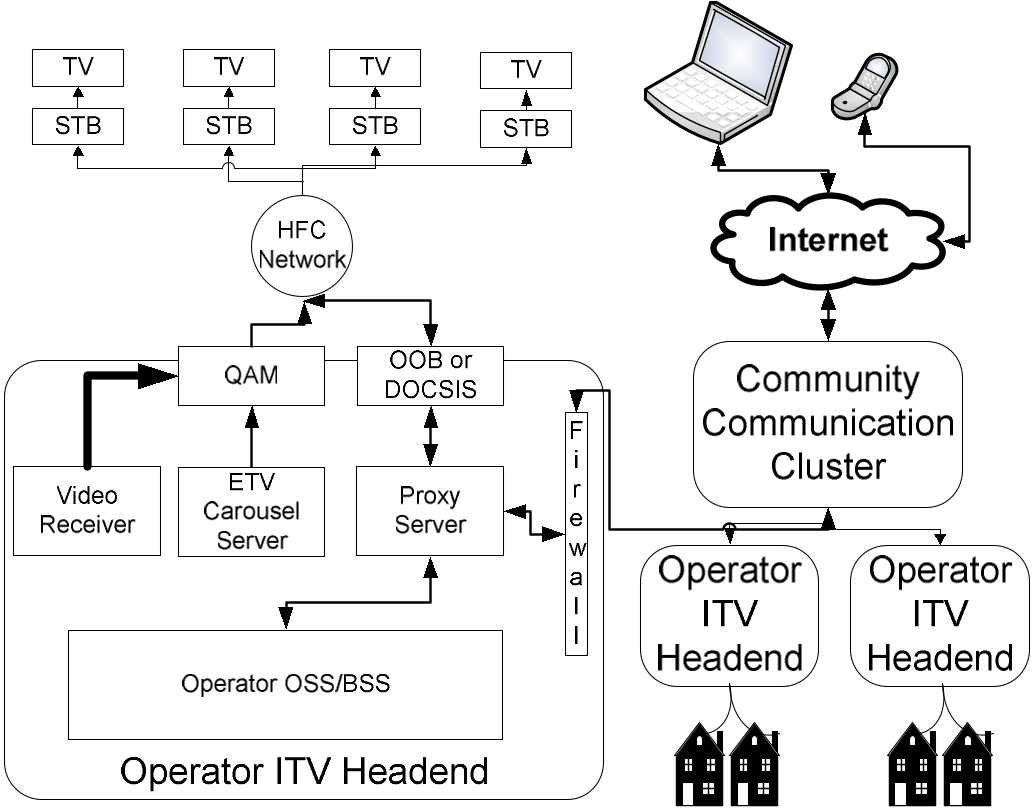 Fig 1: The architecture showing the flow from Set-top boxes through the ETV Proxy to the CCC.
Experiments & Results: Real-World Latency
The system was trialed on a live cable plant using Motorola 64K series boxes. The team tested several "Social Ops," including:
- Resource Sharing: One user could trigger a "Record" command on a friend's DVR.
- Synchronous Interaction: Users on Facebook could see exactly what their friends were watching on TV in real-time.
The trial confirmed that the QPSK return path (a low-bandwidth legacy channel) was sufficient for text-based social interaction. The latency was low enough for "lean-forward" socializing without disrupting the "lean-back" viewing experience.
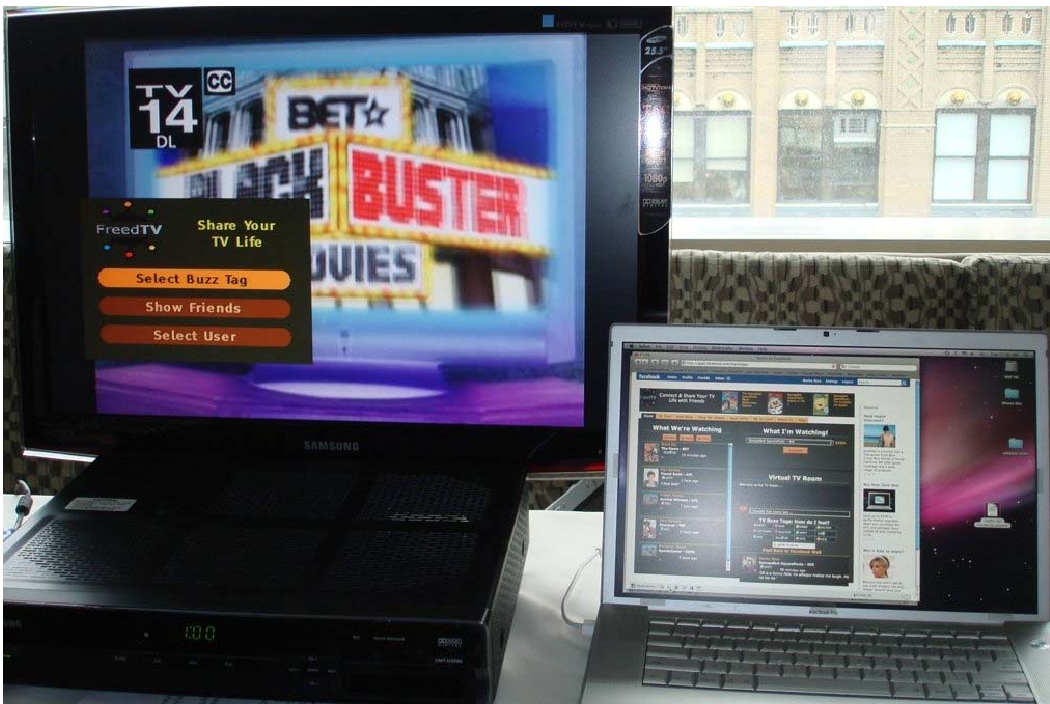 Fig 2: A side-by-side view of the TV interface and the Facebook web application during the trial.
Critical Insight & Conclusion
The true value of this paper isn't just in the "social" aspect, but in the engineering pragmatism. It proved that you don't need to replace every piece of hardware to offer modern services. By inserting a proxy and a cloud-based identity layer, the authors effectively "IP-fied" the legacy cable system.
Takeaways for Today:
- Middleware is King: In any fragmented hardware ecosystem, a common binary format (like EBIF or modern WebAssembly) is the only way to scale applications.
- Identity is the Hook: Social TV only works when the system knows who is sitting on the couch, not just which house the couch is in.
- Legacy Longevity: This work provides a roadmap for modernizing other "dumb" infrastructure by using cloud-based "brains" to handle complex logic.