
Social Media: The Strategic Engine for User Entrepreneurship
Social Media in User Entrepreneurship
This study explores how user entrepreneurs—individuals who innovate to solve their own needs before founding firms—leverage social media to gain a competitive advantage. Analyzing six technology-based startups, it identifies specific Information Systems (IS) resources and capabilities, such as external relationship management and market responsiveness, that are catalyzed by social media platforms.
TL;DR
Unlike traditional manufacturers, user entrepreneurs innovate to solve their own problems before ever thinking about a business plan. This paper investigates how these "accidental entrepreneurs" use social media to transform personal prototypes into market-ready firms. By analyzing six tech startups, the study reveals that social media acts as a critical Information Systems (IS) resource, providing the "Outside-In" and "Inside-Out" capabilities necessary to compete with industry giants.
Background: From Solving Problems to Starting Firms
The path of a user entrepreneur is unique. It begins with User Innovation—creating a tool because it simply doesn't exist. The challenge arises when these users attempt to commercialize. They often lack the formal marketing budgets and infrastructure of established manufacturers. However, they possess something manufacturers don't: a deep, visceral understanding of the "sticky" information regarding user needs.
The Problem: The Missing Link in SME Research
Small and Medium Enterprises (SMEs) have historically struggled to adopt complex technologies due to a lack of skills and capital. While social media has lowered these headers, user entrepreneurs are a distinct breed—they are technically savvy, growth-oriented, and deeply embedded in communities. Existing research failed to pinpoint exactly which social media-linked resources provide these specific founders with a competitive edge.
Methodology: The Resource-Based View (RBV)
The authors analyzed six cases—ranging from gesture-sensing devices (SensePro) to robotics systems (OpenElectrons). They mapped social media activities to the RBV framework, categorizing three types of capabilities:
- Outside-In: Managing external relationships and market sensing.
- Spanning: Planning and internal-external coordination.
- Inside-Out: Technical skills and infrastructure development.
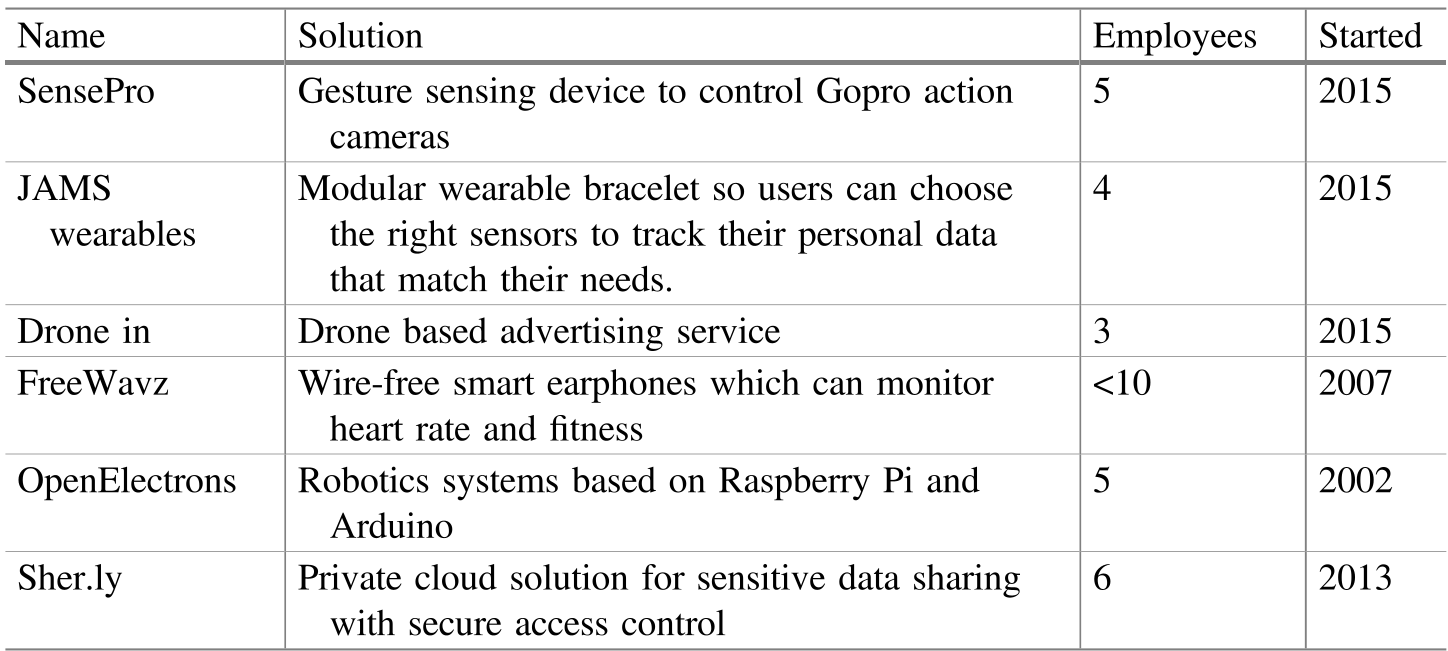 The diverse range of user-founded startups analyzed in the study.
Key Insights: How Social Media Creates Value
1. External Relationship Management & Buzz Building
For nascent firms like Drone-In, social media served as "free advertising." It wasn't just about posting; it was about "stirring the conversation." This created documented support (collateral) that served as proof-of-concept for VC investors.
2. Market Responsiveness through Community Sensing
Firms like OpenElectrons don't rely on expensive market research. Instead, they embed themselves in "tight" communities like Lego Mindstorms. By monitoring forums and "word-of-mouth" digital threads, they identify new needs and validate features in real-time.
3. Inside-Out Technology Development
The study highlights a fascinating use of social media for internal IS skills. Founders leveraged open-source communities (e.g., Arduino and Raspberry Pi forums) to troubleshoot hardware and improve technical knowledge assets, effectively crowdsourcing their R&D infrastructure.
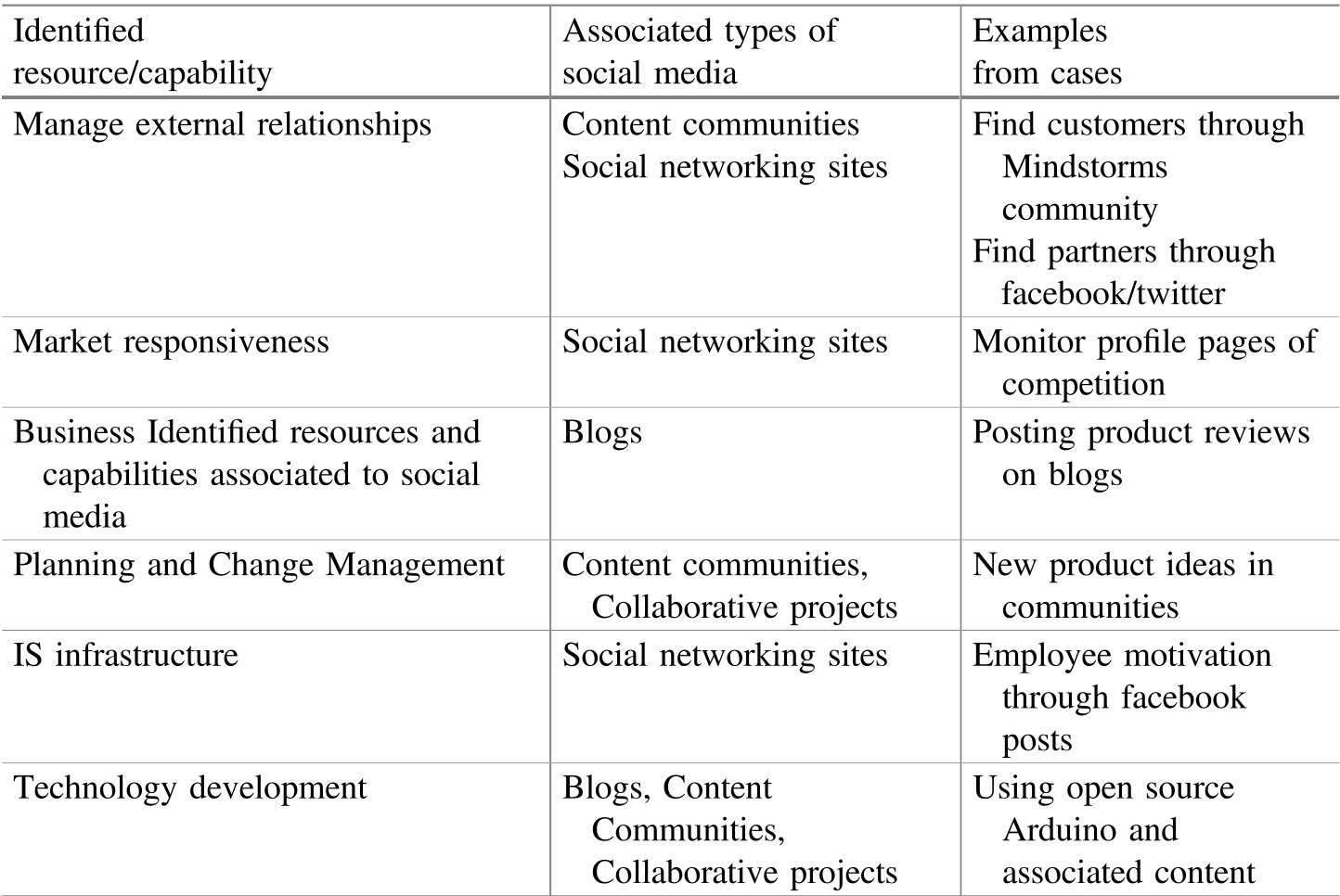 Strategic mapping of social media types to entrepreneurial capabilities.
Deep Insight & Conclusion
The core takeaway is that for user entrepreneurs, social media is the backbone of coordination. It bridges the gap between the Individual (the innovator), the Community (the validators), and the Market (the customers).
Limitations & Future Outlook
While the study provides a robust qualitative look at tech firms, it is limited by its small, industry-specific sample size. However, it signals a major shift: as e-commerce becomes more integrated into social platforms, the "barrier to entry" for user innovators will continue to crumble. Future research should look at how these dynamics play out in non-tech sectors like consumer crafts or professional services.
Final Thought: If you are an innovator solving your own problem, social media isn't just a place to talk—it's your most valuable R&D and marketing department.