
Unlocking the Invisible Balance Sheet: How Social Network Analysis Drives Enterprise Revenue
Social Network Analysis in Enterprise This paper focuses on the challenges and solutions in mining and analyzing social networks in enterprises; the authors base their study on a social network analysis tool called SmallBlue.
The paper introduces SmallBlue (IBM Atlas), a pioneering Social Network Analysis (SNA) system within a global enterprise of 400,000 employees. It combines large-scale graph mining, privacy-compliant data acquisition, and econometric modeling to quantify the impact of social capital on professional productivity and revenue.
TL;DR
IBM researchers deployed SmallBlue, a massive social network analysis (SNA) engine, across 400,000 employees to map "who knows who" and "who knows what." By linking digital footprints (Emails, IMs, Calendars) to billable revenue, they proved that social capital isn't just a soft metric—it’s a financial driver. The study shows that diverse networks (Structural Holes) significantly boost consultant performance, contributing thousands of dollars in annual revenue per person.
Background: The Gap Between Sociology and Data Science
For decades, social scientists knew that "it's not what you know, but who you know." However, proving this in a global corporation was historically impossible due to:
- Static Data: Relying on unreliable surveys instead of real-time interactions.
- Privacy Redlines: Strict labor laws (especially in the EU) preventing server-side monitoring.
- The ROI Question: A lack of hard evidence linking a "friendship" to a "dollar."
Methodology: Privacy-First Social Sensing
To bypass the legal hurdles of monitoring communication servers, the team designed Social Sensors. These are distributed components installed on volunteer machines that extract metadata and term frequencies locally.
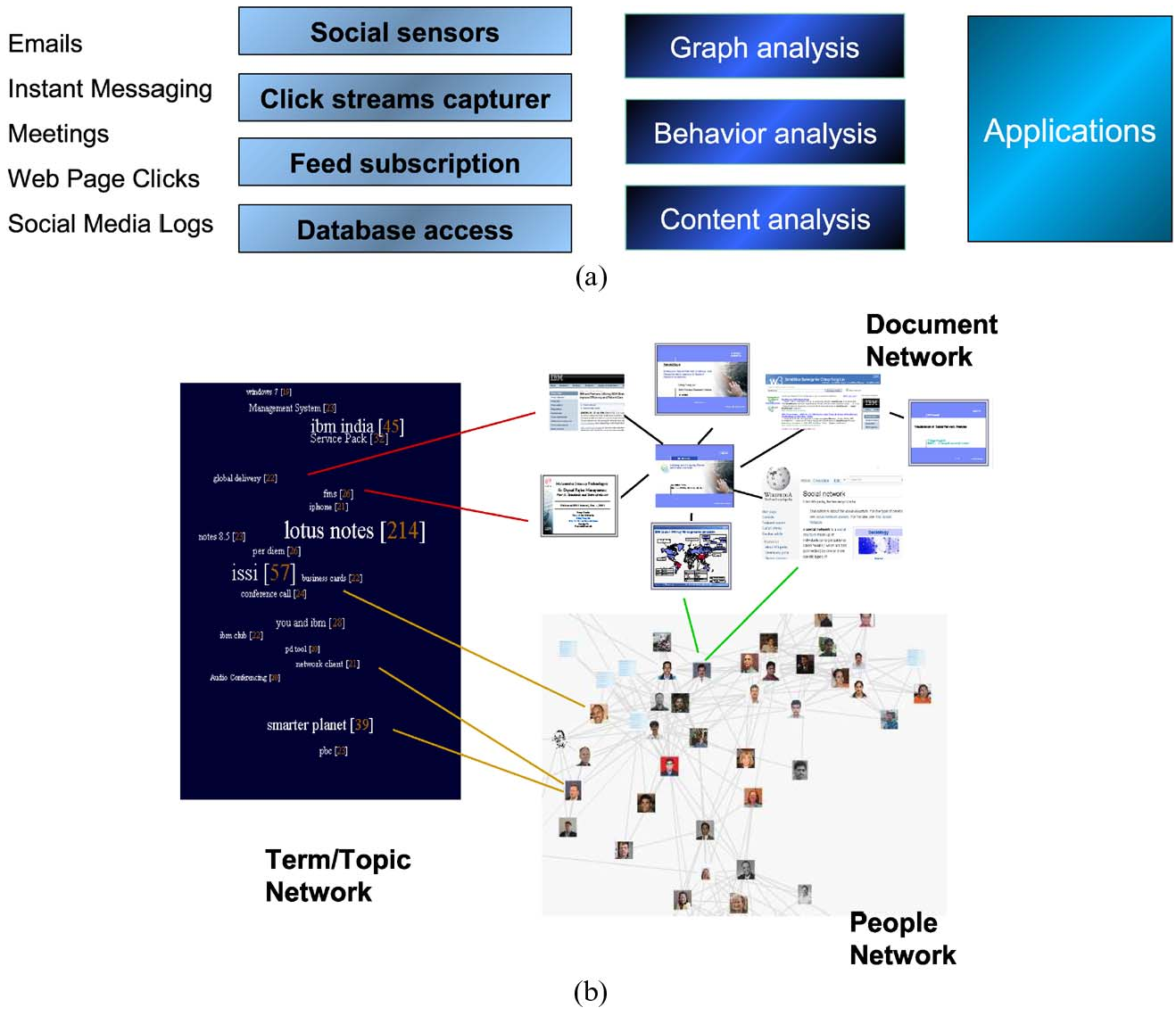
The system architecture processes three distinct layers:
- Relationship Layer: Dynamic evolution of ties through communication.
- Channel Layer: Multimodal behavior (IM vs. Email vs. Face-to-face).
- Expertise Layer: An evolving "ExpertiseNet" representing a person's inner skills.
The "Structural Hole" Insight
The core metric used is the Structural Hole. In network theory, if all your friends know each other, your network is "redundant." If you connect two groups that otherwise wouldn't talk, you occupy a structural hole. The authors posited—and eventually proved—that being the "bridge" between isolated groups provides access to unique information, leading to higher performance.
Results: The Dollar Value of a Connection
The findings provide a rare quantitative look at the "ROI of being social":
- Individual Performance: One standard deviation increase in "Structural Holes" adds $882.40 in monthly billable revenue.
- The Adoption Effect: Consultants who adopted the SmallBlue tool saw revenue increases of roughly $584 per month after a five-to-eight-month lag.
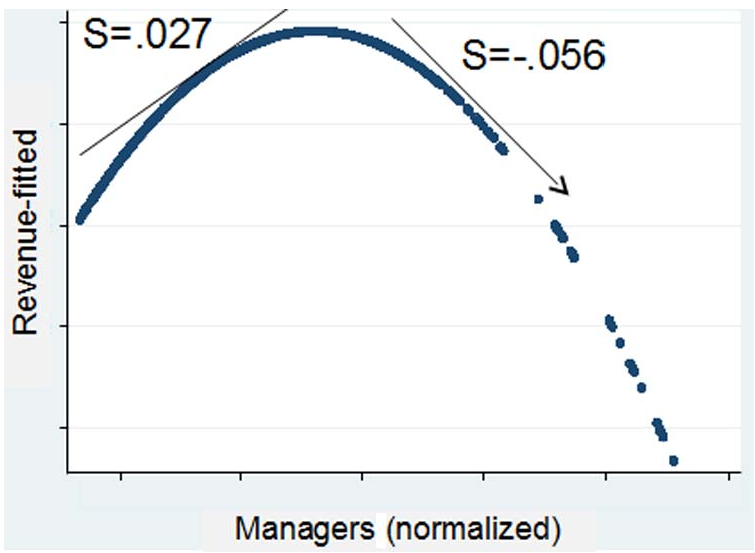
- The "Too Many Cooks" Curve: The research identified a concave "Inverse-U" relationship regarding project management. Adding managers helps revenue up to a point, after which it causes diminishing returns—or even losses—due to "repetitive redundant information exchange."
Scaling Imagery: Visualizing 400,000 People
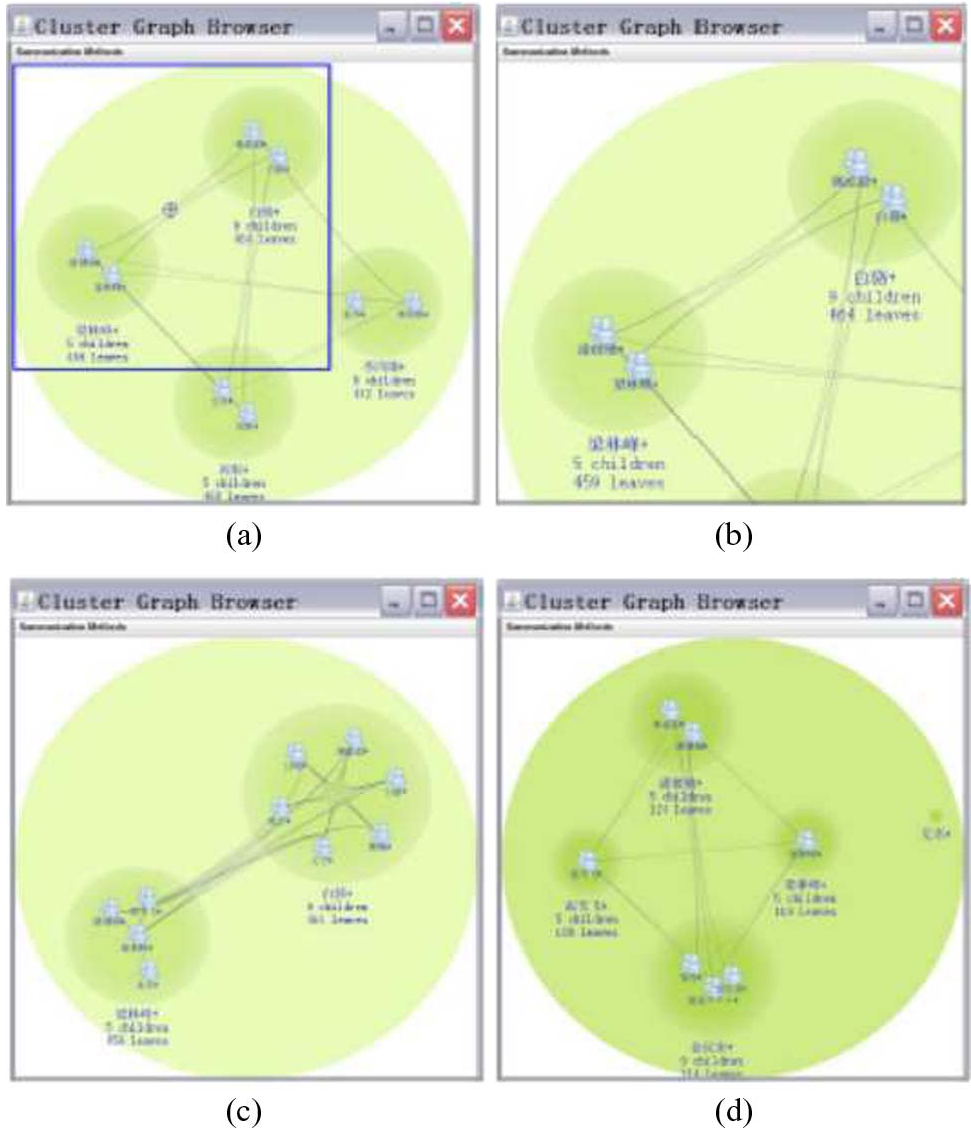
Visualizing a network of this scale is a "hairball" problem. The authors developed HiMap, which uses hierarchical graph clustering to allow "Semantic Zooming." Users can look at the whole company "continent" and zoom in down to individual "ego networks" without losing the global context.
Analytical Insight: Culture and Sentiment
The paper doesn't just stop at numbers; it looks at how we talk. A fascinating cross-cultural analysis revealed:
- Channel Preference: Users in China and India are significantly more likely to use Instant Messaging for Q&A compared to the US or UK.
- Sentiment: US employees show the highest frequency of positive sentiments, while German employees were statistically more likely to express negative sentiments in professional communications.
Conclusion and Takeaways
The SmallBlue study moves SNA from a sociological curiosity to a robust management science.
- Network Heterogeneity is Key: Managers should encourage "boundary-spanning" roles rather than siloed expertise.
- Privacy is a Technical Feature: By building "privacy by design" (local sensors, hashing sensitive data), enterprise-wide mining is possible even under strict EU laws.
- Future of Work: As organizations become increasingly digital, tools that optimize "Social Capital" will be just as important as those that optimize "Human Capital" (skills) or "Financial Capital" (budgets).
Is your network redundant or diverse? In the enterprise world, it might be the difference between a standard year and an $10,000 revenue bonus.