
Unmasking the Syndicate: Advanced SNA Algorithms for Money Laundering Detection
The application of social network analysis algorithms in a system supporting money laundering detection
This paper introduces a Social Network Analysis (SNA) component for the Money Laundering Detection System (MLDS), designed to support criminal intelligence by analyzing financial ties. The system integrates data from bank statements and the National Court Register (KRS) to identify complex organizational structures and assign specific criminal roles to entities.
TL;DR
Financial investigators are often lost in a sea of bank statements and corporate filings. This paper presents a specialized Social Network Analysis (SNA) component within the Money Laundering Detection System (MLDS). By leveraging centrality measures and a custom role-finding algorithm, the system automatically classifies individuals into roles like "Organizers" or "Insulators," allowing police analysts to see through the "smoke and mirrors" of financial crimes.
The Core Challenge: Hiding in Plain Sight
Money laundering is not just about moving money; it’s about obfuscation. Criminals use:
- Mules: Individuals who sell their identity for transactions.
- Insulators: Members who protect the core leadership from law enforcement infiltration.
- Complex Ties: Mixing legal business (KRS register data) with illegal transfers.
Existing tools often provide the "what" (a suspicious transfer) but fail the "who" (the functional hierarchy). The authors argue that by viewing financial entities as nodes in a social network, we can use their structural position to deduce their true intent.
Methodology: From Math to Criminality
The MLDS architecture integrates an import module, clustering, and an SNA engine. The SNA component specifically uses several metrics to define a node's "importance":
- Betweenness Centrality: Identifying the "brokers" of information.
- Closeness: How fast information reached the node.
- PageRank / Authoritativeness: Who is the "spiritual" or actual leader?
Role-Finding Algorithm
Instead of a simple "high/low" threshold, the authors developed a scoring mechanism. Each criminal role is defined by a set of intervals.
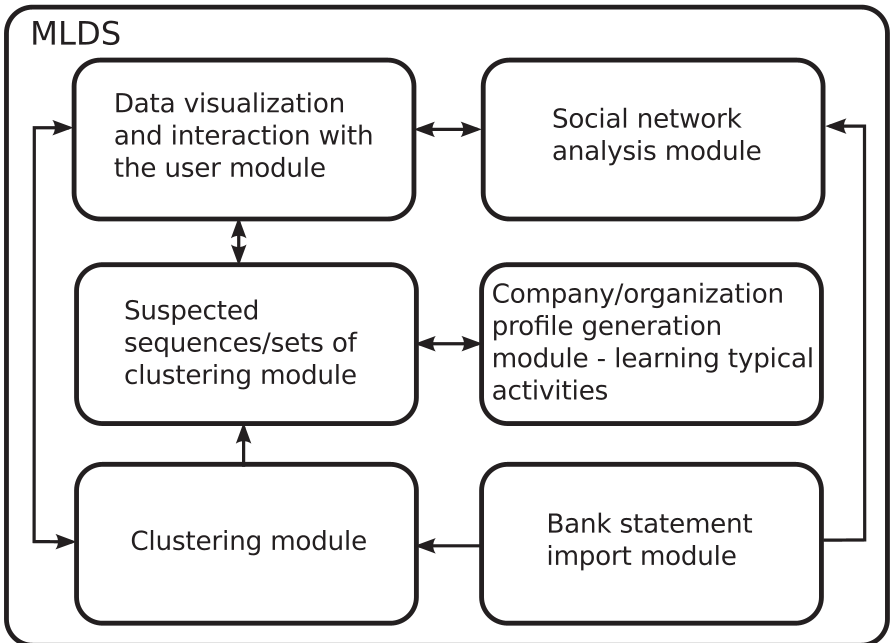 Figure 1: The MLDS Modular Architecture.
For example, an Organizer (Table 1 in the paper) is characterized by:
- High PageRank & Authority: They are the core.
- Low Degree: They avoid direct contact with the "periphery" to stay safe.
- Low Betweenness: They don't facilitate the "day-to-day" flow; they just command.
The Power of Cross-Domain Verification
One of the most impressive features is "Role Comparison." By building networks from both Bank Statements and the National Court Register (KRS), the system can check if an entity plays the same role in both. If a "Crossover" in the bank network is also a "Crossover" in the corporate register, the investigator’s confidence in the analysis skyrockets.
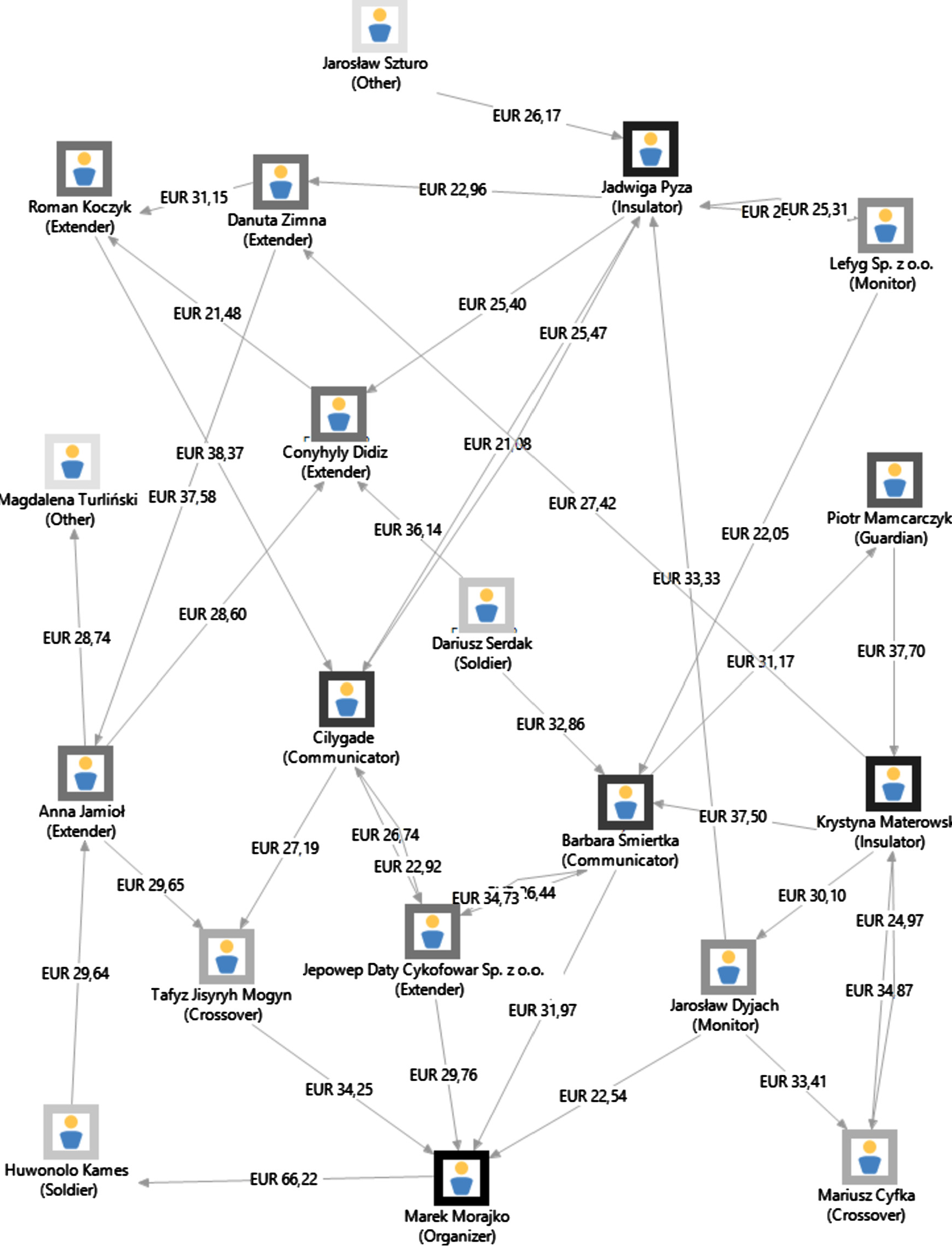 Figure 2: Visualization of assigned roles within a banking network. Colors indicate functional roles like Communicator or Extender.
Experimental Insights & Performance
The system was tested on networks mirroring real-world police scenarios (up to 7,000 nodes).
- Scalability: Even with large datasets, the algorithms complete in seconds.
- Interconnection Analysis: While finding roles is fast, analyzing the subtle connections between roles is the more computationally intensive task but provides deeper structural insights.
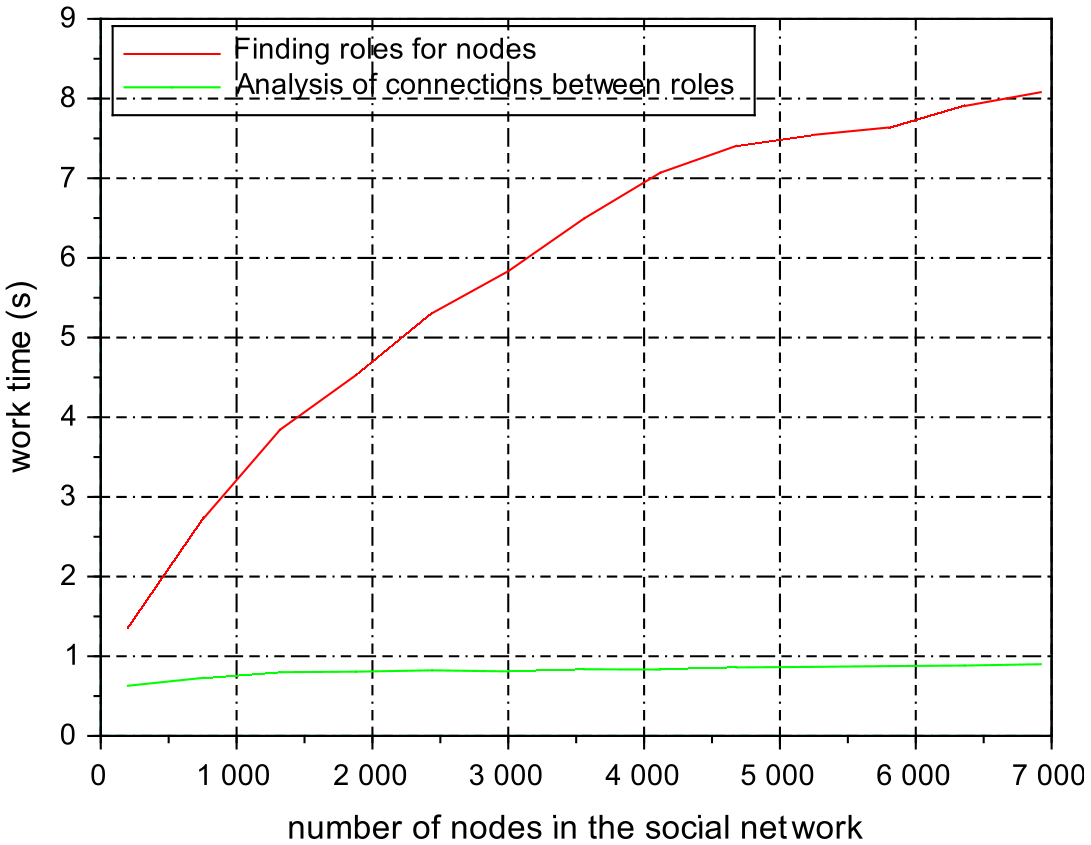 Figure 3: Benchmarking processing time against node count.
Critical Insight: Why This Matters
This research moves beyond simple "rule-based" detection (e.g., "flag transfers over $10k"). It treats criminal organizations as biological entities with functional organs. By defining roles like "Guardians" (security) and "Extenders" (recruitment), the MLDS allows investigators to target the bottlenecks of a criminal organization—the Insulators and Communicators—rather than just arresting the low-level "Soldiers."
Future Work
The authors suggest moving toward Online Money Laundering Detection, which would utilize bio-inspired artificial intelligence (Agent-based modeling) to catch criminals in the act as the data streams in.
Conclusion
The MLDS proves that Social Network Analysis is no longer just for marketing or Facebook; it is a critical weapon in modern criminal analysis. By combining administrative transparency (KRS) with financial data, we can finally map the "unmappable" structures of organized crime.