
Decoding "Friends": Social Network Analysis via Deep Concept Hierarchies
Social Network Analysis of TV Drama Characters via Deep Concept Hierarchies
The paper proposes a multi-modal social network analysis framework using Deep Concept Hierarchies (DCH) and Convolutional-Recursive Neural Networks (C-RNN) to analyze character relationships in TV dramas. By processing the "Friends" series, the system automatically builds grounded visual-linguistic social networks and tracks character affinity as the narrative evolves.
TL;DR
Researchers have developed a framework that "watches" TV dramas to map out character relationships. By combining face recognition (C-RNN) with a dynamic knowledge-building model called Deep Concept Hierarchies (DCH), the system can track how character affinities evolve across hundreds of episodes, effectively handling the shifting contexts of a long-running narrative.
Background & Motivation: Why Dramas?
TV dramas are more than entertainment; they are a form of "big data" reflecting human social roles, culture, and ethics. Traditionally, analyzing these relationships required manual tagging or simple frequency counts of characters appearing in the same frame. However, these methods miss the semantic depth—the conversations, specific objects, and evolving plot points that define a relationship.
The authors identify two core challenges:
- Multi-modality: Relationships are grounded in both visual cues (who is in the scene) and linguistic cues (what is being said).
- Concept Drift: Social networks aren't static. Characters marry, argue, or move, meaning the model must adapt its internal knowledge as new data arrives.
Methodology: The Core Architecture
The framework employs a two-stage pipeline: Recognition and Concept Learning.
1. Character Recognition (C-RNN)
To identify characters, the authors use a hybrid Convolutional-Recursive Neural Network (C-RNN).
- CNN Layer: Extracts local visual features from face patches.
- DRNN (Deep Recursive NN): Learns the hierarchical structure of these features in an unsupervised manner, feeding into a Softmax classifier for final labeling.
2. Deep Concept Hierarchies (DCH)
This is where the "social intelligence" resides. DCH organizes knowledge into layers:
- Layer H (Hyperedges): A pool of image-word pairs (e.g., a picture of a coffee cup paired with the word "Central Perk").
- Layer C1 & C2: Layers of abstract concepts that cluster these hyperedges.
- Learning via Bayesian Inference: Unlike static models, DCH updates its weights () and nodes as it "watches" more episodes. This allows it to handle Sparse Population Coding (SPC), representing concepts efficiently as small subsets of a vast vocabulary.
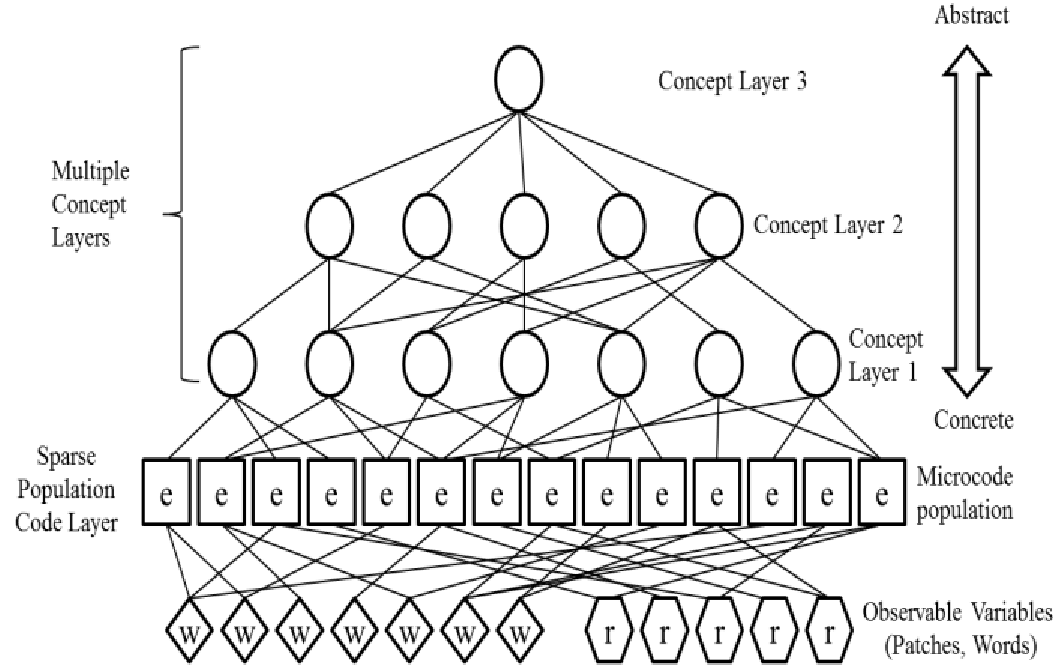 Figure 1: The hierarchical structure of DCH connecting visual patches and words to character concepts.
Experimental Analysis: Watching "Friends"
The model was tested on 183 episodes of the sitcom "Friends."
Visualizing Evolution
Using PCA (Principal Component Analysis), the researchers mapped the hyperedges into 2D space. Early on (Episode 10), the concepts are scattered. By Episode 49, clear clusters emerge around specific characters, showing that the model is successfully building "character-specific" conceptual communities.
Quantifying Affinity
The system measures the "shared hyperedges" between characters to determine their closeness.
- Finding Ross and Monica: The model correctly identified a high affinity between Ross and Monica (who are siblings), driven by shared scenes and linguistic contexts.
- Dynamic Complexity: The social network graph becomes visibly more dense and interconnected as the series progresses from Season 1.
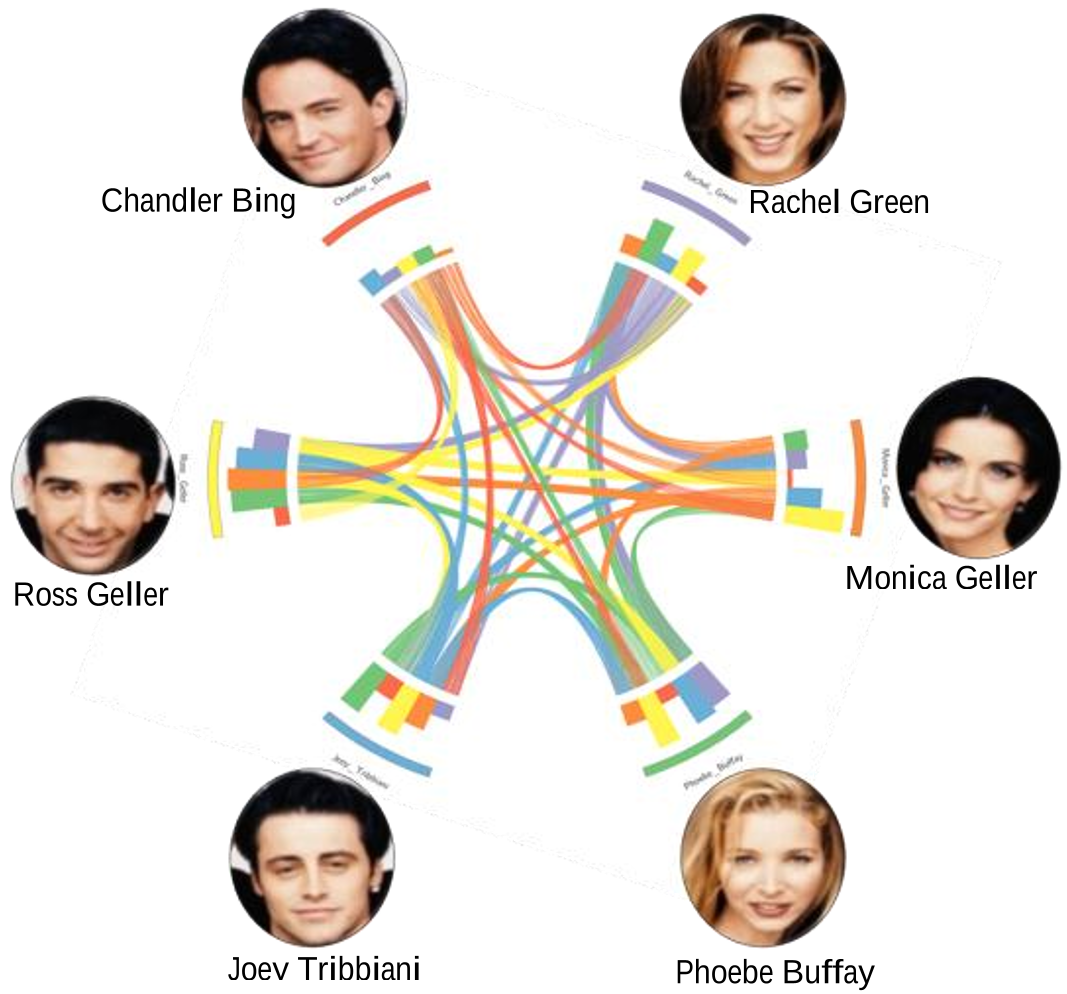 Figure 2: Affinity maps and community growth after learning 49 episodes.
Critical Insight & Future Outlook
The brilliance of this work lies in its online learning capability. By using sequential Bayesian inference, the DCH model acts like a human viewer—building a prior understanding and then updating it with "likelihoods" from the latest episode.
Limitations: While the 89% recognition rate is solid for its time (2015), the reliance on fixed vocabularies and R-CNN for object detection would now be considered a bottleneck compared to modern end-to-end Transformers.
The Road Ahead: This technology isn't just for TV. The authors suggest moving this to Social Networking Services (SNS). Imagine an AI that doesn't just see who you "follow," but understands the conceptual nature of your relationships based on the images and text you share, tracking how those digital bonds drift over time.
Conclusion
By treating video as a stream of grounded concepts rather than just pixels, Nan et al. provided a blueprint for AI that can perceive the "pulse" of a narrative. It is a significant step toward machines that understand not just who is on screen, but why they matter to one another.