
Harmonizing the Shared Space: A Social Network Approach to Group Conflict in Context-Aware Services
A social network approach to resolving group-level conflict in context-aware services
This paper proposes a social network-based methodology to resolve group-level conflicts in context-aware environments. It introduces a two-phase Case-Based Reasoning (CBR) system that utilizes a Nested Minkowski aggregation model to predict effective conflict resolution strategies while preserving user privacy.
TL;DR
As smart environments transition from individual assistance to multi-user spaces, service conflicts are inevitable. This paper introduces a methodology that uses Social Network Theory and Case-Based Reasoning (CBR) to autonomously resolve group conflicts. By focusing on the "Social Context" rather than private personal data, the proposed system achieves high resolution accuracy while maintaining user anonymity.
Contextual Friction: Why Individual AI Fails in Groups
Current context-aware systems are inherently selfish; they are designed to optimize the experience for a single "User A." However, when User A and User B share a living room, their personalized services—such as lighting levels, music, or temperature—often clash.
The authors identify three main sources of group conflict:
- Scarce Context Assets: Limited hardware (e.g., only one TV).
- Sequential Interdependence: One service's output ruins the pre-condition for another.
- Aspiring State Interdependence: A service for one person (an alarm) negatively impacts the desired state of another (sleeping).
The Core Insight: Social Context as a Privacy Shield
The brilliance of this work lies in its move away from raw personal profiles. Instead of knowing who the users are, the system looks at how they relate to one another.
By modeling the occupants as a social network, the system extracts features like:
- Betweenness-Centrality: Identifying the "hub" or influential person in the group.
- Network Density: Measuring the intimacy/connection level to determine how much the group is willing to compromise.
- Structural Holes: Finding key access points between subgroups.
Methodology: Two-Phase CBR
The system operates in two distinct phases:
- Individual selection: Identifying what service each person would want.
- Group resolution: If a conflict is detected, it uses the Nested Minkowski aggregation model to find the most similar historical conflict case and apply its resolution strategy (e.g., utility maximization, structural rank, or past solution).
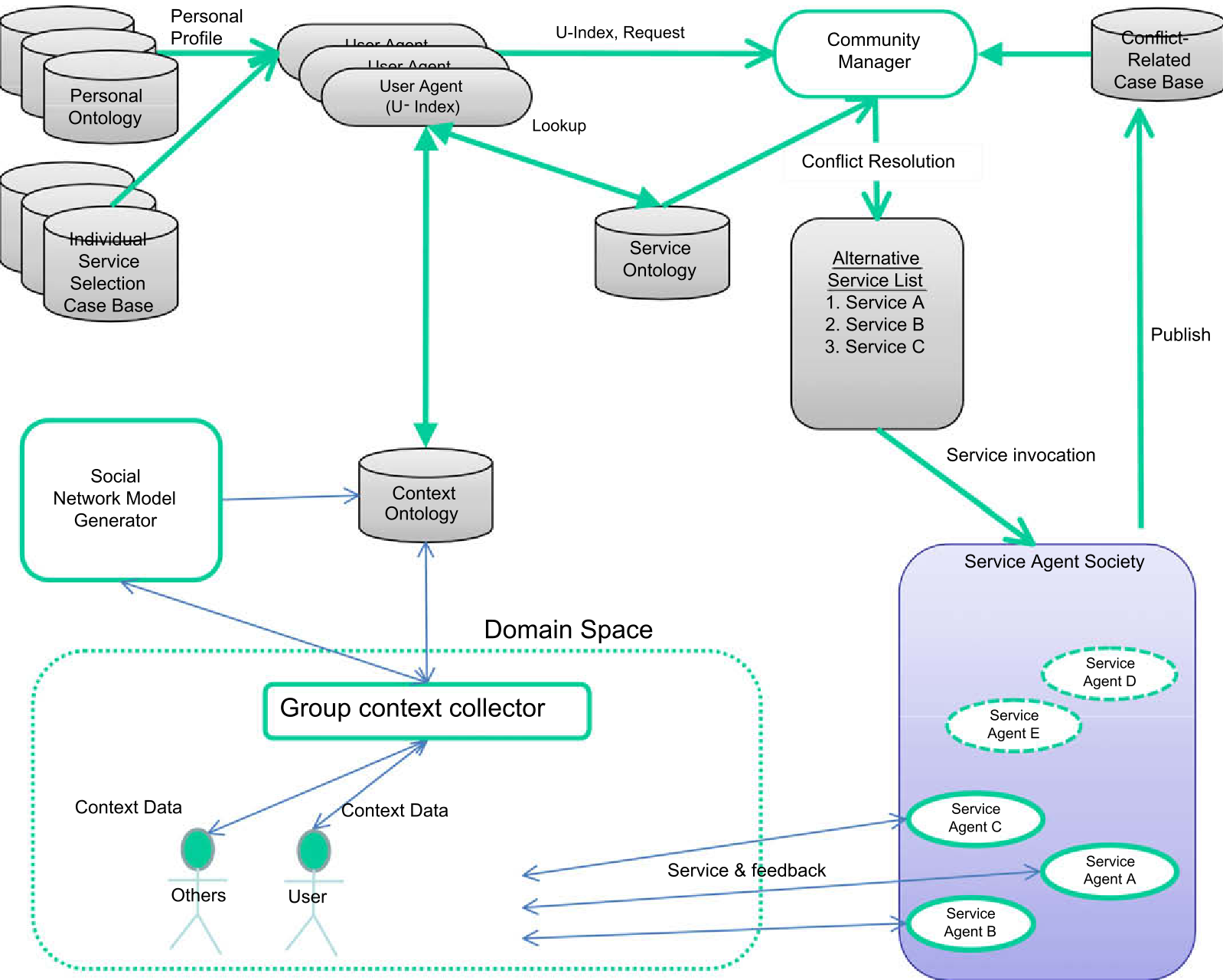 Figure 1: The overall architecture of the context-aware group service selection.
Experimental Validation: Home Sweet Home
To test the theory, the authors used a "Home Sweet Home" scenario involving a family of four. They compared eight different methods, varying the retrieval algorithms (Tversky vs. Minkowski) and the feature sets (Profile vs. Social Context).
Key Findings
- Social Context Wins: Methods using social network features (N_S, T_S) consistently outperformed those relying strictly on personal profiles (N_P, T_P).
- Privacy without Loss: The Nested Minkowski model allowed for distributed similarity calculation, meaning personal data stays on the user's device while only the "similarity score" is shared with the community manager.
- Scalability: Performance improved as the number of training cases increased, demonstrating the learning capability of the CBR approach.
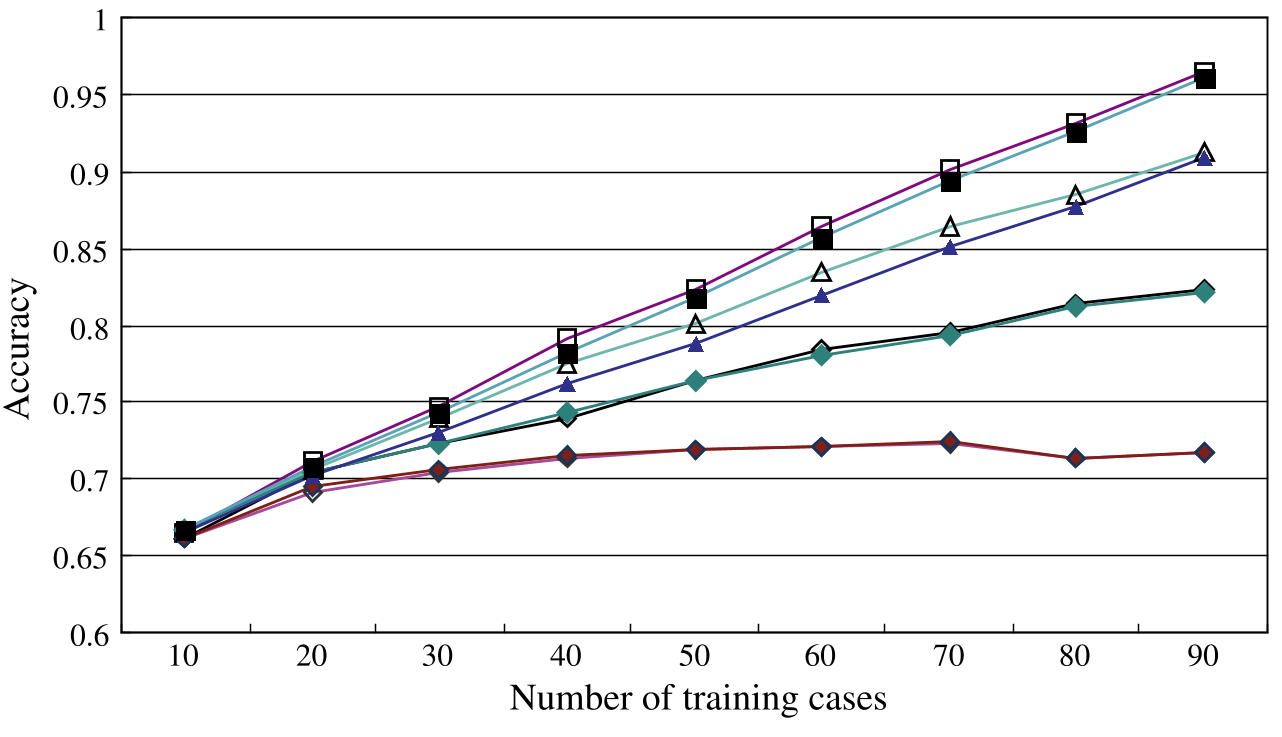 Figure 2: Retrieval accuracy comparisons across different feature sets and models.
Critical Insight & Future Directions
While this paper provides a robust mathematical foundation for group conflict, it relies on a "case base" that must be pre-populated. In highly dynamic or novel environments, the system might suffer from the "Cold Start" problem.
However, the transition from User-centric to Social-centric AI is a vital step for ubiquitous computing. By treating a group of people as a single "social organism" with measurable structural properties, we can design spaces that aren't just smart, but are also socially intelligent and respectful of privacy.
Conclusion
This work demonstrates that resolving conflicts in smart spaces doesn't require "Big Brother" levels of surveillance. By understanding the social fabric of the users—the ties that bind them and the roles they play—autonomous systems can navigate the complex nuances of human coexistence.