
Social-Aware D2D: Leveraging Social Tie Stability to Solve the Wireless Capacity Crunch
13323_Social Network Aware Device-to-Device Communication in Wireless Networks.
This paper proposes a social-aware Device-to-Device (D2D) communication framework that optimizes traffic offloading in wireless networks. It integrates an Offline Social Network (OffSN) layer to capture physical encounters using Gamma distributions and an Online Social Network (OnSN) layer to model content popularity via the Indian Buffet Process (IBP).
TL;DR
Researchers have developed a dual-layer framework that uses human social patterns—both online and offline—to optimize D2D communications. By predicting what users want (via the Indian Buffet Process) and who they stay near (via Gamma encounter modeling), the system can offload massive amounts of data from cellular base stations, potentially doubling the network data rate.
Background: Beyond Simple Proximity
As mobile data demand skyrockets, Base Stations (BS) are struggling under the weight of redundant requests for popular content (e.g., viral YouTube videos). While Device-to-Device (D2D) communication is a known solution, it often fails because physical proximity is transient. If a user moves away mid-download, the link breaks. This paper argues that Social Ties are the missing link: human relationships and daily routines are far more stable than geographic snapshots, providing a more reliable foundation for D2D networking.
The Problem: The Instability of Mobility
Prior D2D research focused primarily on SNR and distance. However, these factors fluctuate wildly. A "close" user might just be a stranger passing by at high speed. Furthermore, standard models didn't account for the content being requested. If we don't know who has what content and how likely a neighbor is to request it, we cannot optimize traffic offloading.
Methodology: The Two-Layer Social Framework
The paper introduces a sophisticated two-tier model:
1. Offline Social Network (OffSN)
Instead of instantaneous location, the authors use encounter history. They model the duration of encounters using a Gamma Distribution .
- Closeness Metric (): This represents the probability that two users will stay together long enough to complete a full content transfer.
2. Online Social Network (OnSN)
To predict content popularity without assuming a fixed distribution, the authors use the Indian Buffet Process (IBP).
- The Intuition: Imagine an infinite buffet. The first customer picks several dishes (new content). Subsequent customers pick dishes based on what previous customers liked (social influence/popularity) and occasionally try new ones.
- Mathematical Strength: This allows the BS to learn content popularity dynamically as users download and share data.
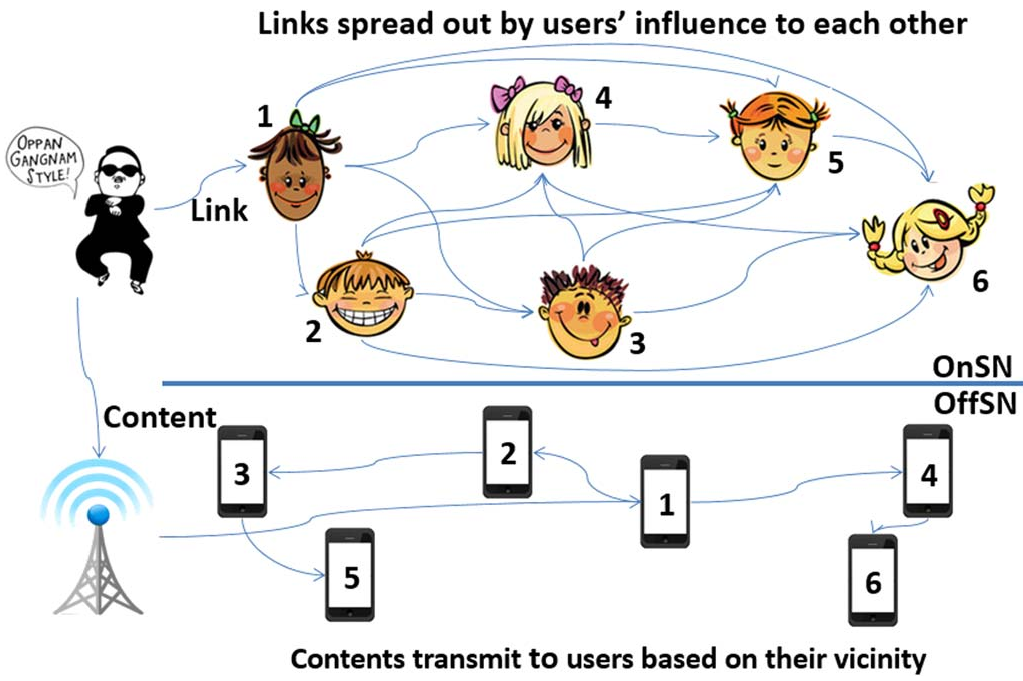 Fig 1: The dual-layer structure showing the flow between Online Social Influence and Offline Physical Transmission.
Proposed Algorithm: Maximal Closeness
The core innovation is the selection algorithm. Instead of picking the nearest neighbor, the BS selects the neighbor with the highest social closeness who already possesses the requested content. This ensures the highest probability of a successful, uninterrupted D2D session.
Experimental Results
Using the CRAWDAD dataset (real-world traces of student movements and Facebook ties), the authors proved:
- Double Throughput: The D2D underlay consistently outperformed traditional cellular architectures across different content popularity settings.
- Impact of Distance: As the allowable D2D distance increases, the chance of finding a "provider" grows, but the signal quality drops. This necessitates a careful optimization of the D2D range.
- Model Accuracy: The IBP model remarkably matched the actual popularity growth patterns of YouTube videos.
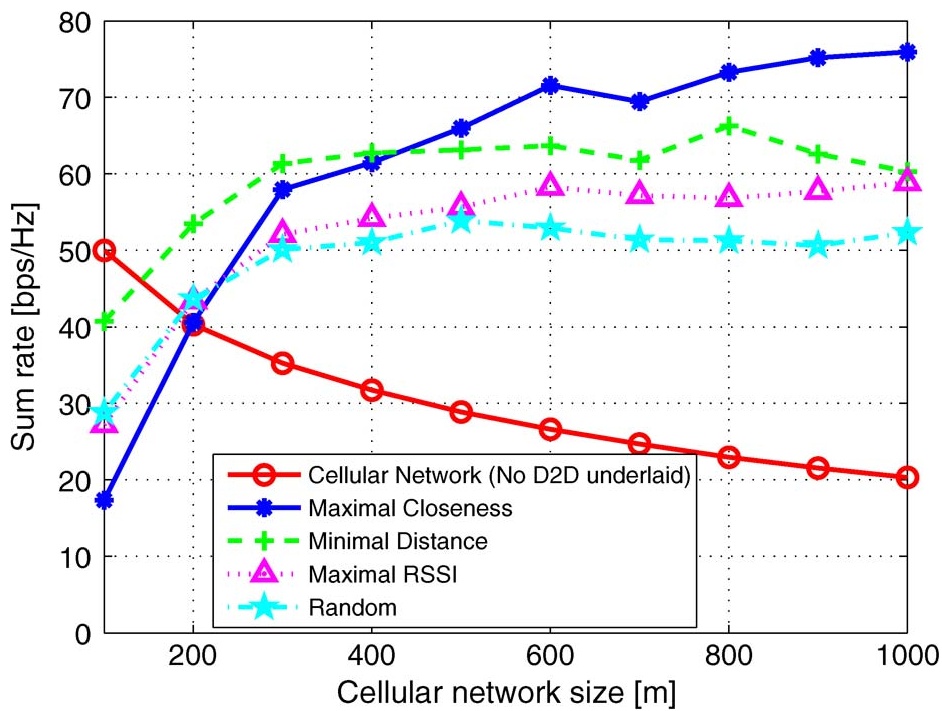 Fig 2: Validation showing that the IBP accurately mimics real-world content selection probability.
Critical Insight & Conclusion
Takeaway
The shift from "Physical-Aware" to "Social-Aware" networking is a paradigm change. By recognizing that human behavior is predictable via social ties, we can transform a chaotic mobile environment into a structured content-delivery web.
Limitations & Future Work
The study assumes the operator has global access to encounter patterns, which raises privacy concerns. While the authors suggest incentives for sharing, the "privacy-utility" tradeoff remains a significant hurdle for commercial deployment. Future research could explore Federated Learning or differential privacy to allow social-aware D2D without compromising user anonymity.
Summary
This paper provides a mathematically rigorous yet physically intuitive roadmap for using the "Social Layer" of our lives to fix the "Physical Layer" of our networks. It’s a compelling case for why your smartphone should know your friends as well as your location.