
Precision Marketing in the Social Era: Leveraging Big Data for Strategic Advantage
Research on the Advantage Strategy of Social Network Big Data in Marketing
This research investigates the integration of Social Network Big Data (SNBD) into marketing strategies, proposing a Precision Marketing framework. By analyzing survey data from 180 practitioners and consumers, the paper demonstrates how big data mining significantly enhances brand loyalty and operational efficiency compared to traditional marketing models.
TL;DR
Social Network Big Data (SNBD) is no longer just a buzzword but the backbone of modern marketing efficiency. This paper explores the transition from "traditional spray-and-pray" marketing to data-driven precision, demonstrating that SNBD significantly improves consumer satisfaction and conversion rates (90%+ approval). The study identifies precision targeting and personalized production as the key competitive moats for modern enterprises.
Background & Positioning
Published in 2021, this paper sits at the intersection of Marketing Management and Data Science. It characterizes the shift from the "Service Marketing" concepts of the 1960s (focused on intangible benefits) to the "Predictive Marketing" of the 2020s, where data mining tools like distributed file systems and cloud computing replace intuition.
Problem & Motivation: The Failure of Traditional Push
The author argues that traditional marketing is suffering from three major pain points:
- Low Information Arrival: Reliance on SMS and phone calls leads to "information blindness" and high consumer irritation.
- Subjective Judging: Marketing consultants often guess customer intent, making quantitative performance evaluation impossible.
- Cost Inefficiency: Without structured data, the cost of developing a single customer remains prohibitively high, limiting the profit margins of SM Es.
Methodology: The Precision Marketing Framework
The core insight of the research is that social networks reflect users' true emotional tendencies and interests. By mining this data, companies can implement a four-dimensional strategy:
- Targeted Advertising: Identifying the exact consumer segments to ensure advertising content is "accepted" rather than "ignored."
- Deep Mining for Promotion: Using SNBD to discover "first opportunities"—latent consumer needs that haven't been met by competitors yet.
- Personalization: Moving away from mass production to diversified performance and color options dictated by direct consumer feedback on social platforms.
- Dynamic Price Control: Using integration systems to collect price acceptance levels, making pricing more scientifically aligned with market value.
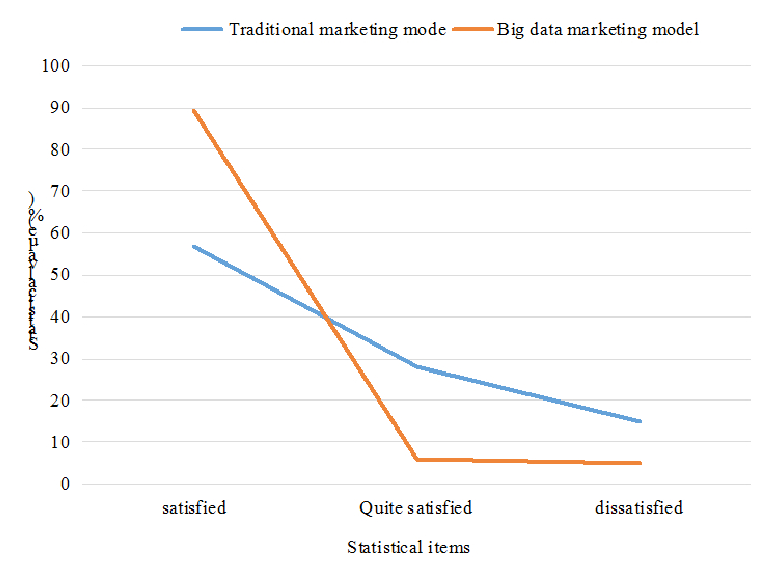 Figure 1: Illustration of how marketing opportunities and transaction rates scale with big data utilization.
Experiments & Results
The paper utilizes a questionnaire and sampling survey of 180 individuals. The findings are stark:
- Marketer Consensus: 90% of staff believe SNBD is a promoter of sales performance.
- Consumer Preference: 95% of consumers hope for more utilization of these technologies to receive relevant information rather than spam.
- Satisfaction Gap: As shown in the comparison chart below, the "Community Network Big Data" model vastly outperforms traditional modes in terms of user satisfaction.
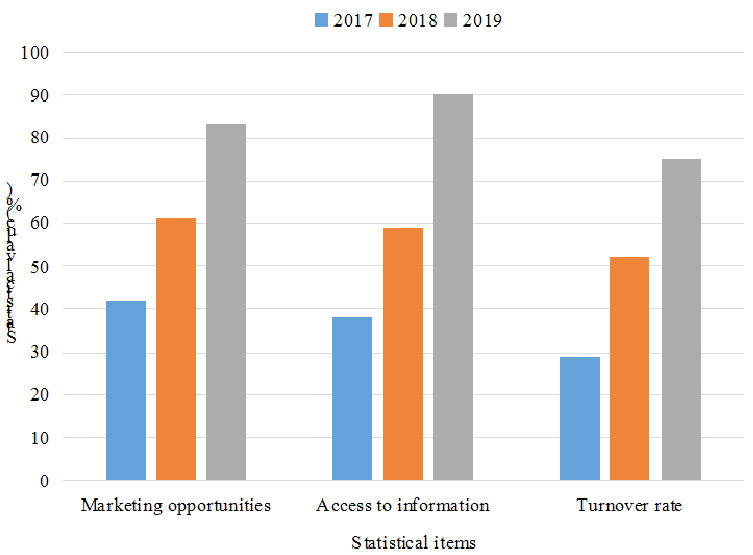 Figure 2: Satisfaction survey of traditional marketing model vs. community network big data marketing.
Critical Analysis & Conclusion
Takeaway
The integration of Big Data into social networks provides a "data guarantee" for marketing. It shifts the focus from simple exposure to Information Arrival Rate and Conversion Quality.
Limitations
While the paper highlights the advantages, it briefly touches upon "information security risks" without providing a deep technical solution (e.g., Differential Privacy or Federated Learning). Furthermore, the sample size (n=180) is relatively small for a "Big Data" centric study.
Future Outlook
For marketing professionals, the path forward is clear: Scientific Introduction. The future of marketing lies in a "win-win" where data allows companies to stop being intrusive and start being helpful, provided that the technical difficulties of unstructured data mining are continuously addressed.