
Multi-View Character Networks: Decoding Social Dynamics from Unstructured Video Data
Social Network Construction of the Role Relation in Unstructured Data Based on Multi-view
The paper proposes a parallelized multi-view framework for constructing social networks of role relations from unstructured video data. It integrates "video shot" views (using face detection/recognition with FP-Growth) and "plot" views (based on character collinearity) to build a comprehensive relationship graph, achieving SOTA-level efficiency via the Spark platform.
TL;DR
Manually mapping character relationships in massive video libraries is a monumental task. This paper introduces an automated, parallelized system that extracts social networks from videos by fusing two perspectives: visual "shots" (who appears together) and narrative "plots" (who is mentioned together). By leveraging the Spark framework, the authors achieved an F1 score of up to 77.66% and a 4.7X speedup in processing.
Background & Motivation: Beyond Structured Data
In the era of big data, most social network analysis (SNA) still relies on structured logs—like "Follower" counts or "Retweet" lists. However, a wealth of human interaction is buried in unstructured video data (movies, TV shows, news).
The authors identify two critical gaps in existing research:
- Single-View Blindness: Relying only on face recognition is risky because occlusions or lighting changes cause missed detections.
- Scalability Bottlenecks: Processing video at the pixel level is computationally expensive, making traditional sequential algorithms impractical for large-scale datasets.
Methodology: The Multi-View Fusion Architecture
The core innovation lies in the "Multi-View" approach, which compensates for the "vision gap" with "narrative insights."
1. The Video Shot View (Visual Evidence)
The system segments videos into shots and extracts keyframes. Using OpenCV and dlib's deep learning face recognition (99.38% accuracy on LFW), it identifies which characters appear in the same frame.
- Algorithm: FP-Growth is used to find "frequent itemsets." If two characters consistently share the screen above a certain
minSupportthreshold, a social edge is created.
2. The Plot View (Semantic Evidence)
Sometimes characters are central to a scene but their faces aren't clearly visible (e.g., a conversation over the phone or a character seen from behind). The "plot view" analyzes the textual description of the story. If two characters are collinear (mentioned in the same descriptive segment), an edge is added.
3. Parallel Implementation via Spark
To handle the "Big Data" aspect, the authors utilized Apache Spark and its Resilient Distributed Datasets (RDDs). Video files are stored in HDFS and processed in parallel across a cluster.
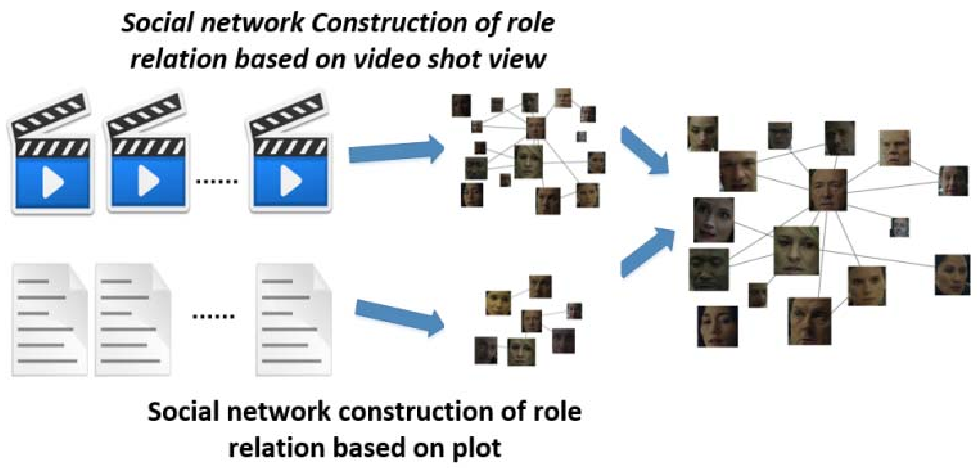 Fig 1: The proposed workflow from HDFS video input to multi-view network construction.
Experimental Analysis: Sitcoms vs. Political Dramas
The authors tested their method on two distinct datasets:
- The Big Bang Theory (TBBT): Relative simple, recurring character interactions.
- House of Cards (HoC): Complex, shifting political alliances and many characters.
Performance Gains
The results confirm that "Two heads (views) are better than one."
| Video Dataset | F1 (Single Shot View) | F1 (Multi-View) | Improvement |
|---|---|---|---|
| The Big Bang Theory | 73.65% | 77.66% | +4.01% |
| House of Cards | 58.12% | 61.32% | +3.20% |
Note: House of Cards had lower scores overall due to the complexity of the plot and many interactions occurring via telephone, which visual-only extraction cannot detect.
Computational Efficiency
By using the Spark framework, the scalability (Speedup) was impressive:
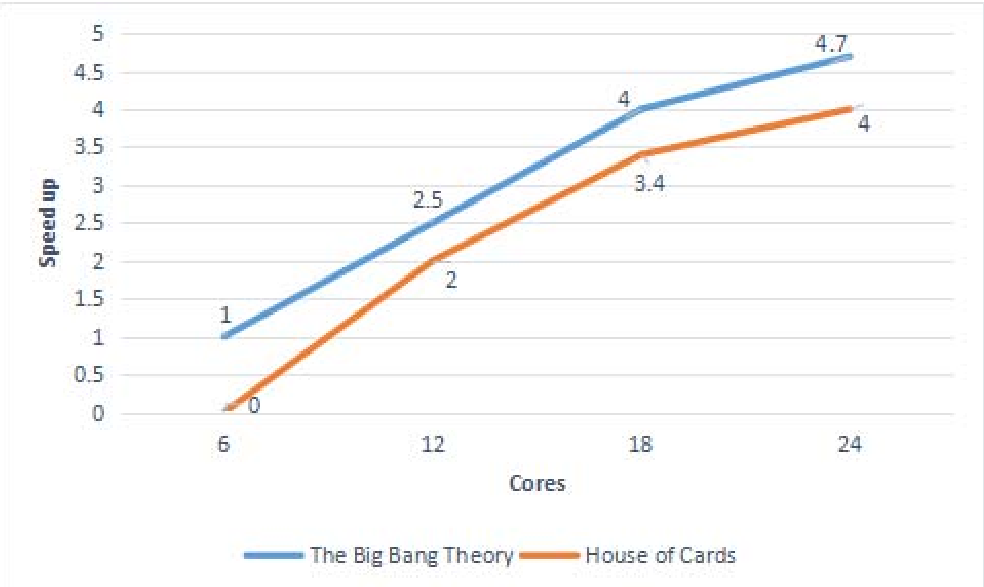 Fig 2: Speedup comparison showing linear-like scaling as more cores are utilized.
Critical Insights: Evolution of Relationships
One of the most fascinating aspects of this research is the visualization of the dynamic nature of social networks. The paper demonstrates how the network topology changes between Episode 1 and Episode 5 of The Big Bang Theory, accurately reflecting plot points like the introduction of "Amy" and her growing connection to Sheldon and Penny.
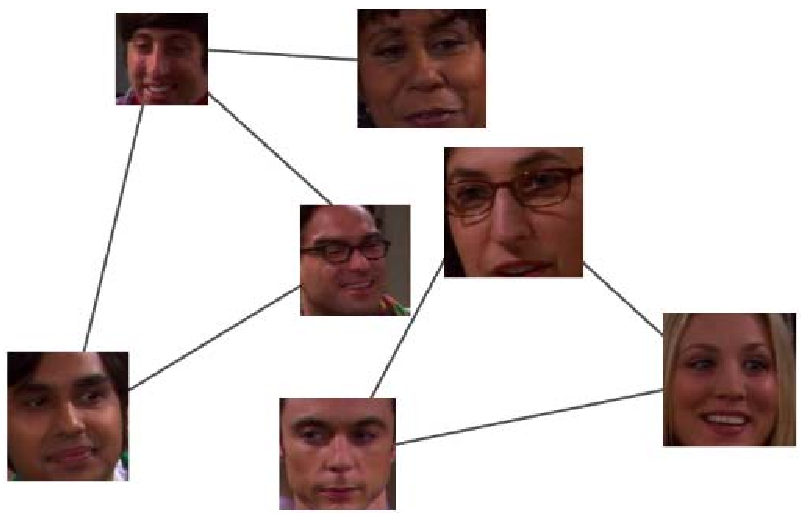 Fig 3: Extracted social network from TBBT Episode 1.
Conclusion & Future Work
The paper successfully demonstrates that integrating visual and textual "views" provides a more robust representation of social structures than visual data alone. While the current model relies on classical frequent itemset mining, the authors suggest that Deep Learning-based Graph Construction is the next frontier.
Key Takeaways:
- Fusion is Key: Semantic plot data is a powerful "clean-up" mechanism for computer vision errors.
- Parallelism is Mandatory: Video analysis is only viable at scale when distributed via frameworks like Spark.
- Limitation: Telephone conversations and off-screen mentions remain a "dark-matter" problem for this specific visual-heavy approach.