
Does Social Network Always Promote Entrepreneurial Intentions? A Structural Perspective
Does Social Network Always Promote Entrepreneurial Intentions? Part I: Theoretical Model
This paper proposes a theoretical framework to investigate the impact of social networks on the entrepreneurial intentions of Chinese College-graduate Village Officials. By integrating Social Network Analysis with the Entrepreneurial Event Model (EEM), the researchers establish a mediation model focused on variables like network heterogeneity, desirability, and feasibility.
TL;DR
Why do highly connected individuals sometimes shy away from entrepreneurship? This paper develops a theoretical model specifically for Chinese College-graduate Village Officials, a group with surprisingly low entrepreneurial drive despite favorable policies. The authors argue that the quality and structure of social networks—measured by size, heterogeneity, and the prestige of the "top node"—are the true drivers, mediated by an individual's sense of desirability and feasibility.
Background: The Paradox of Rural Officials
In China, "College-graduate Village Officials" are a strategic demographic intended to revitalize the "New Countryside." While the government provides low-interest loans and "green channels" for administrative approval, surveys indicate that only 6.4% actually intend to stay and build businesses. This paper moves beyond simple economic explanations to look at Social Embedding—the idea that an individual’s network dictates their decisions.
Problem & Motivation: Beyond "What" to "How"
Prior work often falls into two camps:
- Environmental Factors: Macro-level politics and economics.
- Personal Characteristics: Age, gender, and education.
The authors identify a gap: these factors are indirect. Social networks, however, are localized. The central question is: Does a larger network always help? Or is it the diversity of that network that matters? For village officials, the lack of interest in business information, despite having social resources, suggests a more complex psychological barrier.
Methodology: Measuring the "Greeters' Network"
The core of the methodology is the Chinese New-Year Greeters’ Networks. Because social networks are hard to quantify, the authors use a culturally specific proxy: the types of people an individual greets during the Spring Festival.
1. Network Metrics
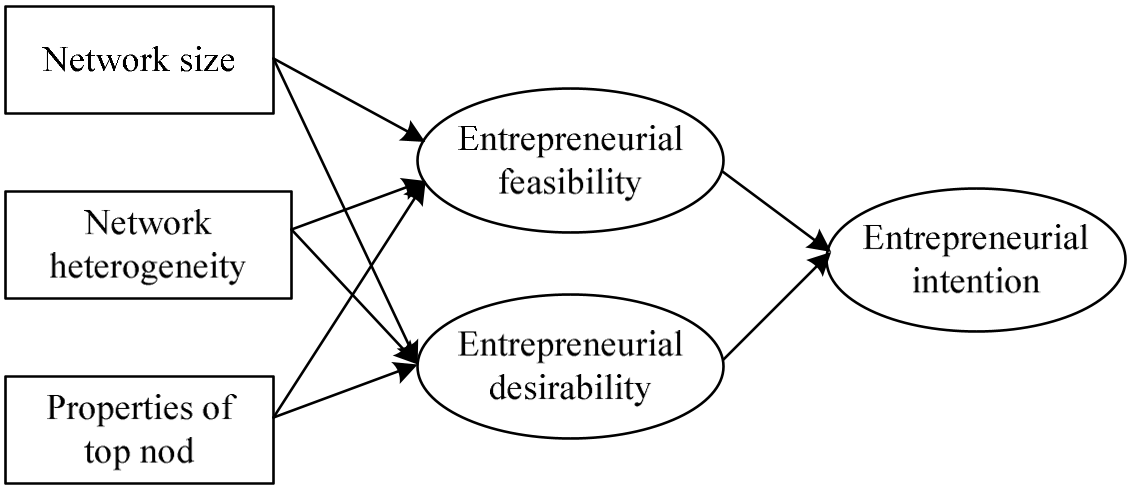
- Network Size: Total number of contacts.
- Network Heterogeneity: The variety of different occupations within the network (out of 20 categories).
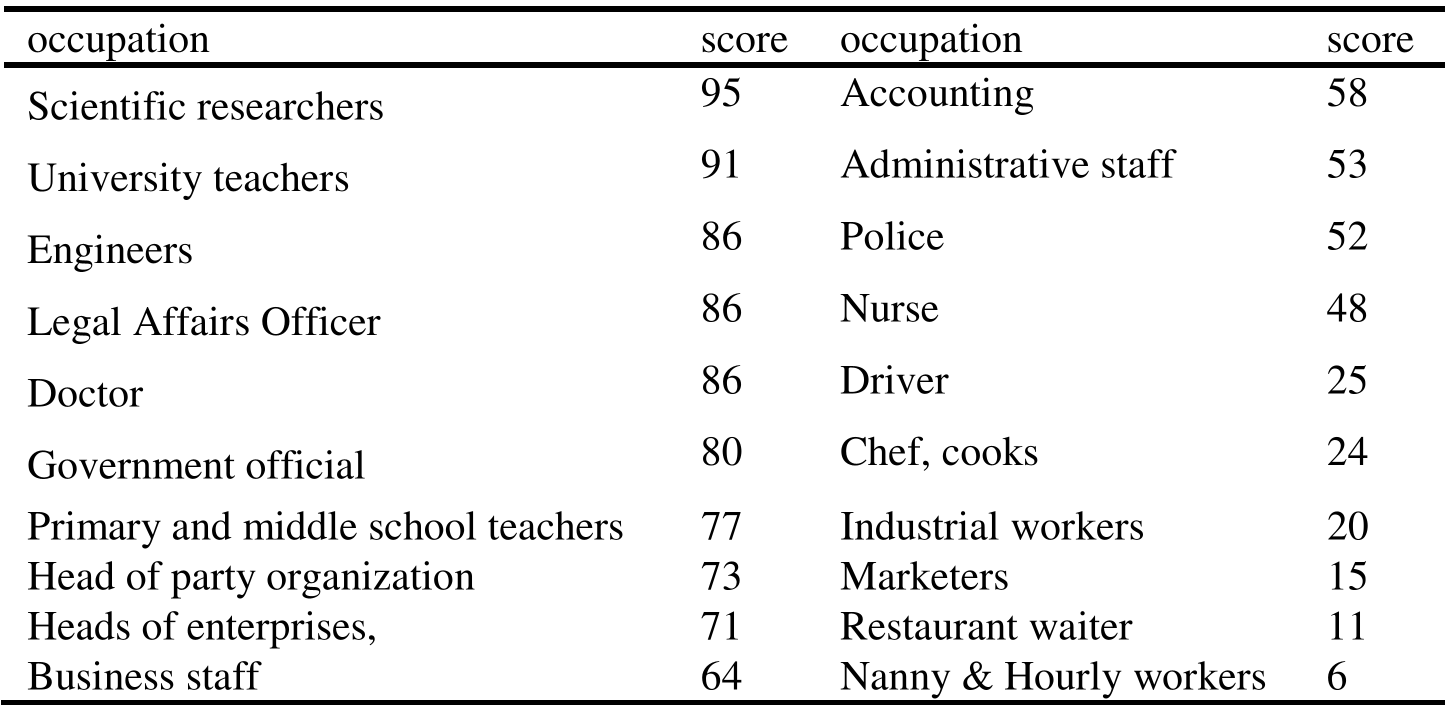
- Properties of Top Node: The highest level of occupational prestige in the network (e.g., Scientific Researchers score 95, while manual workers score 6).
2. The Mediation Model
The authors integrate these network traits with the Entrepreneurial Event Model (EEM), which posits that intention comes from:
- Perceived Desirability: How attractive is the idea?
- Perceived Feasibility: Can I actually do it?
Hypotheses: The Social-Psychological Link
The paper proposes that:
- H1: Larger, more heterogeneous networks with high-prestige top nodes directly boost entrepreneurial intention.
- H2: This boost happens because diverse networks provide the "emotional support" and "practical information" (Desirability and Feasibility) required to take the first step.
To measure this, they developed a 5-point Likert scale questionnaire, quantifying prestige based on a pre-defined table of Chinese occupations.
Critical Analysis & Conclusion
Takeaway
This work highlights that for rural officials, it isn't just about having any social network; it's about having a heterogeneous one. If an official only interacts with other government workers, their "top node" might be prestigious, but their "heterogeneity" is low, leading to weak entrepreneurial desirability.
Limitations
As a "Part I: Theoretical Model" paper, the primary limitation is the lack of empirical data. The model assumes that the "New-Year Greeter" list effectively captures the resources relevant to business, which may overlook professional networks outside of traditional social circles.
Future Prospect
Part II of this research will test this model against a database of Chinese Village Officials. If validated, it would suggest that the best way to promote rural entrepreneurship is not through more loans, but through programs that bridge village officials with diverse professional sectors (e.g., tech, hospitality, and legal).