
SoNetDBlue: Breaking the Silence and Blindness through Cloud-Enabled Social Networks
Social network framework for deaf and blind people based on cloud computing
The paper introduces SoNetDBlue, a Mobile-Cloud social network framework designed to bridge the communication gap between blind and deaf individuals. By integrating Time-of-Flight (ToF) cameras, cloud computing, and social networking, it enables real-time translation between Arabic Sign Language (ArSL) and speech/text.
TL;DR
Communication between blind and deaf individuals is often hindered by a "sensory mismatch." SoNetDBlue is an innovative framework that uses Cloud Computing, Mobile devices, and Time-of-Flight (ToF) cameras to act as a bridge. It converts Arabic Sign Language into speech for the blind and transforms spoken Arabic into animated sign language for the deaf, all while leveraging a social network to prevent social isolation.
The "Sensory Mismatch" Problem
In developing countries like Egypt, millions of people with hearing or visual impairments are left behind by standard social infrastructure. The core technical and social challenge is twofold:
- The Interaction Gap: A blind person cannot see signs; a deaf person cannot hear speech. Without a human interpreter, direct social interaction is nearly impossible.
- The Resource Constraint: High-accuracy Arabic Sign Language (ArSL) recognition and 3D facial analysis require significant computational power that mobile batteries and processors cannot handle alone.
Methodology: The Mobile-Cloud Synergy
The authors propose a "Thin Client" approach. The heavy lifting is done in the cloud (specifically an OpenStack environment), while the user interacts with lightweight wearable hardware.
1. The ToF Camera Sunglasses
Unlike standard RGB cameras, the Time-of-Flight (ToF) camera provides real-time depth information. Integrated into sunglasses, it captures the "conversation partner" at eye level. This is crucial for:
- Emotion Detection: Identifying the six basic human emotions (Happiness, Sadness, etc.) to give the blind user context beyond words.
- Gesture Tracking: High-frame-rate tracking of hands for ArSL recognition.
2. The Cloud-Processing Pipeline
The framework utilizes a scientific workflow management system (SWIMS) to parallelize tasks:
- Blind Mode: Video from glasses Bluetooth to Phone Cloud Pre-processing ArSL to Text Phone Text-to-Speech.
- Deaf Mode: Audio Cloud Speech-to-Text Sign Language Synthesis Digital Avatar on Phone.
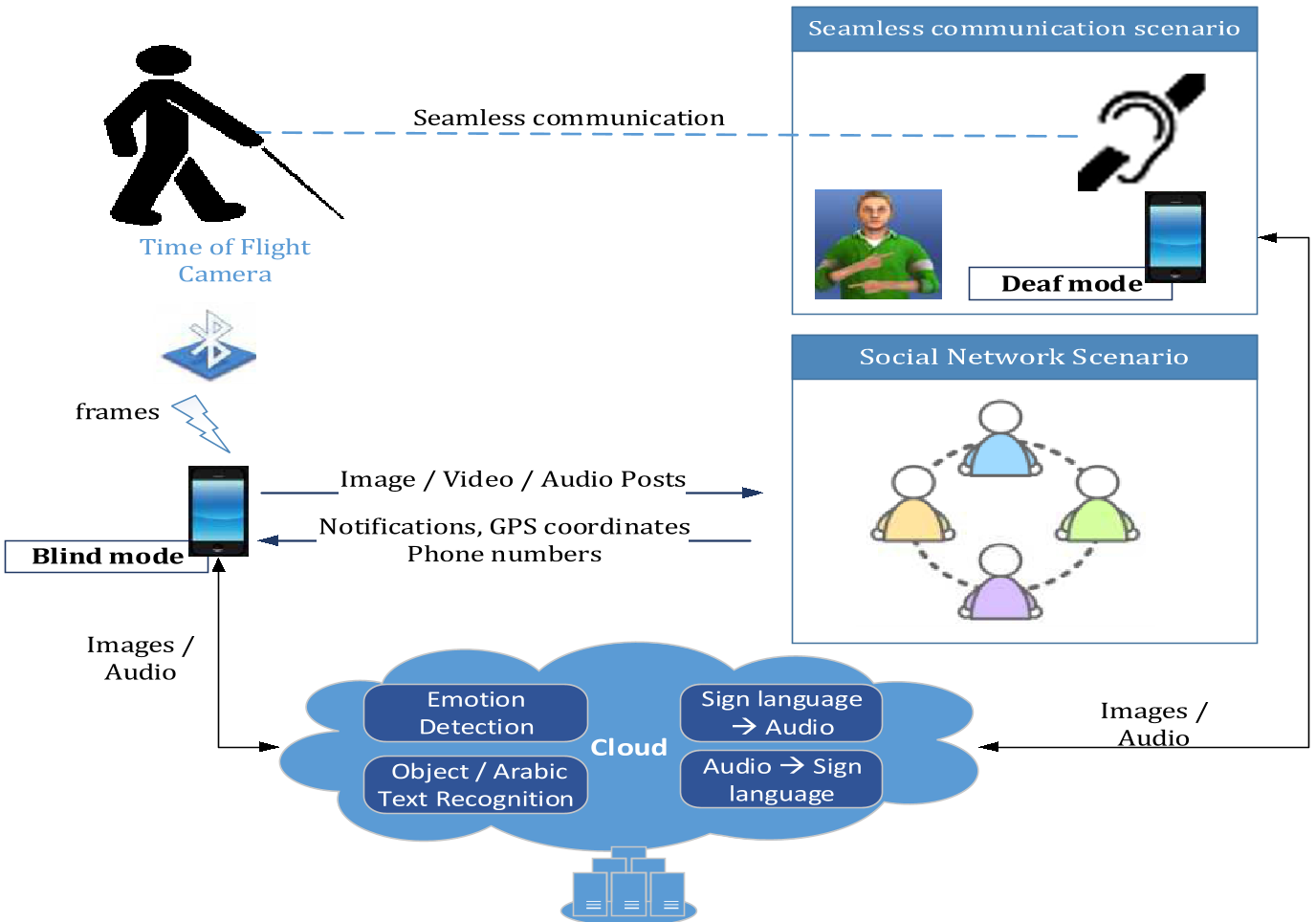 Figure 1: The overarching SoNetDBlue Mobile-Cloud Framework layout.
Experiments & Core Insights
The research highlights that while American Sign Language (ASL) recognition has reached near-99% accuracy, Arabic Sign Language (ArSL) lags behind at roughly 90.55%.
Key Findings:
- Preprocessing is Essential: To save bandwidth (and cost), the thin client filters video frames on the mobile device before sending keyframes to the cloud.
- Privacy & Security: Since the system involves constant video recording, the authors emphasize "unlink-ability"—ensuring that captured data cannot be traced back to a specific user's identity or location.
- Implicit Authentication: For blind users, typing passwords is "frustrating." The framework explores implicit authentication (patterns of touch or behavior) to secure the device without user intervention.
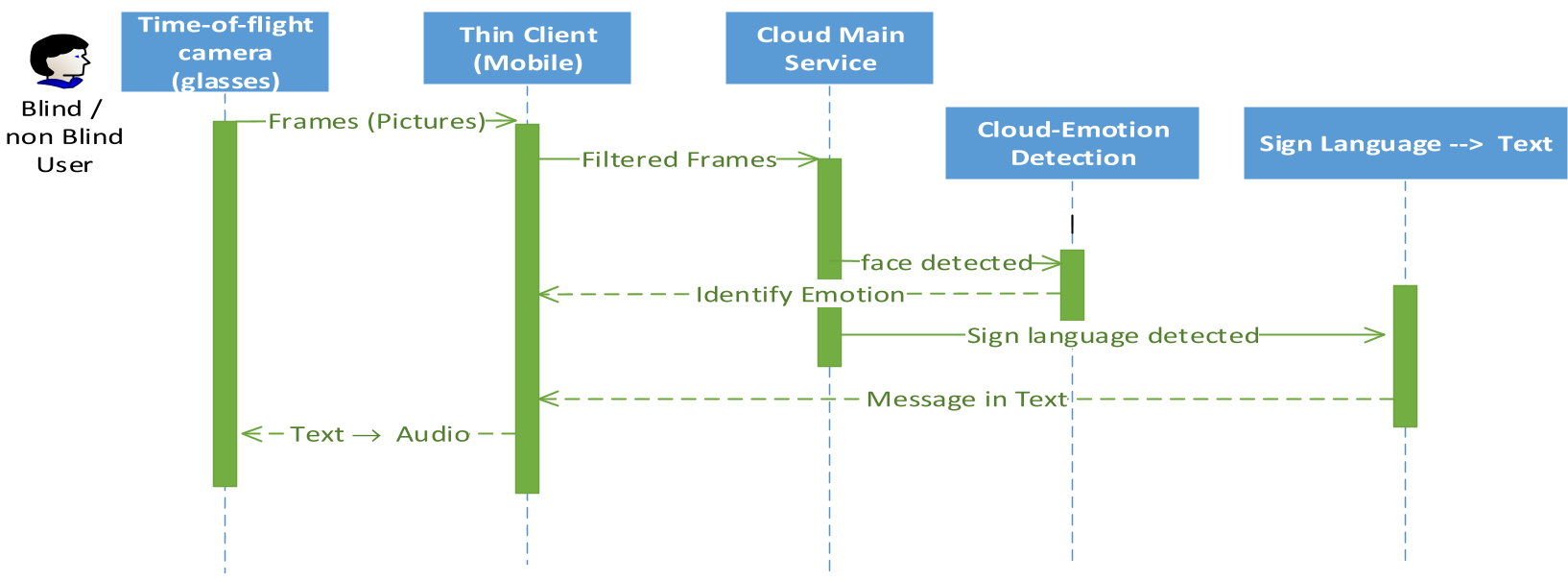 Figure 2: Sequence diagram for the "Blind Mode" communication flow.
Critical Analysis & Conclusion
SoNetDBlue moves beyond simple "tools" and enters the realm of "ecosystems." By integrating a social network aspect, it allows users to find nearby friends via GPS and post audio/sign-language messages, promoting independence.
Limitations:
- Language Maturity: ArSL lacks a standardized documentation system, making it harder to build a comprehensive corpus compared to ASL.
- Bandwidth Dependency: The reliance on cloud offloading makes the system vulnerable in areas with poor internet connectivity, a common issue in developing regions.
Future Outlook:
The push toward Edge Computing could further reduce the latency observed in this framework. As cloud costs decrease and ArSL datasets grow, frameworks like SoNetDBlue will be vital in transforming disabled individuals from "recipients of aid" into "active community participants."
Takeaway: This work proves that the "Digital Divide" can be bridged not just with better hardware, but with smarter, cloud-integrated workflows that respect the linguistic and social nuances of the target community.