
Decoding the Social Pulse: Why We Really Play Social Network Games
Abstract--This paper is aimed at analyzing the behaviors of Social Network Services (SNSs) game users in relation to community-targeting Social Network Games (SNGs), and the motivations that give rise to those behaviors. Previous research has focused on the study and utilization of game production technologies, rarely dealing with motivations of game users. Generally, this research has been limited to observations of user behavior in relation to achieving certain goals or themes of a game, such as upgrading a character's level or obtaining rewards. Rather than analyzing SNS game user behavior simply from this problem-solving perspective, this paper considers a wider variety of human motivations. In order to accomplish this goal, this paper first analyzes the motivation theory of SNS users and Lazzaro's 'People Fun' model. Next, experimental data collected from users playing 13 different SNGs is presented and classified by game events and functional actions. Finally, based on these results, the primary behaviors of SNG users will be generalized into 8 different types and distinct motivation-behavior patterns will be analyzed
This study presents an empirical analysis of user behaviors in Social Network Games (SNGs) by mapping them to Nicole Lazzaro’s "People Fun" model and established social motivation theories. By analyzing 13 popular Facebook games, the research identifies 8 core behavior types and 19 distinct motivation-behavior patterns that define the SNG player experience.
TL;DR
This research moves beyond the "what" of gaming (leveling up) to the "why" (social motivation). By analyzing 13 SNGs, the study bridges the gap between mechanical actions and psychological rewards, providing a roadmap for designers to build deeper community engagement through Lazzaro’s "People Fun" model.
Background: Beyond the Grind
In the early 2010s, Social Network Games (SNGs) like FarmVille and Texas HoldEm Poker dominated digital life. While most industry research focused on the technical "how-to" of game loops, Mijin Kim identified a critical void: we didn't understand the emotional architecture of these social spaces. This paper shifts the focus from functional problem solving to social motivation.
The Core Conflict: Mechanics vs. Emotion
Existing literature often treated game players as task-oriented agents. However, SNGs are unique because they leverage existing social graphs (like Facebook). The study posits that the "fun" isn't in the harvest; it’s in the social bonding, the "schadenfreude" of competition, and the "naches" (pride in another's success) of mentoring.
Methodology: Mapping the Human Element
The author combined two major theoretical pillars:
- Lazzaro’s People Fun: Focusing on social interaction as the primary source of enjoyment.
- Social Motivation Theory: Differentiating between accessibility motivations (social connectedness) and outcome motivations (reputation, efficacy).
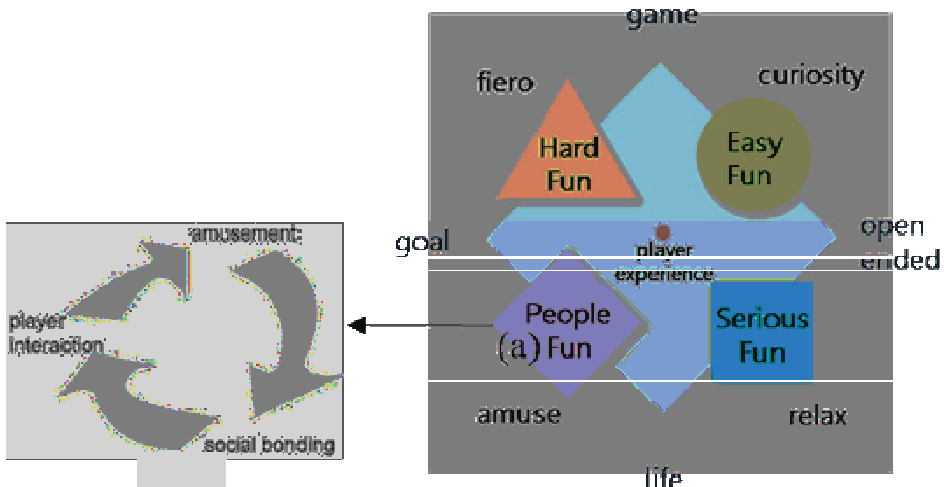 Fig 1: The recursive relationship between social interaction and positive emotion.
Key Findings: Genre Dictates Meaning
The study analyzed 13 games across genres like Simulation, Arcade, and RPG. The most profound insight was that the same behavior can stem from entirely different motivations depending on the game's genre:
- Universal Consistency: "Character" and "Perform" behaviors (personalizing avatars or demonstrating skill) were remarkably consistent across all players.
- Genre-Specific Divergence: Competitive behavior in Arcade games (like Poker) showed "non-mainstream" patterns, suggesting that competition in a pure arcade setting feels fundamentally different to players than competition in a simulation or RPG setting.
 Table 1: Common behaviors synthesized across major SNG titles.
Why This Matters (The "So What?")
For game designers and product managers, this paper provides a "Motivation-Behavior" matrix. It proves that you cannot simply copy a "Cooperate" mechanic from a simulation game and expect it to generate the same social bonding in an arcade game.
The 8 Generalized Behaviors of SNGs:
- Perform: Showing off skills.
- Lead: Guiding others.
- Compete: Testing skill against peers.
- Pets: Nurturing/Nurturing behaviors.
- Cooperate: Working together toward a goal.
- Spectacle: Observing the actions of others.
- Characters: Identifying with an avatar.
- Communicate: Direct social exchange.
Critical Analysis & Limitations
While the study provides a robust qualitative framework, the sample size (10 subjects) is small for a broad empirical generalization. However, as an exploratory piece, it successfully validates that Lazzaro’s macroscopic "People Fun" model holds up under specific case-study scrutiny.
Future Outlook
The next frontier, as the author suggests, is the integration of Emotions into this Motivation-Behavior model. Understanding that a "Cooperate" action leads to "Gratitude" while a "Compete" action might lead to "Schadenfreude" is essential for designing sustainable virtual communities.
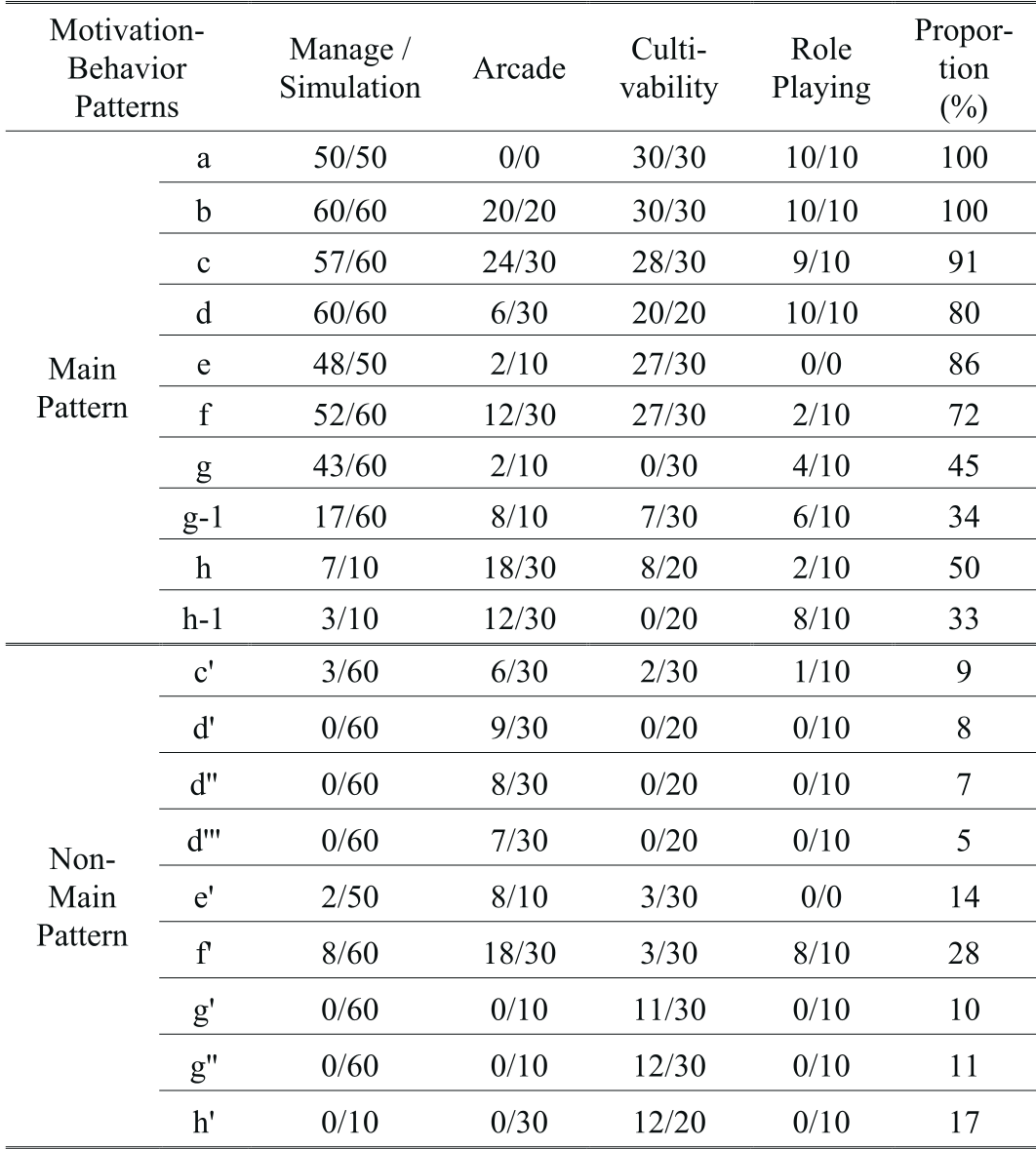 Table 2: Data showing the distribution of mainstream vs. non-mainstream patterns across genres.