
Beyond Simple Spreading: A Probabilistic Flow Approach to Multi-Topic Information Diffusion
16021_The Roles of Social Network Mavens.
This paper introduces a novel framework for analyzing and modeling Information Diffusion in social networks by focusing on user-specific attributes and multi-topic engagement. It leverages a Gaussian Mixture Model (GMM) and probabilistic flow constraints to capture the complex dynamics of how information spreads across diverse user interest sets.
TL;DR
Information in social networks doesn't just spread—it flows under constraints. This paper shifts the perspective from simple "infection" models to a probabilistic flow framework. By combining metrics for user independence and interest multiplicity with a Gaussian Mixture Model (GMM), the authors provide a more granular way to predict how information traverses through users with finite "attention capacity."
The "Attention Bottleneck": Why Simple Cascades Fail
Most classical models, like the Independent Cascade (IC) or Linear Threshold (LT), treat users as passive nodes that "flip" states. However, real-world users have:
- Limited Capacity: A user can only process so much information.
- Topic Preference: A user might be a "sharer" for technology but a "lurker" for politics.
- Independence Dynamics: Some users generate original content (), while others primarily relay it ().
The authors argue that ignoring these factors leads to massive inaccuracies in predicting long-term diffusion patterns.
Methodology: Flow Optimization and GMM
The core of the paper lies in redefining the probability of a node becoming active given the activity of its neighbors .
1. Multi-Dimensional User Profiling
The paper defines three critical metrics to characterize a user :
- Independence (): Ratio of original content to total activity.
- Sharing (): The extent to which a user propagates information from neighbors.
- Multiplicity (): The diversity of topics a user engages with relative to the whole network.
2. The Flow Constraint Mechanism
The problem is framed as a maximization of flow , subject to (node capacity). The connection is defined by: This ensures that the "pressure" of information flow respects the inherent capacity of the receiving node.
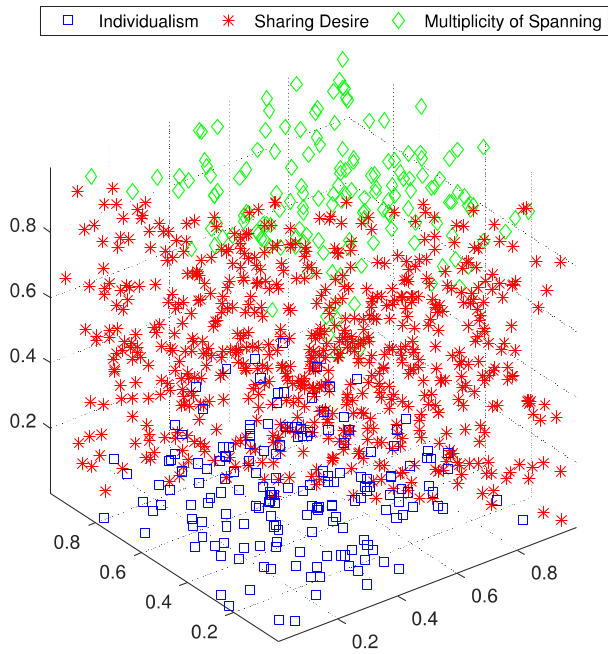 Figure 1: The conceptual architecture of the Gaussian Mixture distribution over the social graph.
3. Latent Pattern Discovery with GMM
To handle the stochastic nature of these interactions, the authors employ a Gaussian Mixture Model (GMM) trained via the Expectation-Maximization (EM) algorithm. This allows the model to find latent clusters of users who behave similarly under different information "topics."
Experiments and Insights
The researchers visualized the diffusion clusters using multi-dimensional plots. The GMM successfully identified "Influencer Hubs" (high sharing, low independence) versus "Content Originators" (high independence).
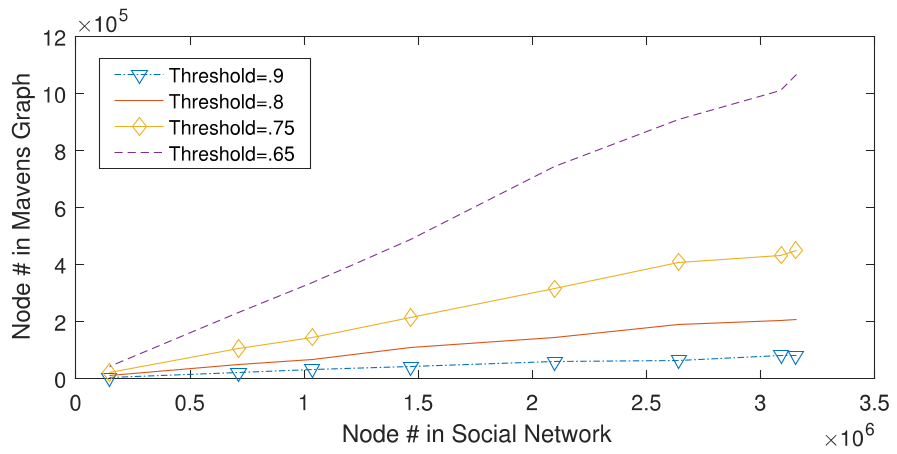 Figure 2: Analysis of user distribution across independence and multiplicity dimensions.
Key findings include:
- Users with high Multiplicity act as vital "bridges" between disconnected topical communities.
- When node capacity is strictly enforced, the model avoids the "unrealistic viral explosion" often seen in simpler models, leading to a better fit for real-world plateauing behavior.
Critical Analysis & Conclusion
Takeaway
This work highlights that User Capacity and Topical Diversity are not just secondary features—they are the primary regulators of social network dynamics. By treating information as a flow and using GMMs to model latent behaviors, we can move toward "Precision Social Analytics."
Limitations
The model assumes a relatively static network topology. In reality, followers/following relations shift dynamically during a viral event (the "echo chamber" effect). Incorporating temporal graph changes would further enhance this framework.
Future Work
The logical next step is applying this "Capacity-Flow" logic to adversarial information (misinformation) to see if "bottlenecking" certain nodes can more effectively halt the spread of rumors than simple node removal.