
PIDX: Quantifying the Invisibility Cloak of Social Media Privacy
Social network privacy measurement and simulation
The paper introduces the SONET model and its Privacy Index (PIDX) to quantify privacy risk in online social networks. It provides a numerical value (0-100) based on attribute sensitivity and visibility, allowing users to evaluate their exposure across different social circles (friends, friends of friends, and public).
TL;DR
Researchers have developed a metric called the Privacy Index (PIDX) to solve the "confusion gap" in social media privacy settings. By assigning numerical weights to different personal attributes (like your DOB or SSN) and factoring in who can see them, the system generates a risk score from 0 to 100. This turns vague privacy policies into a clear dashboard of vulnerability.
The Problem: The Subjectivity of Silence
Why is it so hard to protect privacy online? The authors identify four core hurdles:
- Subjectivity: One person's "public info" is another's "secret."
- Attribute Variance: A leaked email is bad; a leaked SSN is catastrophic.
- Inference: Hidden data can be guessed from known data.
- Combinatorial Risk: Two "safe" attributes joined together can uniquely identify you.
Prior works like PrivAware or Privometer focused on how many attributes were leaked but ignored how sensitive those attributes were. Meanwhile, statistical models like IRT (Item Response Theory) assumed users and data were independent—which is never true in a connected social graph.
Methodology: The SONET Model & c-PIDX
The authors propose the SONET (Social Network) model, which treats privacy as a function of Sensitivity x Visibility.
The Formula for Exposure
The core of the paper is the Composite Privacy Index (c-PIDX). It blends two different mathematical perspectives:
- w-PIDX (Weighted): Captures incremental changes. If you add a phone number, your score goes up slightly.
- m-PIDX (Maximum): Captures the "weakest link." If you expose your SSN, your risk is high regardless of other settings.
The composite formula ensures that if even one highly sensitive item is public, your risk score reflects that "critical hit" to your privacy.
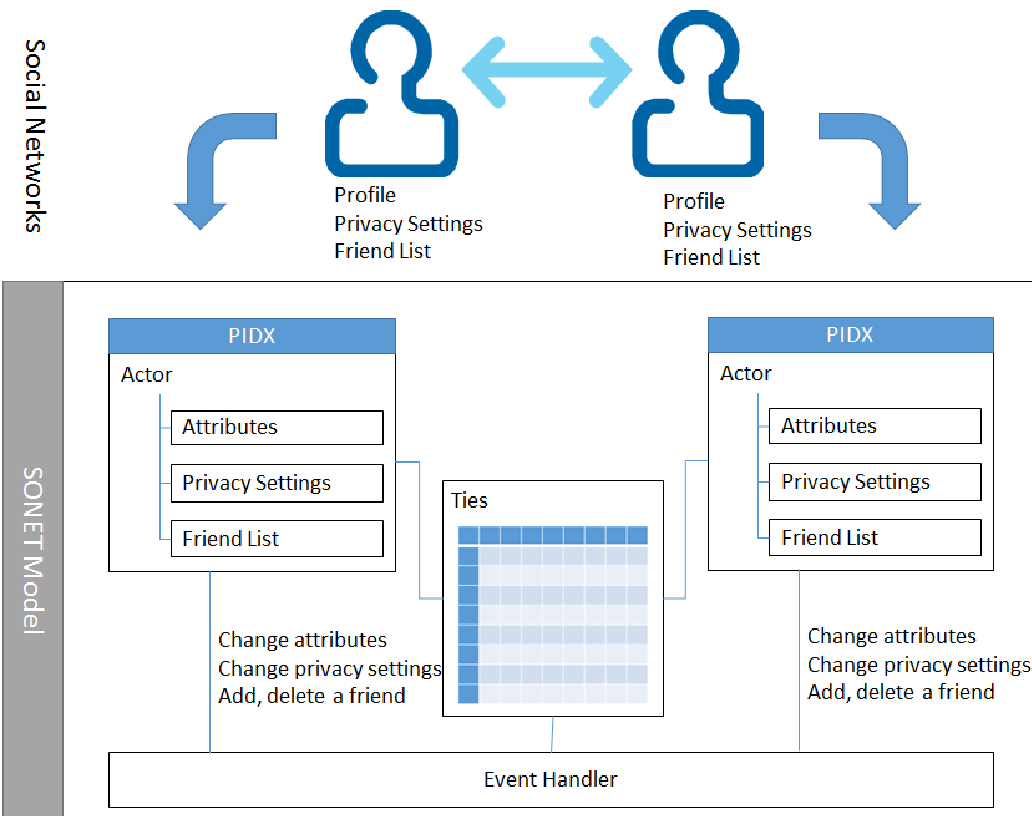 Figure 1: Mapping real-world social networks into the SONET mathematical model.
OSNPIDX: Simulating the Risk
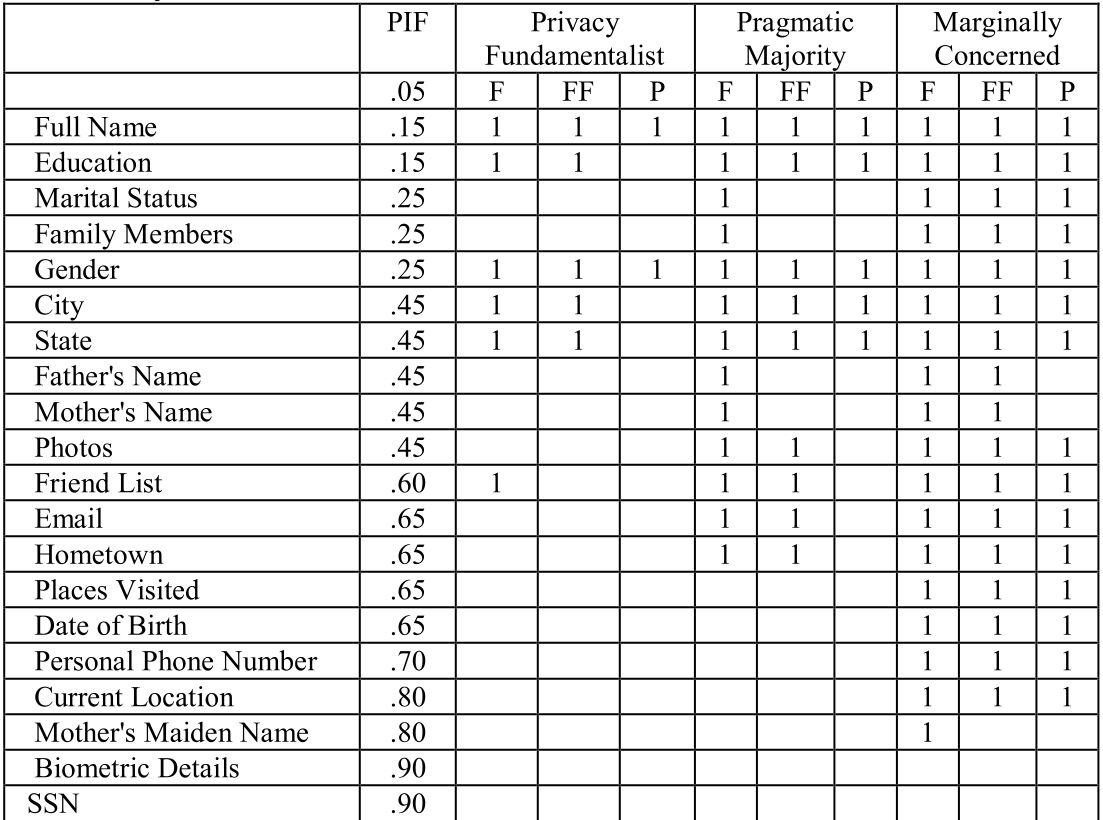
To prove this works, the team built OSNPIDX, a simulation tool. They categorized users into three psychological buckets:
- Privacy Fundamentalists (PF): The "tinfoil hat" crowd (minimal sharing).
- Pragmatic Majority (PM): The average user (shares with friends).
- Marginally Concerned (MC): The "open book" (shares everything).
Key Comparison Table
The following table defines the Attribute Privacy Impact Factor (PIF). Notice how an SSN or Biometric details carry a weight of 0.90, while a name is only 0.15.
Experiments: What the Data Says
The results from the OSNPIDX simulation are stark. For a Privacy Fundamentalist, the leap from "Friends" to "Public" view drops their exposure score significantly. However, for a Marginally Concerned user, their c-PIDX remains above 90 even for the "Public" group.
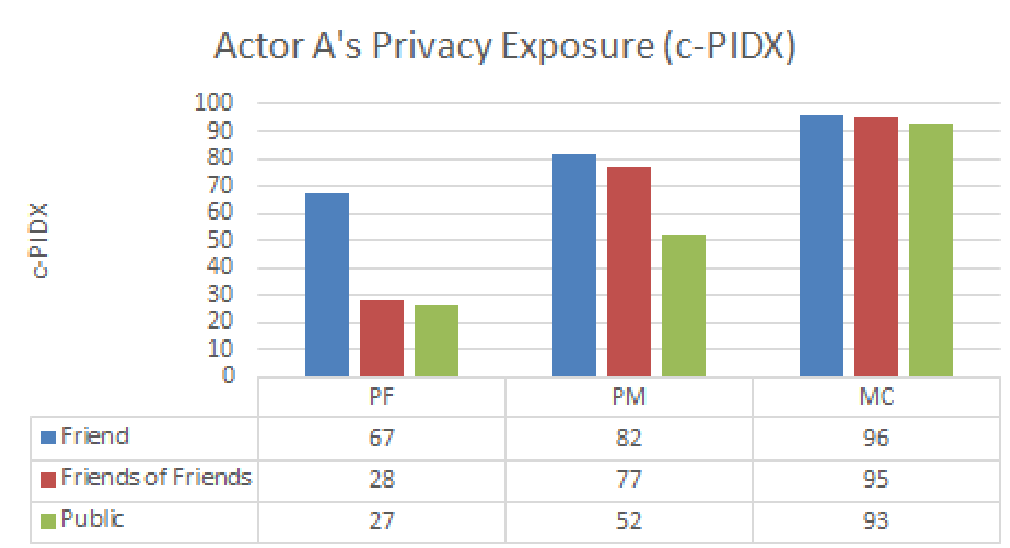 Figure 2: The risk "cliff" for Privacy Fundamentalists vs. the stagnant high-risk of Marginally Concerned users.
One of the most sobering findings: if a hacker gains access to an account, the PIDX shoots up to 96/100. This suggests that no matter how good your settings are, the "Account Compromise" event is a total privacy failure.
Critical Insight & Conclusion
This paper matters because it moves social media privacy from the realm of legal prose into the realm of engineering. By quantifying risk, we can build tools that alert a user: "Posting this photo will increase your Public Privacy Index by 15 points."
Limitations: The "Sensitivity" weights (PIF) are currently static based on old surveys. In reality, the "price" of data on the dark web changes. Future iterations of PIDX will need to be dynamic, shifting the weight of an attribute (like a home address) based on modern threats like doxxing.
Ultimately, PIDX provides a much-needed "Speedometer" for our digital lives, helping us realize just how fast we are driving toward a total loss of anonymity.