
Specialized OSNs: Bridging the Gap Between Social Research and User Engagement
Development of a Social Network for Research Support and Individual Well-Being Improvement
The paper presents a custom-built Online Social Network (OSN) platform developed using Design Science Research (DSR). It integrates typical social networking dynamics with forum structures and gamification elements specifically to provide researchers with unrestricted access to user-generated data for psychological and social science studies.
Executive Summary
TL;DR: Large-scale Online Social Networks (OSNs) are "walled gardens" that trap valuable behavioral data behind restrictive APIs. This paper introduces a proprietary social platform that blends forum dynamics, gamification, and unrestricted data access to empower social scientists and psychologists while improving user well-being.
Background: Positioned at the intersection of Information Systems and Social Sciences, this work follows the Design Science Research (DSR) methodology to create a functional artifact that addresses the specific limitations of commercial platforms for academic inquiry.
The "Walled Garden" Problem in Social Science
While users are more engaged than ever in the age of "Prosumers," academic researchers face significant hurdles. Conventional platforms like Facebook and WhatsApp offer limited data transparency, making it nearly impossible to conduct deep longitudinal studies on social capital or psychological phenomena without expensive partnerships or restrictive API limits.
The authors argue that a "Research-First" platform is necessary—one that provides:
- Granular Data Access: Full visibility into interactions for authorized researchers.
- Integrated Survey Tools: The ability to deploy questionnaires within the social flow.
- Contextual Communities: Structured spaces that foster mutual support, particularly for marginalized groups like families of persons with disabilities.
Methodology: Engineering Social Interaction
The platform was built using the MVC (Model-View-Controller) pattern, ensuring flexibility and security. The core logic focuses on two pillars: Community Moderation and Engagement Loops.
1. The Architecture of Engagement
Unlike the algorithmic feeds of Twitter, this platform utilizes a hierarchical community-forum structure. This allows for focused discussions (e.g., a "Programming" community containing "Java" and "PHP" sub-threads).
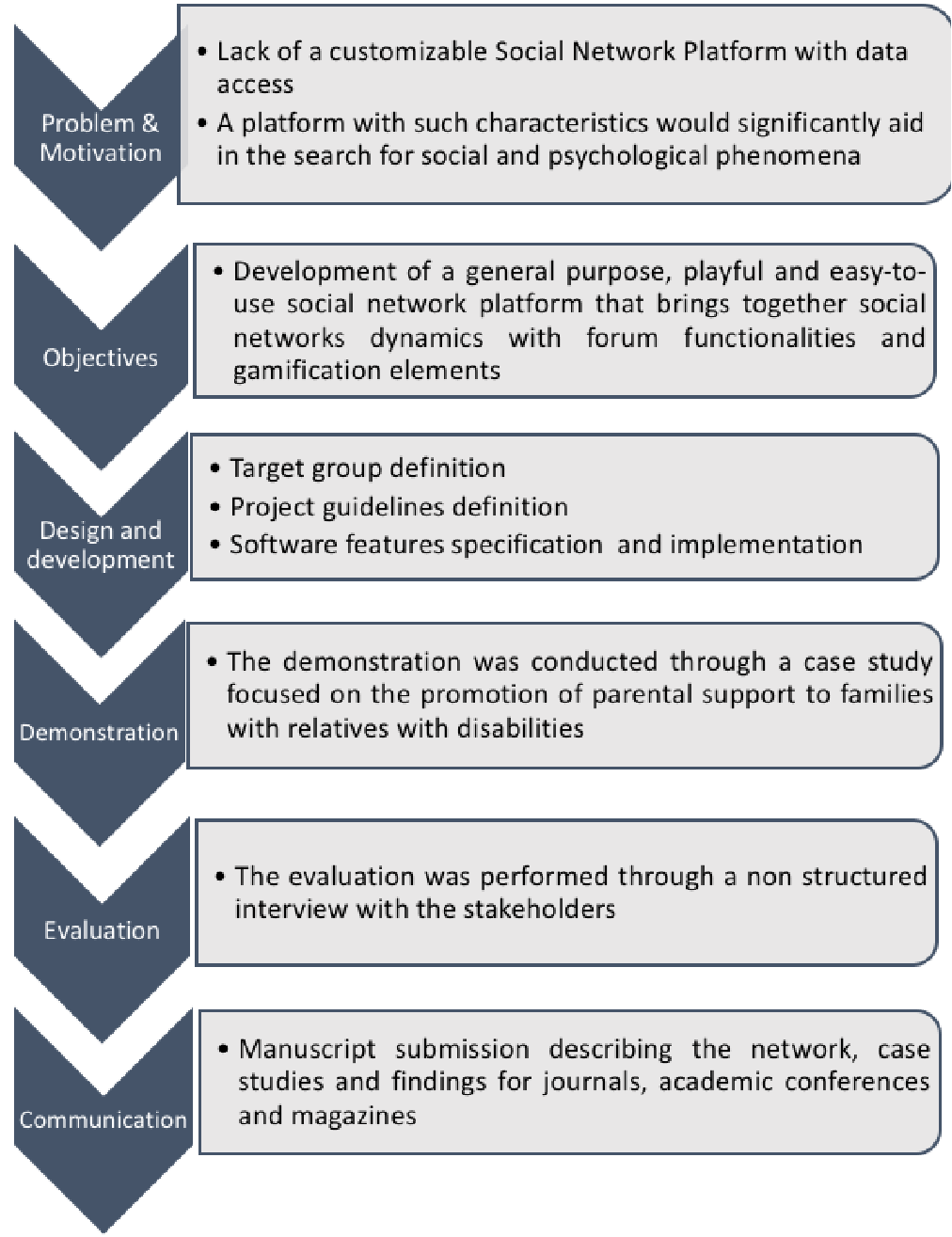 Figure 1: The Design Science Research framework used to develop the platform.
2. Gamification as a Catalyst
To prevent the platform from becoming a "ghost town," the authors integrated a reward system. Users earn points and unlock nine levels of medals for actions like liking, sharing, and—crucially—answering research surveys. This creates an "Engagement Loop" that feeds the researchers' need for data while providing the user with social recognition.
Experimental Potential & Feature Comparison
The platform's value proposition is best understood when compared to industry giants. While it lacks "Lives" or "Events" (for now), it outperforms mainstream OSNs in features critical for clinical and academic work.
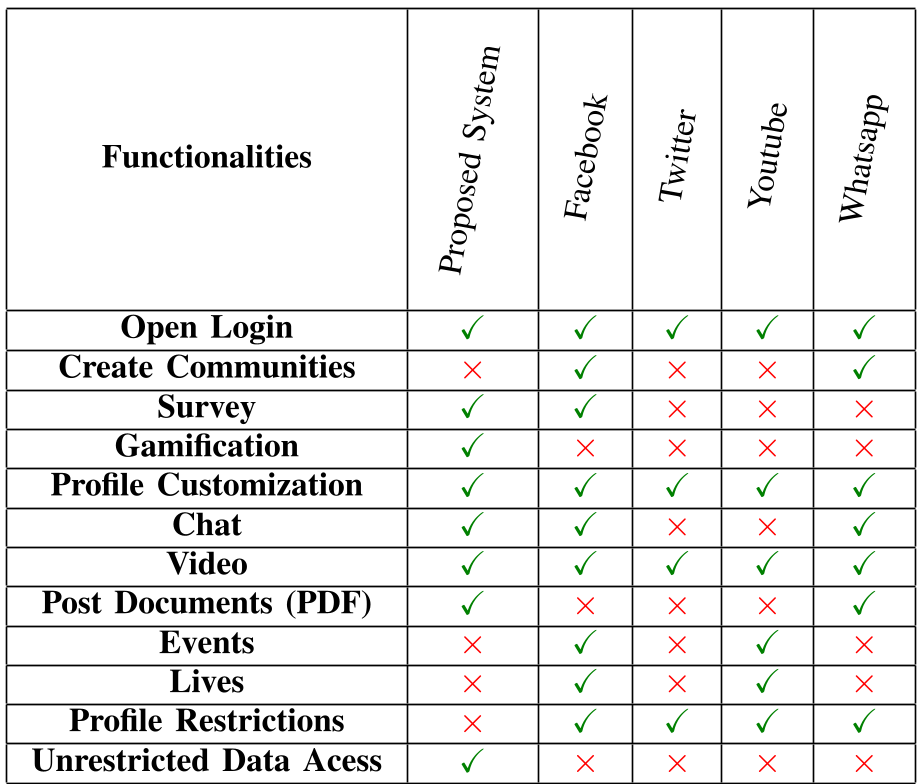 Table 1: Comparison of functionalities. Note the "Unrestricted Data Access" and "Gamification" as primary differentiators over Facebook and WhatsApp.
Critical Insight & Conclusion
By using Design Science Research, the authors have moved beyond theoretical critique to build a practical tool for an International Research Consortium. The inclusion of restricted "Moderator" roles ensures that communities remain supportive and informative, which is essential for "Inductive Well-being"—the process of improving mental health through structured social interaction.
Limitations: The platform currently faces challenges in scale and high-intensity features like video streaming. Its success depends heavily on the "Human-in-the-loop" (the moderators).
Future Work: The next phase involves quantitative evaluations of "Interaction Success" and assessing whether the digital social capital gained on this platform translates into real-world psychological resilience.