
Unleashing the Power of Granularity: Semantic Composition in Educational Social Networks
A Social Network for Sharing Learning Segments and Compositions
This paper introduces a framework for an educational social network focused on sharing and composing "learning segments"—granulated portions of Learning Objects (LOs). It proposes a semi-automatic composition strategy using semantic relationships and logic reasoning to assist users in sequencing content.
TL;DR
Building high-quality digital learning content is notoriously slow and expensive. This paper argues that the secret to efficiency lies not in creating more content, but in segmentation and smart composition. By breaking Learning Objects (LOs) into granular segments and using a logic reasoner to map their relationships, the authors created a social network where learners collaboratively build and sequence their own "knowledge playlists."
The Problem: The "Monolith" Barrier in E-Learning
For decades, the educational technology community has chased the dream of Reusable Learning Objects (LOs). However, most LOs are like massive boulders—hard to move, hard to transition, and impossible to fit into a different "wall" of knowledge.
The two primary pain points identified are:
- Inverse Relationship of Size and Reuse: Large multimedia files are too specific to be reused elsewhere.
- The Assembly Tax: Even if you find the right parts, the cognitive effort required to sequence them logically (is Segment A a prerequisite for Segment B?) is overwhelming for both teachers and students.
Methodology: From Segments to Intelligent Graphs
The authors propose a shift from viewing learning content as files to viewing it as a Semantic Network of Segments.
1. Segmentation
Instead of downloading a 60-minute lecture, users extract "segments"—focused snippets that address specific concepts. This maximizes the "granularity" of the content, making it highly versatile.
2. Logic Reasoning for Sequence
Simply having a pile of snippets isn't enough. The core innovation here is the use of semantic relationships and logic inference. If Segment S1 "is basis for" S2, and the system knows S2 "requires" S4, a reasoner can suggest a logical learning path even if those specific segments were never explicitly linked by a human.
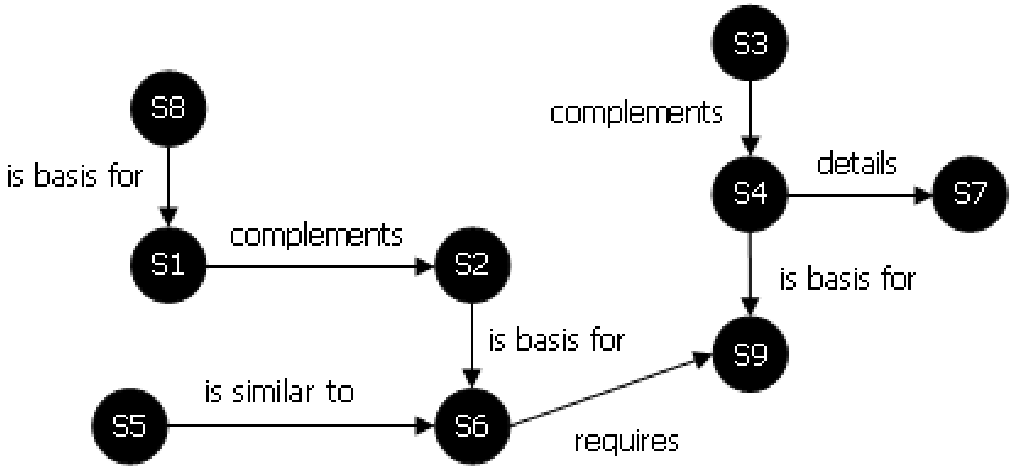 Figure 1: Examples of explicit relationships (Basis for, Complements) between segments.
By applying rules like (SX basis for SY) AND (SW basis for SZ) AND (SY requires SZ) → (SX requires SW), the system reduces the manual labor required to catalog every possible connection in a large repository.
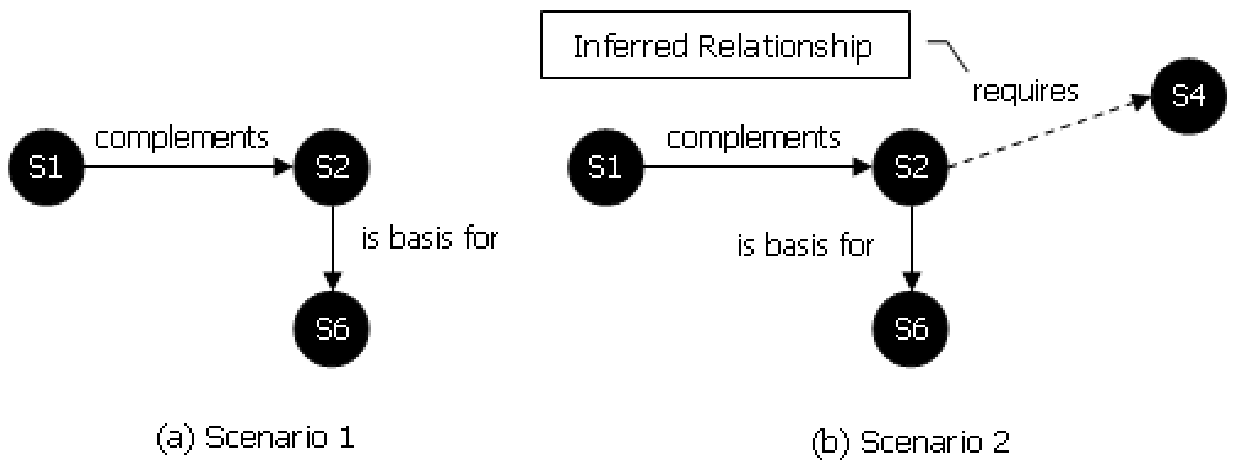 Figure 2: Contrast between simple relationships and inferred reasoning. Note how the dotted line in (b) represents a discovered pedagogical dependency.
Experiments: Social Learning in Action
The researchers tested their prototype at the Federal University of the State of Rio de Janeiro. Learners were tasked with segmenting videos on "Strategic Planning" and "Object-Oriented Programming" and then creating new "compositions."
Key Findings:
- Visual Aid Performance: 87.5% of students found that visualizing relationships transformed the composition process from a chore into a logical puzzle.
- Collaborative Motivation: Users were highly willing (100%) to recommend their segments to others, effectively turning the platform into a "Social Network for Learning."
- Meaningful Navigation: The ability to explore content based on its conceptual depth (Depth Level 1 vs. Level 2) allowed for much better exploratory learning than a standard search bar.
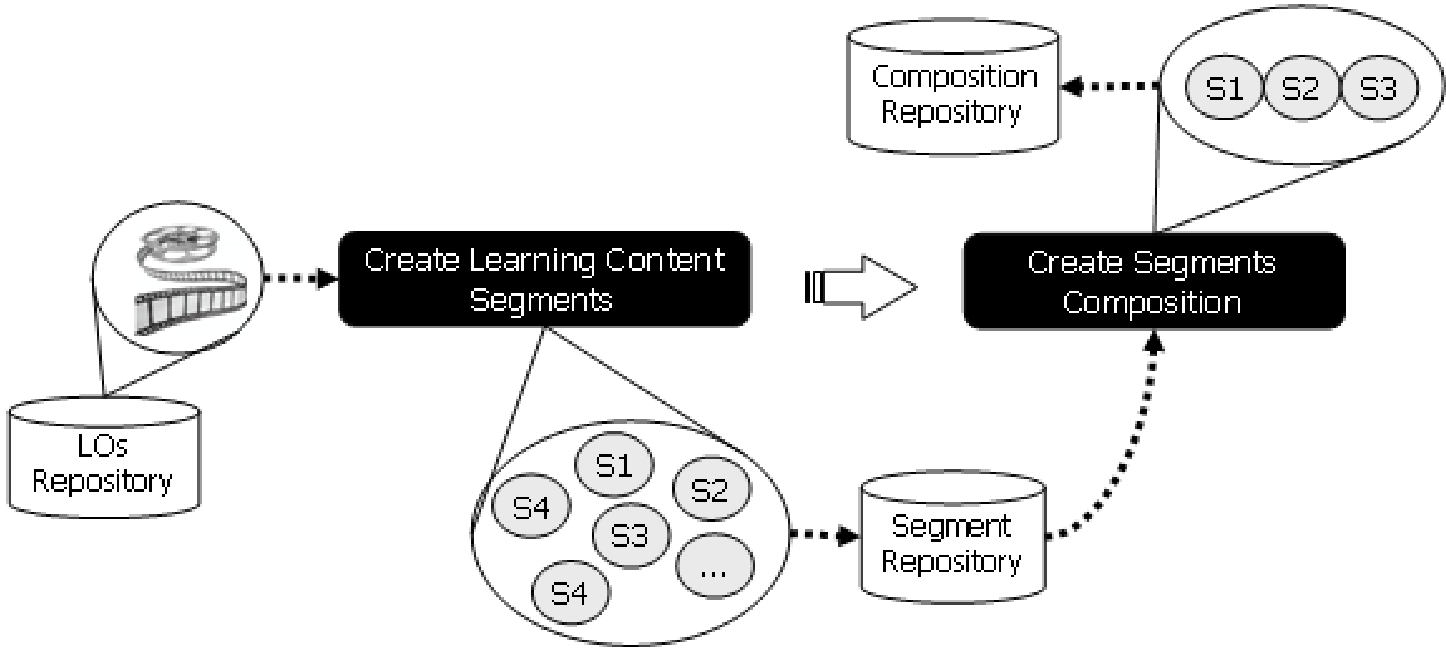 Figure 3: The lifecycle of a segment within the collaborative environment.
Critical Insight & Future Outlook
While this paper successfully demonstrates the utility of logic-driven sequencing, its current implementation is semi-manual. The authors acknowledge that the next frontier is Automated Planning.
By integrating Hierarchical Task Networks (HTN) or modern AI planning, future systems could automatically generate a personalized "learning roadmap" for a student based on their unique gaps in knowledge.
Another significant takeaway is the move toward multi-media layer compositions. While this study focused on video, the framework is designed to eventually handle cross-media sequencing—linking a text segment to a video segment through shared semantic concepts.
Conclusion
This work provides a robust blueprint for moving past "Learning Object Repositories" toward "Dynamic Learning Ecosystems." By treating educational content as a living, relatable social graph, we can significantly lower the cost of high-quality, personalized education.