
Getting Acquainted in the SNS Era: Beyond "Passive Browsing" to True Social Attraction
Getting acquainted through social network sites: Testing a model of online uncertainty reduction and social attraction
This study investigates how members of Social Network Sites (SNS) use passive, active, and interactive uncertainty reduction strategies (URS) to form impressions of new acquaintances. Drawing on a survey of 704 SNS users, the research identifies a moderated mediation model where interactive strategies most effectively reduce uncertainty, which subsequently drives social attraction.
TL;DR
Is "stalking" a profile enough to make you like someone? According to this seminal study on social network sites (SNS), while almost everyone (99%) uses passive strategies like browsing photos and blogs, these actions don't actually reduce your uncertainty about a person. Only interactive communication (direct questioning and self-disclosure) effectively lowers uncertainty, which—mediated by the valence of information—eventually leads to social attraction.
Context: Why Old CMC Theories Needed an Update
Early theories of Computer-Mediated Communication (CMC), such as Media Richness Theory or the Reduced Cues Perspective, were born in the era of green-screen terminals and text-only MUDs. They assumed that online interaction was inherently "cue-poor" and dyadic.
The advent of SNS (like Facebook or the Dutch site Hyves used in this study) changed the game. These platforms are:
- Cue-Rich: They provide photos, videos, and music tastes.
- Open Systems: They allow for "one-to-many" communication and observing how a target interacts with others.
The authors, Antheunis et al., recognized that these new affordances might fundamentally change how we reduce uncertainty about strangers.
The Core Mechanism: The URT Model on SNS
The researchers proposed a model based on Uncertainty Reduction Theory (URT). The logic is simple: We seek information to make the other person's behavior predictable. Predictability (low uncertainty) should, in theory, lead to liking (social attraction).
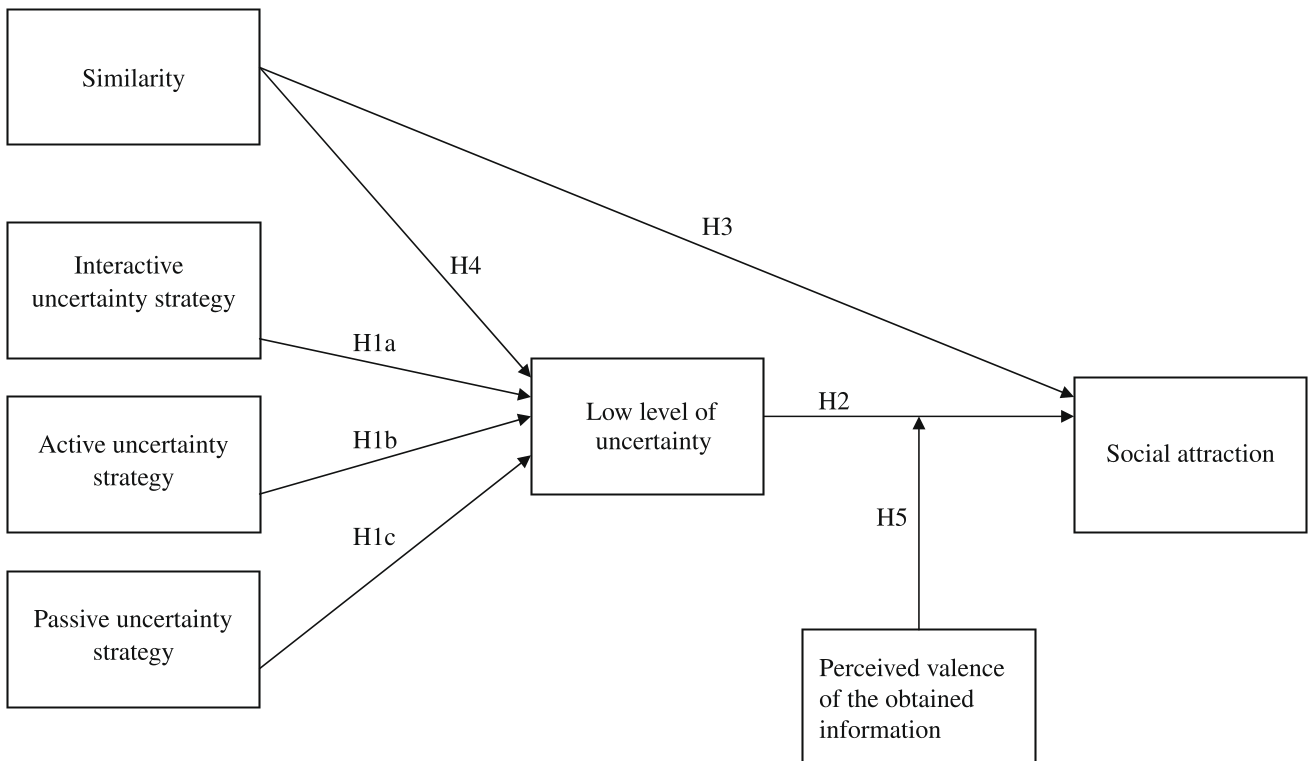
The study categorized behaviors into three strategies:
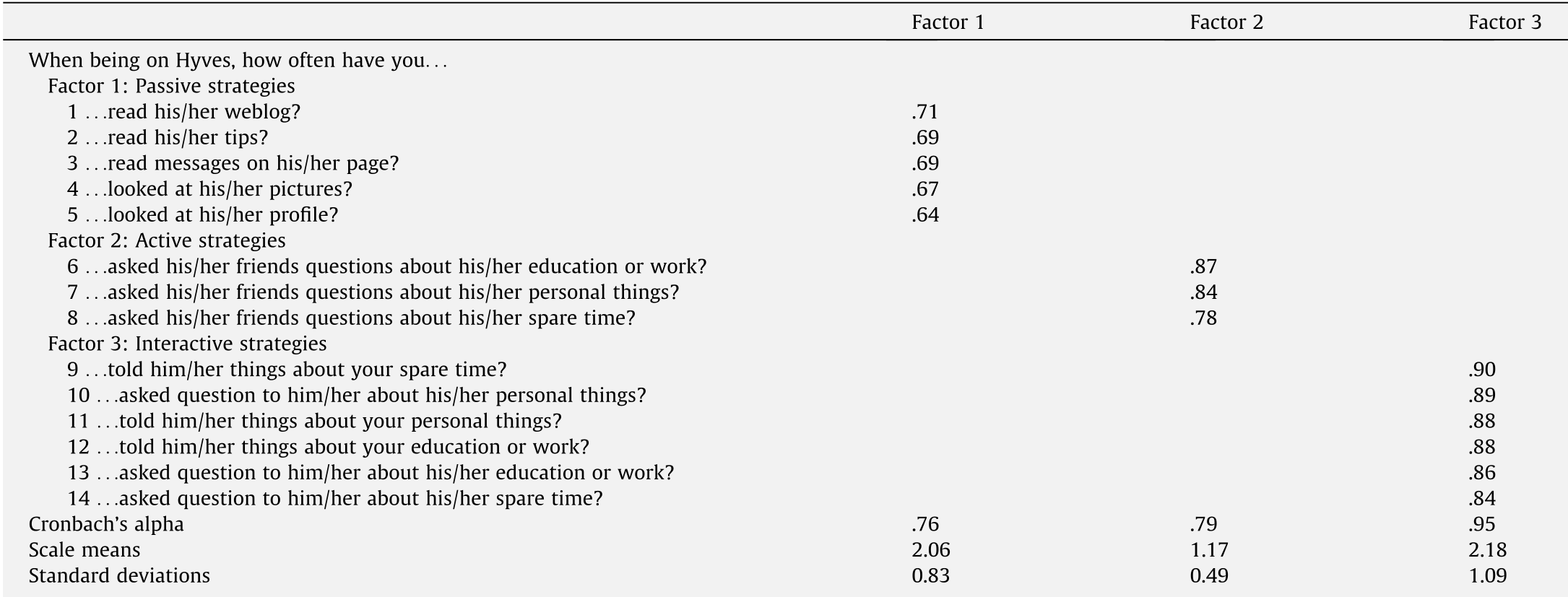
- Passive: Reading blogs, looking at profile pictures, and checking status updates.
- Active: Asking the target’s friends about their work or personal life.
- Interactive: Directly talking to the person, asking questions, and sharing personal stories.
Methodology and Findings
Using a sample of 704 users who met acquaintances online, the study used Confirmatory Factor Analysis (CFA) to validate these strategies and Bootstrapping to test mediation effects.
1. The Strategy Paradox
The results revealed a striking contrast between frequency and effectiveness:
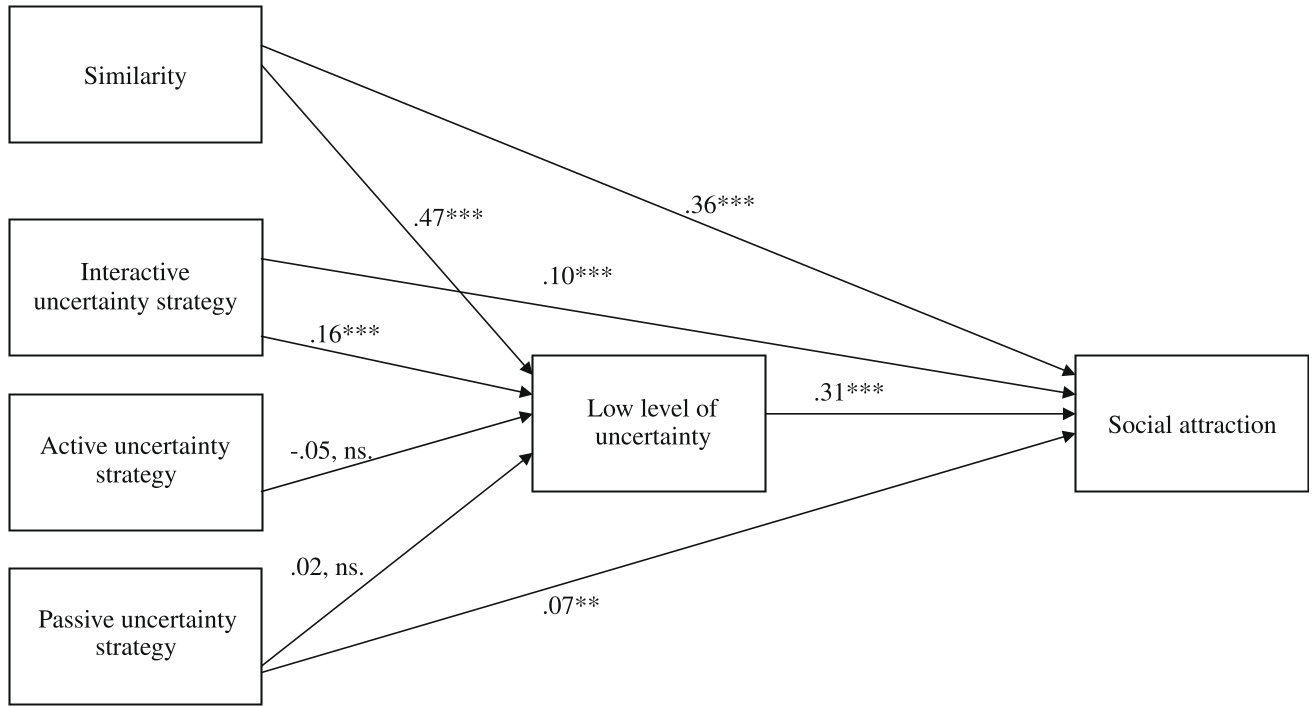
- Passive strategies are the most common (98.9% usage) but do not statistically reduce uncertainty.
- Interactive strategies are the only ones that successfully lower the level of uncertainty (β = .16).
2. The Power of Similarity
Perceived similarity acted as a massive driver. If you think someone is "like you," your uncertainty drops significantly (β = .47), which then boosts social attraction.
3. The "Valence" Twist (Moderated Mediation)
The most sophisticated finding of the paper is that the link between "knowing someone" and "liking someone" is not direct. It is moderated by the valence (positivity or negativity) of the info.
- If the info is Positive: Knowing more doesn't necessarily make you like them much more (the link is weak).
- If the info is Negative: Knowing more (low uncertainty) makes the negative impression "stick" much harder, significantly dictating your attraction level.
Critical Insight: Why This Matters Today
This study proves that "lurking" (passive consumption) is a poor tool for relationship building. Even in a cue-rich environment where we can see someone's entire life via a profile, interactive self-disclosure remains the "gold standard" for reducing social friction.
Limitations: The study is cross-sectional, meaning it captures a snapshot in time. It cannot strictly prove that low uncertainty causes attraction—it only shows they are strongly linked.
Conclusion
For developers of social platforms and researchers of digital psychology, the message is clear: To foster real social attraction, platforms must move users away from passive scrolling and toward interactive engagement. Furthermore, we must account for the "Negativity Bias"—in the digital world, a single piece of negative information carries more weight in the uncertainty-reduction process than a dozen positive "likes."